
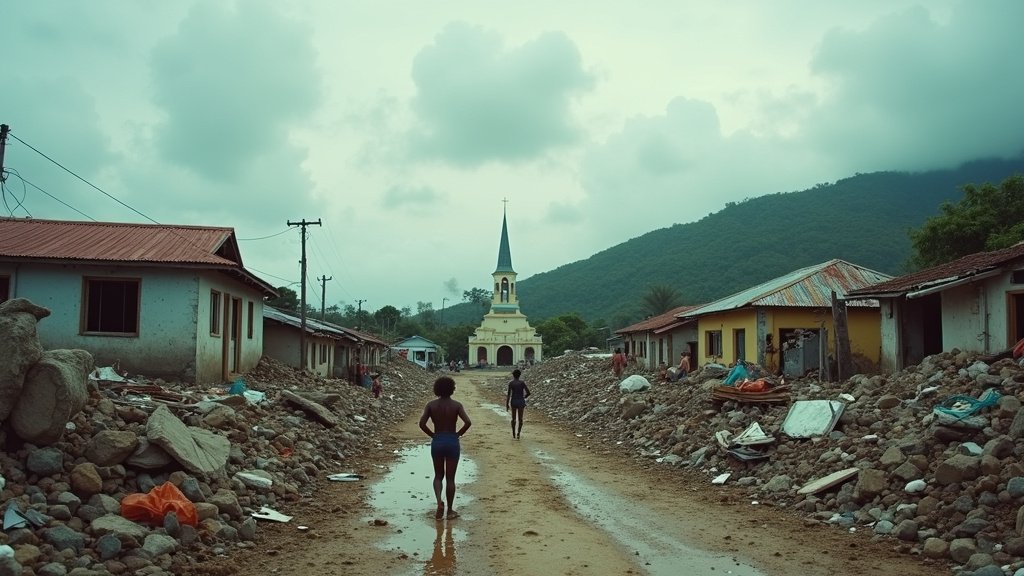
Two weeks after Hurricane Melissa, a monstrous Category 5 storm, tore through the Caribbean, the full scale of its devastation is still being assessed, with relief efforts intensifying across the hardest-hit nations. The hurricane, one of the strongest Atlantic storms on record, has left a trail of destruction, displacing hundreds of thousands, damaging critical infrastructure, and exacting a tragic toll in lives lost across Jamaica, Cuba, Haiti, and other affected islands.
The Unprecedented Fury of Melissa
Hurricane Melissa made landfall in Jamaica on October 28, 2025, as a catastrophic Category 5 storm with sustained winds of 185 mph, marking the most intense hurricane ever recorded to strike the island. Its destructive path continued, impacting Cuba as a Category 3 hurricane and causing widespread chaos throughout the region, including the Dominican Republic, the Bahamas, and Turks and Caicos. The storm’s immense power unleashed torrential rains, life-threatening storm surges of up to 13 feet, and catastrophic winds, leading to widespread flooding, landslides, and immense damage to homes, businesses, and essential services.
Assessing the Devastation: A Region in Ruins
Jamaica: A Nation Grappling with Historic Damage
Jamaica bore the brunt of Hurricane Melissa’s fury. The storm inflicted an estimated US$8.8 billion in physical damage, equivalent to 41 percent of the country’s 2024 GDP, making it the costliest hurricane in its recorded history. Preliminary assessments indicate that 41 percent of the damage was to residential buildings, 33 percent to infrastructure, 21 percent to non-residential buildings, and 5 percent to the agriculture sector. Entire communities, particularly in parishes like St. Elizabeth, St. James, and Westmoreland, were left in ruins, with reports of 90% of roofs destroyed in areas like Black River. Critical infrastructure, including 287 health institutions and 600 schools, sustained damage, leaving hundreds of thousands without power or clean water. The destruction has been described as unprecedented, with Prime Minister Andrew Holness noting it surpassed the impact of previous major hurricanes.
Cuba: Mass Evacuations and Widespread Impact
In Cuba, Hurricane Melissa’s passage necessitated the evacuation of nearly 735,000 people from high-risk areas. The storm struck the eastern coast as a Category 3 hurricane, bringing winds up to 195 km/h and inundating parts of the island with significant rainfall. Damage to homes, roadways, and infrastructure was extensive, with widespread flooding reported in several eastern provinces. Approximately 53,000 people remained displaced following the storm, and over 158,000 hectares of crops were damaged or destroyed, severely impacting the agricultural sector.
Haiti: Deepening Humanitarian Crisis
Haiti, already grappling with a severe humanitarian crisis, suffered a tragic increase in fatalities, with over 40 deaths reported, and some accounts reaching as high as 88, including 10 children. The storm triggered catastrophic flooding and landslides, devastating more than 30 communities, particularly in the southwestern region. Thousands of homes were flooded or destroyed, and access to basic services like clean water became a critical concern. The hurricane has deepened existing hardships for a population already facing immense challenges.
The Unfolding Humanitarian Response
In the wake of the disaster, governments and a coalition of international aid organizations, led by UN agencies, have intensified relief efforts across the Caribbean. The UN’s Office for the Coordination of Humanitarian Affairs (OCHA) has been crucial in coordinating response operations, supporting national governments in Jamaica, Cuba, and Haiti.
The World Food Programme (WFP) has been at the forefront, distributing food assistance to hundreds of thousands and extending cash assistance to vulnerable households. Ahead of the storm, anticipatory action frameworks allowed for early warnings to be issued to millions, and cash transfers were distributed to help communities prepare. In Cuba, WFP pre-positioned food supplies to support hundreds of thousands, while in Jamaica, initial food kits and ongoing distributions aim to reach vast numbers of affected families.
Other UN agencies, including UNICEF, PAHO, UNFPA, IOM, FAO, and UNDP, are providing essential support in areas such as water, sanitation, and hygiene (WASH), health services, child protection, psychosocial care, and restoring livelihoods. Direct Relief has committed significant emergency funding and medical supplies, dispatching charter flights with essential medicines. Organizations like World Central Kitchen are on the ground providing meals, and the US State Department has committed US$24 million in disaster relief funding. The Government of Japan has also extended an emergency grant of USD 4 million to support food, shelter, and health initiatives.
Community Resilience and Stories of Struggle
The hurricane’s impact extends beyond physical destruction, deeply affecting the lives and stories of individuals and communities across the Caribbean. Millions have been displaced, with many still residing in temporary shelters. The disruption to schooling has been profound, impacting nearly 477,000 children across Cuba, Haiti, and Jamaica, who are now facing learning loss and instability, with schools themselves damaged or repurposed as shelters.
Despite the overwhelming challenges, stories of resilience are emerging. Community-led actions are often the first line of assistance, with local groups and volunteers stepping in to help neighbors rebuild. Residents speak of the overwhelming nature of the destruction, with one Jamaican resident stating, “I don’t think there is a single person on this island who hasn’t been affected one way or another by Hurricane Melissa.” The deep emotional and social toll on families and communities underscores the long road to recovery.
Challenges and the Path to Recovery
Relief efforts continue to face significant logistical hurdles, including blocked and damaged roads that impede access to isolated communities. The restoration of essential services like power and communications remains a critical concern. Organizations like the World Bank and the Inter-American Development Bank are working on detailed damage assessments and supporting Jamaica’s transition into a reconstruction phase, emphasizing the need for resilience and inclusivity. The scale of the disaster requires sustained international solidarity and support to help these Caribbean communities rebuild their lives and restore opportunity.