
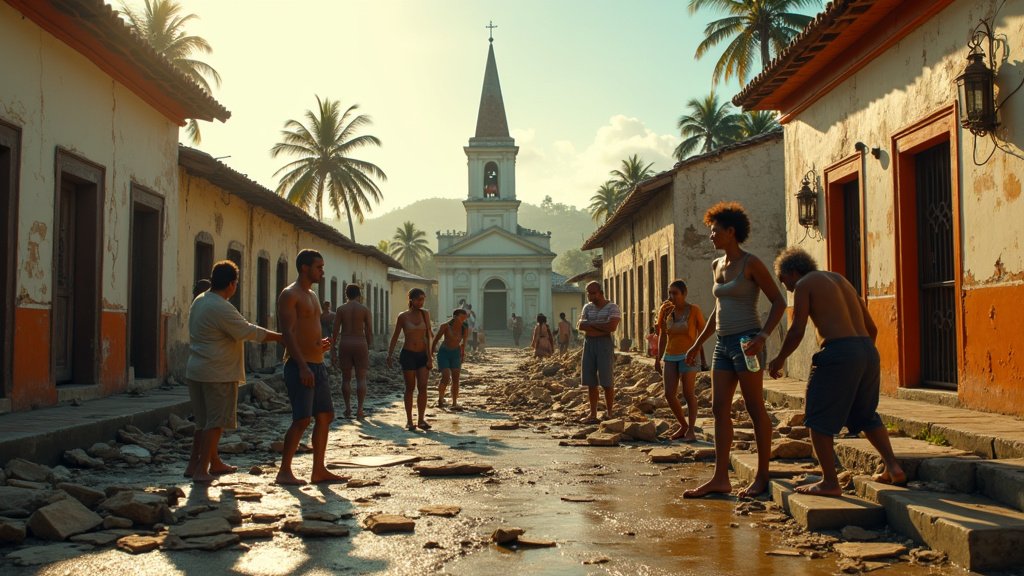
Hurricane Melissa’s Devastation: Caribbean Nations Mobilize Faith, Community Action for Hopeful Rebuilding
The Caribbean is grappling with the profound aftermath of Hurricane Melissa, a catastrophic Category 5 storm that carved a path of destruction across the region, leaving a “trail of heartbreak” in its wake. The hurricane’s immense power resulted in significant loss of life, widespread devastation to infrastructure, and severe economic impacts, prompting a monumental task of rebuilding and healing for affected nations.
A Region Engulfed in Catastrophe
Hurricane Melissa made landfall in Jamaica on October 28, 2025, as a Category 5 hurricane, the strongest storm on record to hit the island nation. Sustained winds of up to 185 mph (297 km/h) and torrential rainfall caused catastrophic damage. In Jamaica alone, an estimated 156,000 dwellings were damaged, with 24,000 considered total losses. Uprooted trees, landslides, and flooded roadways left entire communities cut off, slowing the delivery of crucial relief supplies. The economic toll on Jamaica is staggering, with initial estimates placing the damage at nearly $9 billion USD, equivalent to approximately 41% of the country’s 2024 GDP. Prime Minister Andrew Holness described the scale as unprecedented, surpassing the impact of previous devastating storms like Gilbert and Ivan.
Beyond Jamaica, Hurricane Melissa inflicted severe damage across the Caribbean. Cuba was struck as a Category 3 hurricane, forcing the evacuation of over 700,000 people. Haiti, though not directly hit by the eye of the storm, suffered immense flooding and landslides, which exacerbated existing hardships and led to a significant loss of life. The United Nations reported that approximately six million people across the Caribbean were impacted, with Jamaica, Haiti, and Cuba bearing the brunt of the storm’s fury.
Health Crisis and Humanitarian Concerns
The devastation wrought by Hurricane Melissa has heightened humanitarian concerns, particularly regarding public health. In Haiti, the hurricane intensified existing outbreaks of cholera and increased the threat of diarrheal, typhoid, and malaria cases due to contaminated water supplies. Health authorities reported over 2,900 suspected cholera cases in Haiti since January, a situation made more precarious by the storm’s impact on water and sanitation systems. Across the Caribbean, hundreds of healthcare facilities sustained damage, severely affecting access to essential medical services. The UN’s priorities for humanitarian response include providing clean water, sanitation, and resuming primary healthcare services.
Faith and Community as Pillars of Resilience
Amidst the widespread destruction, a powerful narrative of resilience, faith, and community action is emerging. Faith-based organizations have mobilized swiftly to provide aid and support to affected populations. Groups such as World Relief, Catholic Relief Services, Operation Blessing, and Samaritan’s Purse have deployed teams, supplies, and funds to assist those most in need. These organizations are providing critical items like clean water, hygiene kits, shelter materials, and medical assistance, working in partnership with local churches and communities.
The Diocese of Montego Bay, while facing damage to its own convents, schools, and churches, has launched a relief fund to support rebuilding efforts. Their Facebook posts reflect a steadfast faith, stating, “The Church remains – serving, comforting, and rebuilding in the name of Christ”. Similarly, stories from communities highlight neighbors helping neighbors, demonstrating the strength of the human spirit and the unwavering commitment to supporting one another. The International Federation of Red Cross and Red Crescent Societies (IFRC) is providing material and psychological support, emphasizing that while the road ahead is long, resilience and determination are key to recovery.
The Path to Recovery
The United Nations and various aid agencies are working in close coordination with governments to address immediate humanitarian needs and support long-term recovery strategies. Efforts focus on restoring essential services, rebuilding damaged infrastructure, and providing economic assistance to affected communities. The World Food Programme is aiming to assist hundreds of thousands through food assistance and cash transfers, while also warning of funding shortfalls for their extensive response.
The scale of the challenge is immense, with nearly 477,000 children experiencing disruptions to their schooling due to damaged or closed educational facilities across Cuba, Haiti, and Jamaica. The restoration of livelihoods, particularly in the agricultural sector, is also a critical component of the recovery process, with organizations distributing seeds, fertilizer, and materials to farming families.
As the Caribbean nations begin the arduous journey of recovery, the stories emerging are not solely of loss but of an indomitable spirit. The collective action, faith-driven initiatives, and the inherent resilience of the communities are serving as beacons of hope, illuminating the path forward from the heartbreak left by Hurricane Melissa. The region’s determination to rebuild, stronger and more resilient, underscores the enduring strength of the human spirit in the face of overwhelming adversity.