
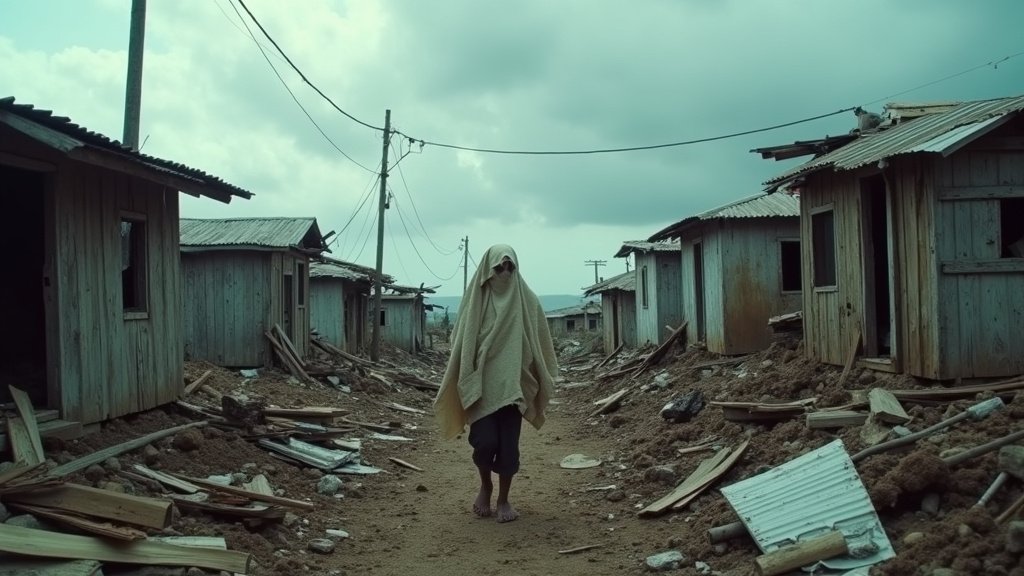
The once-vibrant landscapes of Jamaica are now a tableau of devastation, bearing the indelible scars left by Hurricane Melissa. The Category 5 storm, the most powerful to ever make landfall on the island, unleashed a torrent of destruction on October 28, 2025, leaving an estimated 45 people dead, hundreds injured, and tens of thousands of households displaced. Its passage transformed familiar communities into scenes of utter ruin, forcing a desperate fight for survival and a long, arduous journey towards recovery.
The Unprecedented Fury of Melissa
Hurricane Melissa arrived as a catastrophic force, intensifying rapidly over unusually warm Atlantic waters. Making landfall near New Hope in western Jamaica at its peak intensity, it was the strongest storm recorded in the island’s history, surpassing even the notorious Hurricane Gilbert of 1988. With sustained winds reaching 185 miles per hour and recorded wind gusts as high as 252 mph, the hurricane ripped through the nation, its eyewall causing near-total destruction in its path. The storm’s immense power was not just in its winds; it also triggered widespread flooding and deadly landslides, compounding the devastation across the western and southern parishes, particularly St. Elizabeth and Westmoreland.
Communities Reeling: The Human Cost and Untold Stories
The human toll of Hurricane Melissa is staggering. The immediate aftermath revealed a landscape where homes were reduced to rubble, and entire neighborhoods were flattened. At least 45 lives were lost in Jamaica alone, with reports indicating further missing persons whose fates remain unknown. Tens of thousands of families, an estimated 30,000 households according to some reports, found themselves homeless, seeking refuge in temporary shelters or with relatives whose homes were spared the worst. The sheer scale of destruction meant that in some severely affected areas, up to 90% of buildings sustained damage.
Personal stories of loss and resilience are emerging from the wreckage. Survivors recount harrowing experiences of huddling in the remnants of their homes, the deafening roar of the wind, and the shock of seeing their entire lives swept away. Marlene, from Brompton in St. Elizabeth, lost everything, sheltering with her daughters in their concrete bathroom, the only part of their house left standing. Their immediate reality is sleeping on salvaged clothes, a stark testament to the immediate needs for shelter, food, and water that grip these devastated community areas. Access to basic necessities has become a daily struggle, with many residents rationing water and desperately seeking aid that is slow to reach them due to impassable roads.
Infrastructure in Ruins, Recovery Hampered
The hurricane’s destructive path obliterated critical infrastructure, severely impeding relief and recovery efforts. An estimated US$8.8 billion in physical damage was inflicted upon Jamaica, equivalent to 41% of the country’s 2024 GDP, marking it as the costliest hurricane in its recorded history. Residential buildings bore the brunt of the damage, accounting for 41% of the total, followed by infrastructure (33%) and non-residential buildings (21%). Power and communication lines were downed across large swathes of the island, leaving over 530,000 customers without electricity at the storm’s peak. Many areas remained without power and running water for weeks.
Roads were blocked by an estimated 4.8 million tonnes of debris—a colossal 480,000 truckloads of rubble, vegetation, and household waste. This debris not only slowed the delivery of essential supplies but also made accessing cut-off communities a monumental task. Soldiers and residents alike were forced to use machetes and chainsaws to clear paths, a testament to the overwhelming scale of the disaster. Critical facilities, including hospitals and health centers, sustained severe damage, further complicating the provision of medical care. Black River Hospital was destroyed, and numerous primary and secondary health facilities require full reconstruction, creating a dire public health challenge.
A Long Road to Reconstruction and Resilience
The task of rebuilding is immense, involving coordinated efforts from the Jamaican government, local organizations, and international partners. The United Nations Development Programme (UNDP) is working on debris removal as a critical first step to restoring access and services. The UN’s humanitarian response priorities include providing clean water, sanitation, healthcare, nutrition, and housing. The UN Emergency Relief Coordinator has allocated US$4 million from the Central Emergency Response Fund (CERF) to scale up humanitarian operations.
Financial institutions like the World Bank and the Inter-American Development Bank (IDB) are supporting damage assessments and recovery planning, acknowledging that broader economic losses will likely surpass the estimated US$8.8 billion in physical damage. Their collaboration with the United Nations Economic Commission for Latin America and the Caribbean (ECLAC) aims to guide a resilient and inclusive recovery. Efforts are also underway to restore livelihoods, particularly in the heavily impacted agricultural sector, which suffered preliminary losses exceeding J$20 billion (approximately US$124.5 million), affecting over 70,000 farmers and leading to the loss of over 1.25 million animals.
A Stark Warning for the Caribbean
Hurricane Melissa’s unprecedented intensity serves as a stark reminder of the escalating threat posed by climate change to the Caribbean region. Small Island Developing States (SIDS) like Jamaica are disproportionately vulnerable, contributing minimally to global greenhouse gas emissions yet bearing the brunt of increasingly severe and frequent extreme weather events. Experts point to record-warm sea-surface temperatures as a key factor amplifying the storm’s power, underscoring the urgent need for global action on climate change adaptation and mitigation. The impacts ripple across the region, with Cuba, Haiti, and other islands also reporting significant damage and displacement.
The extensive damage to agriculture, infrastructure, and housing, coupled with the region’s existing debt burdens, creates a vicious cycle of vulnerability. Building resilience—through robust disaster preparedness, climate-smart infrastructure, and sustainable development practices—is no longer an option but a necessity for survival in the face of an intensifying climate crisis.
Hope Amidst the Rubble
Despite the overwhelming devastation, the spirit of the Jamaican people remains unbroken. Communities are mobilizing, neighbours are supporting neighbours, and a collective determination to rebuild is evident. The stories emerging from the disaster zones are not just tales of loss, but also of resilience, courage, and the enduring strength of the human spirit. As Jamaica embarks on its monumental recovery, the world watches, hoping for sustained international solidarity and decisive action on climate change to protect vulnerable nations like this from future catastrophes.