
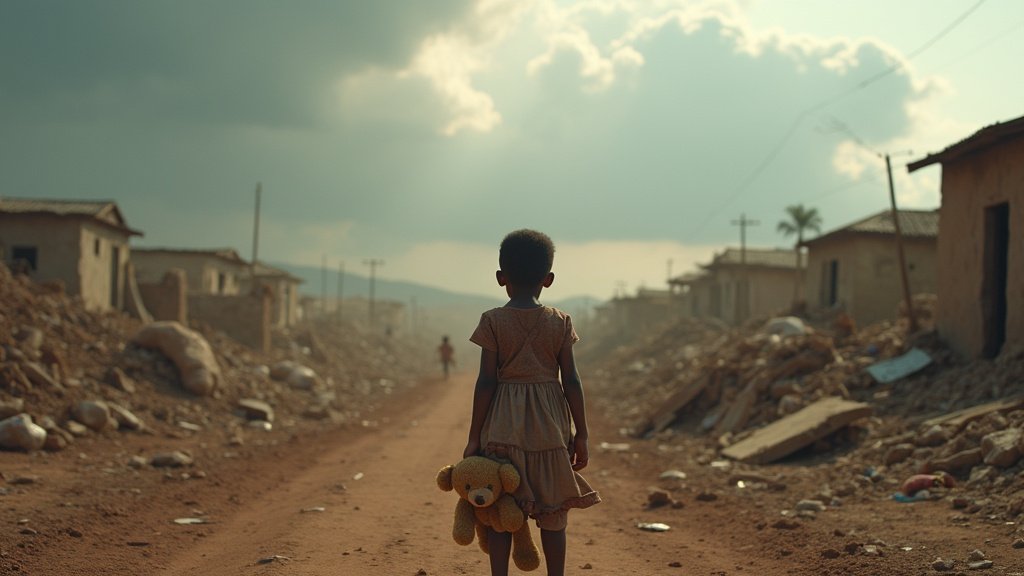
The Latin America and Caribbean region is grappling with a cascade of crises as of mid-October 2025, marked by record internal displacement in Haiti, devastating weather events in Mexico and Honduras, and ongoing conflict-induced suffering in Colombia. Humanitarian organizations are sounding the alarm as these compounding challenges strain resources and impact vulnerable communities across the Caribbean and beyond.
Haiti: Record Displacement Amidst Escalating Violence
Haiti is facing an unprecedented humanitarian crisis, with internal displacement reaching a staggering 1.4 million people by October 17, 2025. This figure represents a significant 36% increase since late 2024, underscoring the worsening situation in the nation. The primary driver of this displacement is escalating gang violence, which has increasingly occurred outside the capital, Port-au-Prince. Nearly two-thirds of new displacements have been reported in departments such as Centre and Artibonite, indicating a concerning spread of insecurity into previously less affected areas.
Unlike in previous years, a majority of armed attacks leading to mass displacement in 2025 have taken place in the provinces, accounting for 69% of incidents. This shift poses new challenges for humanitarian response. Approximately 85% of displaced families are being hosted by local communities, placing immense pressure on their already limited resources. In Port-au-Prince, the capital, the majority of displaced individuals reside in overcrowded, improvised sites, with only 238 such locations reported. These sites offer little access to essential services like food, water, and healthcare. The humanitarian situation is dire, with Haiti’s national humanitarian plan being one of the least funded globally, at only 14%. The economic collapse and disruption to livelihoods further exacerbate hunger, with 5.7 million people facing Crisis (IPC 3) levels of food insecurity, including 1.9 million in Emergency (IPC 4). Children are disproportionately affected, with 3.3 million needing humanitarian aid and 680,000 displaced.
Mexico and Honduras Grapple with Extreme Weather
Central America has been hit hard by intense rainfall in October 2025. Mexico experienced severe flooding and landslides between October 6-9 due to the remnants of Hurricane Priscilla and Tropical Storm Raymond, affecting over 121 municipalities. Tragically, at least 72 deaths and 48 missing persons have been reported. The economic toll is immense, with approximately 100,000 homes damaged or destroyed, and critical infrastructure, including roads and medical facilities, sustaining significant damage. Some areas received over 21 inches of rainfall in just a few days, leading to overflowing rivers and widespread devastation. Indigenous and socially vulnerable communities have been disproportionately impacted. The Mexican government has launched a recovery and reconstruction plan, but access remains hampered in isolated communities due to damaged infrastructure.
In Honduras, sustained rains triggered widespread floods and landslides, causing at least 15 deaths and affecting nearly 29,000 people. Over 2,000 homes were damaged, and 83 communities were left cut off. A 45-day state of emergency was declared in several departments, including Francisco Morazán, La Paz, Intibucá, and Lempira, with a separate emergency declared for the capital district. Authorities have maintained high alert levels, with specific departments under red and yellow alerts due to the ongoing rainfall and threat of landslides. The damage in the capital alone is estimated at approximately 850 million lempiras (US$32.6 million).
Colombia: Ongoing Conflict Fuels Displacement and Confinement
Colombia continues to face severe challenges due to ongoing clashes between armed groups. In the Valle del Cauca region, at least 1,407 Afro-descendant people, comprising around 516 families, have been confined by ongoing fighting in Bajo Calima. These affected rural communities are left without access to essential goods and freedom of movement. Throughout 2025, violence and insecurity have been significant drivers of displacement and mobility restrictions in Valle del Cauca, affecting at least 21,100 people so far. More broadly, Colombia is grappling with a significant internal displacement crisis, with over 7 million internally displaced persons (IDPs). Armed non-state actors (NSAGs) are expanding their territorial control, contributing to mass displacement events and forced confinement. Communities, particularly Indigenous and Afro-Colombian populations, are prevented from moving freely due to threats, armed clashes, and anti-personnel mines. The ongoing violence and insecurity highlight the complex challenges in achieving lasting peace and stability in the country.
Caribbean Hurricane Season Outlook
The 2025 Atlantic hurricane season, while intense, has seen some late-season activity. Tropical Storm Lorenzo dissipated on October 16 without posing a threat to the Caribbean. Recovery efforts are ongoing from Tropical Storm Jerry, which caused flooding in the northeastern Caribbean. More significantly, Hurricane Melissa made landfall in Jamaica on October 28 as a Category 5 storm, causing catastrophic damage and becoming the costliest hurricane in the island’s history. Melissa also impacted Haiti, the Dominican Republic, Cuba, and the Bahamas. The storm severely disrupted health systems, damaging facilities and leading to power and water outages. The Pan American Health Organization (PAHO) has been supporting response efforts in Jamaica, Haiti, and Cuba, providing critical supplies and technical assistance. While the main hurricane season is drawing to a close, forecasters noted the possibility of tropical cyclone formation in the SW Caribbean in early November, emphasizing the need for continued vigilance.
The confluence of these diverse crises—from extreme weather and escalating violence to prolonged conflict—presents a complex and urgent humanitarian landscape across Latin America and the Caribbean. The stories emerging from these affected communities underscore the urgent need for sustained international support and locally-led resilience initiatives.