
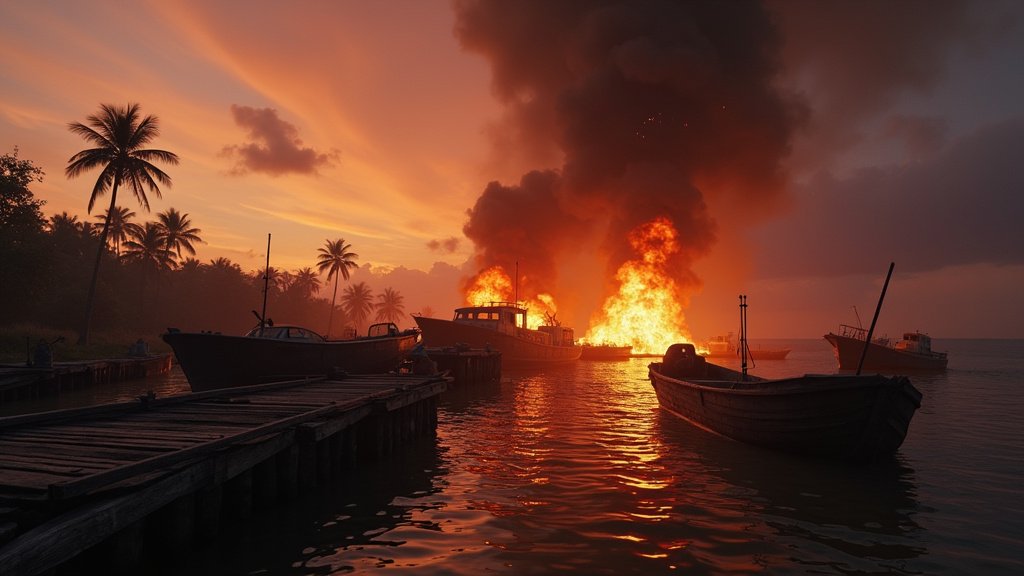
CIA Behind Drone Strike at Venezuelan Dock Tied to Drug Smuggling Operations
The CIA conducted a drone strike at a Venezuelan docking area. Sources confirm this. The facility was believed to be used by drug cartels. This action escalates U.S. pressure. It follows increased U.S. military strikes. These strikes target alleged drug boats. They began in August. Over 30 strikes occurred in the Caribbean. President Trump previously threatened action. He also ordered tanker seizures. The U.S. Justice Department increased a reward. It now offers $50 million for Venezuelan President Nicolás Maduro’s arrest. Special Operations Command stated it did not support this strike. CNN initially reported the CIA’s involvement.
Background of the Operation
The strike occurred in early December. It targeted a remote dock on Venezuela’s coast. The U.S. government believed it was a logistics center. It was allegedly used by the Tren de Aragua gang. This gang is a Venezuelan criminal group. They allegedly stored drugs there. They also moved drugs onto boats. These boats then shipped them overseas. No casualties were reported. The facility was empty at the time. The strike destroyed infrastructure. It also hit associated vessels. This was the first known U.S. land-based attack. It occurred inside Venezuela.
President Trump’s Statements
President Trump first mentioned the operation. He spoke in a radio interview. He said the U.S. knocked out a “big facility”. He described it as a place “where ships come from”. Later, he spoke to reporters. He called it a “dock area”. He said boats loaded drugs there. He declined to identify the agency involved. He only stated he knew who was responsible. Trump authorized covert CIA action. This was confirmed in October. He stated his reasons were twofold. First, Venezuela released prisoners. They entered the U.S. Second, drug smuggling from Venezuela. He noted drugs often come via sea routes. He also suggested looking at “land” actions.
Escalation in the Caribbean
This drone strike is part of a larger campaign. The U.S. military increased its presence. It deployed warships and personnel to the Caribbean. This began in August. The goal was combating drug cartels. However, most fentanyl enters the U.S. via Mexico. The campaign involves naval blockades. These target sanctioned oil tankers. The U.S. views the drug crisis as a national security threat. It frames the fight as a “war”. This justification allows military responses. The U.S. has conducted over 30 maritime strikes. These happened in the Caribbean and Pacific.
Official Statements and Denials
A spokesperson for Special Operations Command denied support. Colonel Allie Weiskopf stated, “Special Operations did not support this operation.” This included intelligence support. The CIA and White House declined comment. Venezuela has not officially acknowledged the strike. Colombian President Gustavo Petro commented. He said the U.S. bombed a suspected cocaine factory. He mentioned Maracaibo. He feared it was for mixing coca paste.
Implications and Context
The strike escalates tensions. It’s a direct action on Venezuelan soil. U.S. pressure on President Maduro increased. Sanctions are a key tool. The U.S. has designated Tren de Aragua. It’s labeled a foreign terrorist organization. The U.S. also increased the reward for Maduro’s arrest. It now stands at $50 million. This reflects ongoing efforts. These efforts target narco-terrorism. The news cycle reflects this intense focus. The culture of international relations is tested. This raises questions about sovereignty. It also highlights the fight against crime.
Ongoing Operations and Future Outlook
The U.S. military continues operations. They target alleged drug traffickers. At least 107 people have died. These deaths occurred in numerous strikes. The U.S. also seized oil tankers. This is part of the maritime “quarantine”. The aim is to disrupt illicit flows. The Caribbean remains a focus area. These actions underscore a broader strategy. It involves disrupting trafficking networks. It deters state-linked illicit activities. The news of this strike reverberates. It signals a significant shift. The fight against drug smuggling continues.