
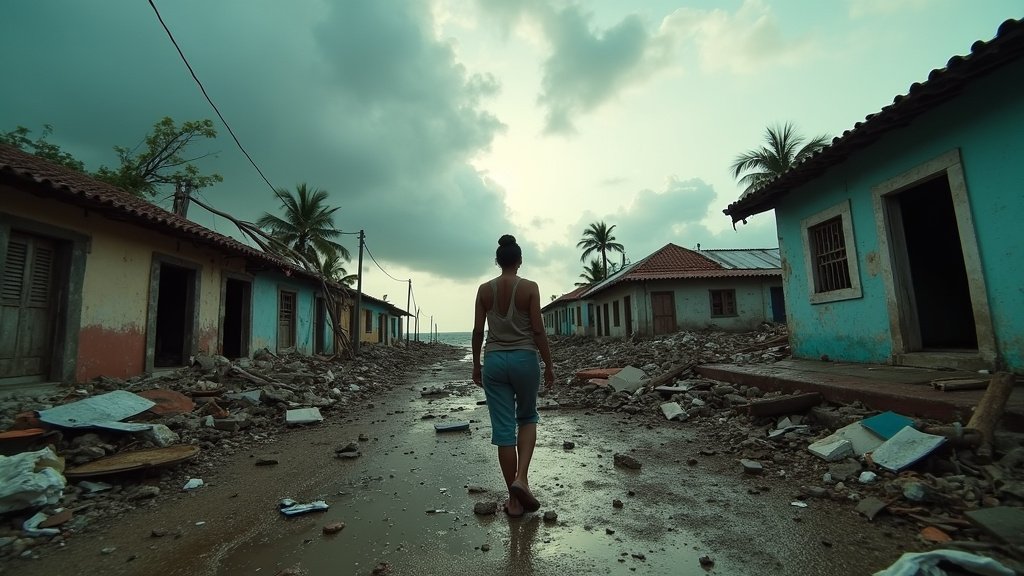
Hurricane Melissa has wreaked catastrophic destruction across the Caribbean, leaving a trail of devastation, a rising death toll, and hundreds of thousands displaced. The powerful Category 5 storm made landfall in Jamaica on October 28, 2025, with sustained winds of 185 mph, marking it as one of the strongest hurricanes on record to strike the island. The storm’s fury extended to Haiti, Cuba, the Dominican Republic, and the Bahamas, inflicting immense damage on infrastructure, homes, and livelihoods.
A Catastrophic Storm’s Path
Hurricane Melissa rapidly intensified in the central Caribbean Sea, developing into a formidable Category 5 storm before making its initial devastating landfall in Jamaica. Its destructive path continued, hitting Cuba as a Category 3 hurricane. The storm’s immense power brought life-threatening winds, torrential rainfall, and severe storm surge to multiple islands. The economic and personal costs of this disaster are expected to take months to fully calculate, with the storm set to be remembered as one of the most powerful to emerge from the Atlantic Ocean.
Devastation Across Islands
Jamaica bore the brunt of Hurricane Melissa’s initial assault. In towns like Black River, described as the storm’s “ground zero,” up to 90% of structures suffered roof damage, and power lines were snapped. Over half a million people, approximately 77% of the island’s population, were left without electricity. Communication blackouts and blocked roads severely hampered rescue and damage assessment efforts.
Haiti has reported the highest confirmed death toll, with at least 44 fatalities documented across Haiti, Jamaica, the Dominican Republic, and Panama. In Haiti, catastrophic flooding in the southern and western regions led to the displacement of over 16,000 individuals, and at least 23 deaths were reported by October 29.
Cuba also experienced significant impacts, with Category 3 winds and heavy rainfall causing widespread damage. Over 60,000 homes were reported as completely or partially destroyed, and more than two million people may require assistance. Rising river levels rendered 241 communities inaccessible to disaster response teams, home to approximately 140,000 people, with unconfirmed reports of deaths in these areas. The Dominican Republic also faced heavy rainfall and landslides, disrupting services and infrastructure.
Rising Death Toll and Humanitarian Crisis
As of reports from October 31, 2025, the confirmed death toll across the affected nations surpassed 60, with the majority of these tragic losses occurring in Haiti and Jamaica. Initial reports confirmed 19 deaths in Jamaica and at least 31 in Haiti, alongside at least one death in the Dominican Republic. The situation remains fluid, with authorities expecting the death toll to rise as search and recovery efforts continue in remote and devastated areas.
Infrastructure Collapse and Recovery Efforts
The hurricane’s impact has been devastating for critical infrastructure. In Jamaica, seven hospitals sustained catastrophic roof and infrastructure damage, including facilities in Black River, Hanover, Trelawny, St. James, Westmoreland, and St. Ann. Bellevue Hospital in Kingston also sustained damage. Beyond healthcare, roads, bridges, and power grids were decimated, leaving hundreds of thousands without essential services for extended periods. The restoration of power to over 60% of customers in Jamaica was considered a significant milestone amidst the widespread destruction.
International Response and Community Resilience
Governments and international organizations have mobilized to provide urgent assistance. The United States, through its Department of State, directed immediate support, deploying Disaster Assistance Response Teams and urban search-and-rescue units. The U.S. has committed nearly $37 million in aid to the region, with significant portions allocated to Jamaica, Haiti, and Cuba.
The United Nations and its partners are actively involved in supporting national authorities, distributing essential supplies like food, water, medical kits, and shelter materials. Relief organizations emphasize that monetary donations are the most effective way to support recovery, allowing for the local purchase of urgently needed supplies.
Despite the immense challenges, the resilience of Caribbean communities is evident. As former Jamaican senator Imani Duncan-Price noted, “We stay alert. We stay alert. And support each other.”. The ongoing efforts focus not only on immediate relief but also on long-term reconstruction, aiming to “build back better” based on the lessons learned from Hurricane Melissa. The news of Hurricane Melissa underscores the critical need for robust disaster preparedness and the enduring spirit of cooperation within the Caribbean region. The news coverage highlights the strength of human connection and the shared efforts to rebuild lives and communities against the backdrop of natural disasters that deeply affect regional culture and well-being.