
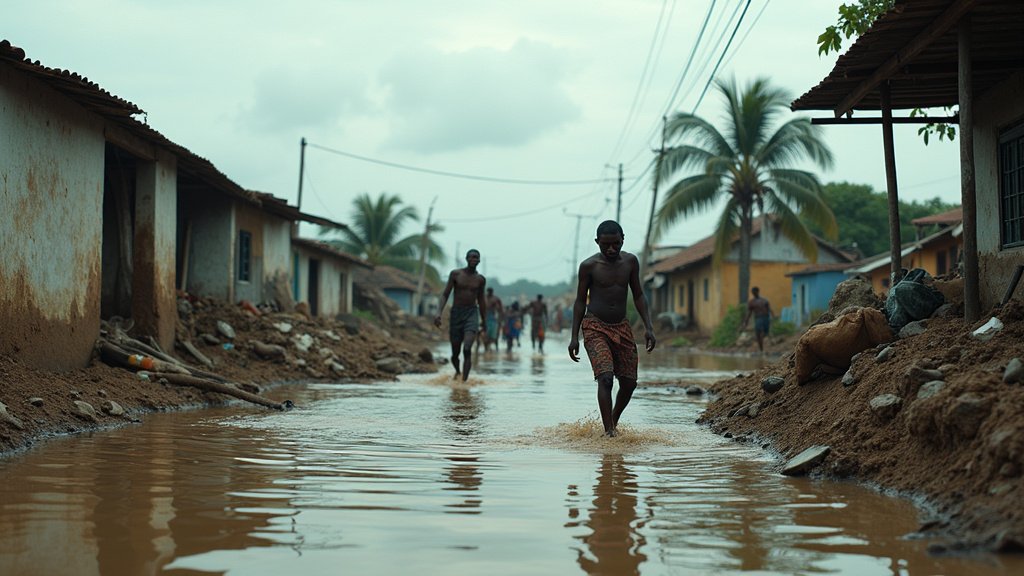
PETIT-GOÂVE, Haiti – More than a week after the catastrophic Category 5 Hurricane Melissa tore through the Caribbean, the Haitian community of Petit-Goâve remains locked in a desperate struggle for survival and recovery. What began as a powerful tropical storm escalated into one of the most intense Atlantic hurricanes on record, unleashing unparalleled destruction across Jamaica, Cuba, and Haiti, leaving an indelible mark of devastation and loss. In Petit-Goâve, a town already grappling with deep-seated challenges, the hurricane’s fury has compounded an existing humanitarian crisis, pushing its resilience to the breaking point.
The Unrelenting Fury of Melissa
Hurricane Melissa, the strongest tropical cyclone globally in 2025, made its initial devastating landfall in Jamaica as a Category 5 storm, boasting sustained winds of 185 mph. Its destructive path continued, weakening but still posing a significant threat as it struck Cuba as a Category 3 hurricane. Even countries not in the direct path, like Haiti, bore the brunt of its outer bands, experiencing torrential rains, life-threatening storm surges, and devastating landslides. The storm’s slow movement exacerbated the rainfall, leading to widespread flooding and an overwhelming of natural drainage systems across the region.
Petit-Goâve’s Night of Terror
For the residents of Petit-Goâve, located in Haiti’s southwestern coastal region, the hurricane’s impact was particularly brutal. In the dead of night on October 29th, the La Dique River, swollen by Melissa’s relentless downpour, burst its banks. The ensuing flash flood, carrying mud and debris, surged through the town, trapping families in their homes and sweeping away everything in its path. The human cost has been staggering, with reports indicating that at least 43 lives were lost in Haiti due to the storm, a significant number of them children. Petit-Goâve bore a disproportionate share of this tragedy, with official figures suggesting at least 25, and in some accounts up to 43, deaths occurring in the town, including as many as 10 children. Homes were not spared; more than 160 were damaged, while an estimated 80 were completely destroyed, leaving countless families homeless and stripped of their possessions.
A Nation’s Deepening Crisis
Hurricane Melissa’s impact has amplified Haiti’s pre-existing vulnerabilities. The storm’s heavy rains and subsequent flooding have devastated communities across the southern departments, turning neighborhoods into treacherous landscapes of mud and debris. Roads have been washed away, isolating communities and severely hampering access for much-needed aid. Reports from organizations like UNICEF and the World Food Programme (WFP) highlight the critical need for food, clean water, sanitation, and shelter, especially in areas where critical infrastructure, including schools and health facilities, sustained significant damage. The storm’s fury has not only destroyed physical structures but has also threatened to worsen the nation’s already dire hunger crisis and increase the risk of waterborne diseases like cholera, with concerning cases reported in the affected regions.
The Arduous Path to Recovery
The road to recovery for Petit-Goâve and the broader Haitian community is fraught with immense challenges. Aid organizations, including the World Food Programme and UNICEF, are working tirelessly to deliver essential supplies, but access remains a major hurdle. Gangs have reportedly blocked key roads between the capital, Port-au-Prince, and Petit-Goâve, forcing humanitarian efforts to rely on lengthy and difficult boat trips. This insecurity not only impedes the delivery of life-saving assistance but also deepens the sense of isolation and despair among survivors.
The psychosocial toll is also significant. Families grapple with the profound grief of losing loved ones, particularly children, and the trauma of witnessing their entire lives being swept away in a matter of hours. UNICEF is providing psychosocial support in schools and to affected children, recognizing the long-term emotional impact of such a devastating event. The community’s inherent resilience, a cornerstone of Haitian culture, is evident in neighbors helping each other, sharing scarce resources and offering shelter. However, the scale of the destruction demands sustained external support to rebuild not just homes, but also livelihoods and the very fabric of community life.
Resilience and the Road Ahead
As Petit-Goâve and other affected areas in the Caribbean begin the monumental task of rebuilding, the international community’s commitment to long-term recovery is paramount. While immediate relief efforts are underway, the hurricane has underscored the urgent need for climate-resilient infrastructure and preparedness strategies. The devastation wrought by Hurricane Melissa serves as a stark reminder of the increasing vulnerability of small island developing states in the face of climate change, emphasizing the inseparable links between climate justice and reparatory justice. The spirit of the Caribbean people, marked by a profound sense of community and mutual support, will be crucial in navigating the challenging months and years ahead, but sustained global solidarity remains essential to help these communities rise from the ruins.