
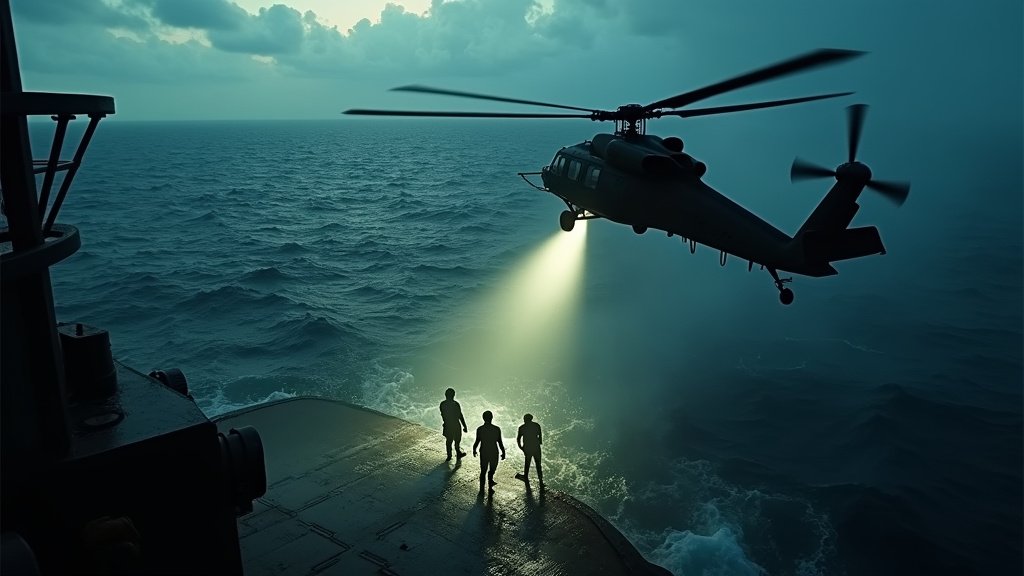
A U.S. military airstrike in the Caribbean on November 6, 2025, resulted in the deaths of three individuals, the latest in a series of controversial operations targeting alleged drug traffickers. The strike was announced by Secretary of War Pete Hegseth, who vowed to continue actions against “narco-terrorists” until the flow of drugs into the United States is stopped.
Operation Southern Spear: A Campaign Against Narcoterrorism
This escalating campaign, officially dubbed “Operation Southern Spear,” was formalized by Defense Secretary Pete Hegseth, signaling a significant intensification of U.S. efforts against what the administration labels “narco-terrorism” in the Western Hemisphere. The operation is intended to “defend our Homeland, removes narco-terrorists from our Hemisphere, and secures our Homeland from the drugs that are killing our people”. This initiative is part of a broader strategy by the Trump administration to combat drug trafficking, with President Donald Trump characterizing drug traffickers as terrorists responsible for numerous deaths in the U.S..
The November 6th Strike and Hegseth’s Stance
On November 6, 2025, Secretary of War Pete Hegseth announced the successful execution of a strike that killed three individuals in the Caribbean. In a statement posted on X (formerly Twitter), Hegseth declared, “To all narco-terrorists who threaten our homeland: if you want to stay alive, stop trafficking drugs. If you keep trafficking deadly drugs — we will kill you”. He further emphasized the Department of War’s commitment, stating, “The Department will treat them EXACTLY how we treated Al-Qaeda. We will continue to track them, map them, hunt them, and kill them”. This aggressive rhetoric underscores the administration’s “peace through strength” doctrine, aiming to foster a robust warfighting culture within the U.S. military.
Broader Campaign and Mounting Casualties
The November 6th strike is one of at least 20 to 22 kinetic strikes conducted by U.S. forces in the Caribbean and Eastern Pacific since early September 2025. These operations have reportedly resulted in the deaths of at least 75 to 83 individuals, with no survivors in many instances. The U.S. alleges that targeted vessels were operated by “designated terrorist organizations” such as Venezuela’s Tren de Aragua and Colombia’s National Liberation Army. However, the administration has not publicly presented evidence to substantiate these claims, leading to international scrutiny and accusations of extrajudicial killings.
Geopolitical Tensions and Regional Concerns
The intensified military actions in the Caribbean have coincided with a significant U.S. military buildup, including the deployment of the advanced aircraft carrier USS Gerald R. Ford, marking the largest U.S. military presence in the region in generations. This buildup is seen by some as an escalating pressure tactic against Venezuelan President Nicolás Maduro, whom the U.S. has accused of complicity in drug trafficking and has designated his administration’s group, Cartel de los Soles, as a foreign terrorist organization.
This U.S. policy has generated friction with regional partners. Colombian President Gustavo Petro ordered a halt to intelligence sharing with the U.S. until the strikes cease, emphasizing that “the fight against drugs must be subordinated to the human rights of the Caribbean people”. China has urged the U.S. to act in ways that promote peace and stability in Latin America and the Caribbean.
Questions of Legality and Effectiveness
International legal experts and some U.N. officials have raised serious concerns about the legality of the U.S. strikes, suggesting they may violate international law and constitute extrajudicial executions, particularly as evidence linking targets to drug smuggling is not publicly available. While the U.S. asserts these actions are consistent with self-defense, critics question the legal basis for lethal force against vessels in international waters. Furthermore, despite the aggressive military campaign, U.S. Coast Guard officials have reported no “noticeable difference” in the flow of cocaine, indicating that traffickers are adapting their tactics. The news of these strikes and the broader campaign has become a significant point of international news and debate.
Conclusion
The November 6th airstrike, killing three individuals in the Caribbean, is a stark example of the U.S. military’s intensified operations under “Operation Southern Spear.” While the administration frames these actions as necessary to combat “narco-terrorism” and protect national security, the campaign faces mounting international criticism regarding its legality, transparency, and effectiveness, even as a significant military presence is established in the region. The long-term impact on regional stability and the culture of the Caribbean remains a significant concern for international observers.