
Bad Bunny delivered a historic Super Bowl halftime show. It was a revolutionary moment for entertainment. The performance placed Puerto Rican identity at its center. It showcased the island’s rich history and culture. This event followed his major win at the 2026 Grammy Awards. He won Album of the Year for “Debí Tirar Más Fotos”. This was a first for an all-Spanish language album. The Super Bowl performance was more than music. It was a powerful cultural statement. Bad Bunny used every moment to highlight his heritage.
A Symbol of Heritage
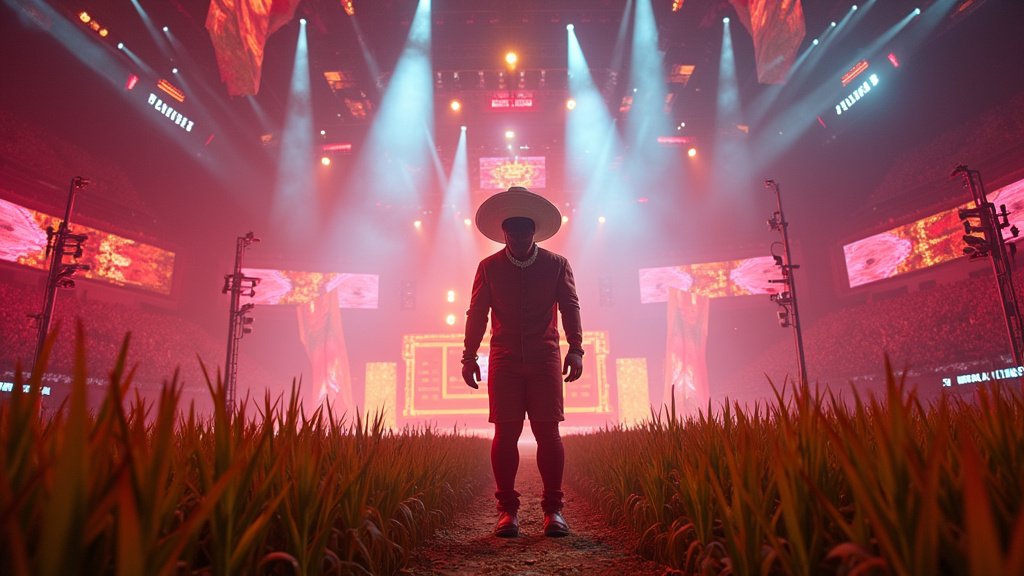
From the start, the visual language spoke volumes. Bad Bunny appeared wearing a traditional pava. This woven straw hat represents Puerto Rico’s jíbaros. It is a symbol of resilience and pride. The jíbaro figure has deep historical roots. It dates back to Spanish colonial rule. The pava has become a symbol of resistance. Bad Bunny had featured the pava before. Its appearance at the Super Bowl reached millions globally.
Stage Setting for Puerto Rico
The stage itself became a vibrant portrayal of island life. It featured elements like sugarcane fields. This referenced Puerto Rico’s complex colonial past. Scenes depicted everyday life. There were grandfathers playing dominoes. A piragua (shaved ice) stand was present. A recreated casita evoked familiar homes. This connected to his 2025 San Juan residency. Utility poles were also part of the set. They referenced issues like Puerto Rico’s power grid.
A Spanish-Language Landmark
This was the first Super Bowl halftime show performed solely in Spanish. This was a significant step for Latin music globally. Bad Bunny consistently sings in Spanish. He is an icon for Latin pride. He has helped propel reggaeton worldwide. His music blends Caribbean urban roots with global appeal. This performance reinforced that connection.
Tributes and Collaborations
Bad Bunny performed hits like “Tití Me Preguntó”. He also sang “El Apagón”. This song addresses socioeconomic issues on the island. The show featured surprise guests. Lady Gaga sang a salsa-fied “Die With a Smile”. Ricky Martin joined for “Lo Que Le Pasó a Hawaii”. Cardi B, Pedro Pascal, and Karol G also made appearances. These guests represented diverse facets of Latin entertainment. Snippets of songs by reggaeton pioneers paid homage. This acknowledged artists who paved the way.
Beyond Entertainment
Bad Bunny wore an all-white jersey with “Ocasio”. This celebrated his identity and heritage. It was a personal affirmation for the artist. His Grammy acceptance speeches also carried weight. He spoke out against immigration crackdowns. He dedicated awards to those pursuing dreams abroad. The performance itself was an act of resistance. It highlighted themes of community and self-belief. Bad Bunny aims to inspire. He encourages audiences to believe in themselves.
A Lasting Cultural Impact
This Super Bowl halftime show was a career milestone. It was a victory lap after a massive year. His album “Debí Tirar Más Fotos” was critically acclaimed. It received billions of streams. Bad Bunny’s artistry draws from Puerto Rican musical traditions. These include bomba and plena. He places himself in a lineage of cultural innovators. His performance was a masterclass in spectacle and history. It communicated oppression, ingenuity, and joy. Bad Bunny has become a global force. His Super Bowl show solidified his status. It was an unforgettable night of entertainment and news.