
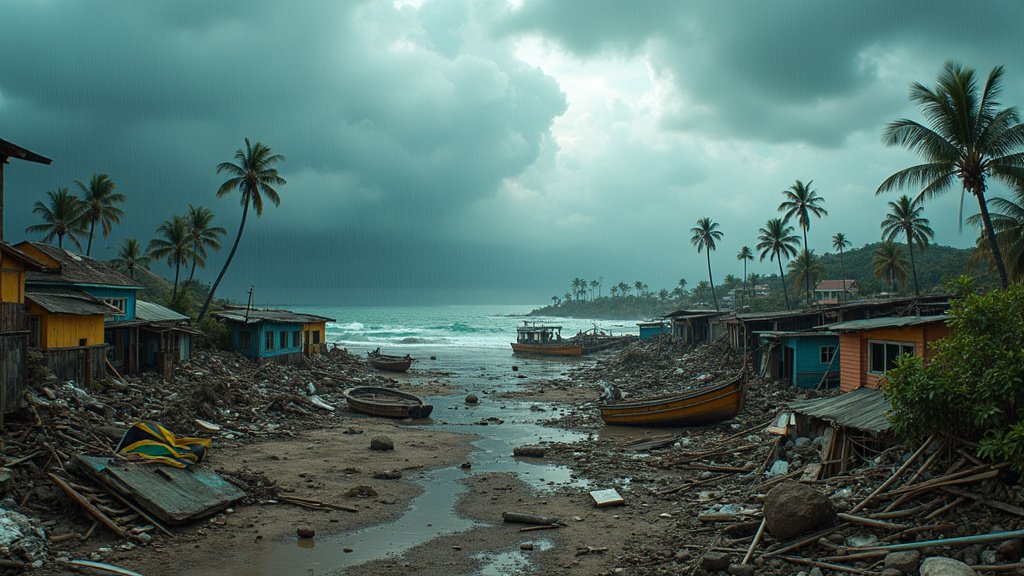
Hurricane Melissa Unleashes Catastrophic Devastation Across Jamaica
KINGSTON, JAMAICA – The Caribbean island nation of Jamaica is grappling with the aftermath of Hurricane Melissa, a monstrous Category 5 storm that made a catastrophic landfall, leaving widespread destruction, significant loss of life, and crippled essential services in its wake. The hurricane, one of the most powerful ever recorded in the Atlantic basin, struck the southwestern coast of Jamaica on October 28, 2025, unleashing unprecedented fury.
The Storm’s Unprecedented Fury
Hurricane Melissa made landfall near New Hope in the Westmoreland Parish with sustained winds of 185 miles per hour, a speed that ranks it as the strongest hurricane to ever make landfall on the island and tied for the most intense Atlantic hurricane on record. Meteorological data revealed wind gusts reaching a staggering 252 mph, captured by dropsonde instruments, surpassing previous records. The storm’s immense power brought a life-threatening storm surge of up to 13 feet and torrential rainfall, with some central areas of Jamaica receiving an estimated 18 to 24 inches of rain, and projections indicating up to 40 inches in certain locales.
Widespread Destruction Across the Island
The impact of Melissa has been devastating, particularly across Jamaica’s western and southern parishes. Satellite analysis indicates that up to 40% of buildings and roads in the most severely affected areas, including the tourist hub of Montego Bay and the port town of Black River, suffered extensive damage. Over 122,000 dwellings were demolished or significantly damaged, leaving thousands homeless. The agricultural sector, a cornerstone of the island’s economy, sustained billions of dollars in losses, with crops, livestock, and vital infrastructure destroyed. The fisheries sector faces a near-total collapse in some communities, reporting a 100% loss of fishing vessels.
The economic toll is immense, with preliminary estimates placing the damage at approximately $8 billion to $10 billion USD, a figure that represents nearly half of Jamaica’s annual GDP. The destruction has been described as ‘heartbreaking,’ with entire neighborhoods flattened and landscapes dramatically altered.
Human Cost and Critical Services
The human toll of Hurricane Melissa has been significant, with at least 46 fatalities reported in Jamaica alone, and many more missing or injured. The hardest-hit parishes include St. Elizabeth, which recorded 18 deaths, and Westmoreland with 15. The storm’s passage crippled essential services across the island. Over 530,000 Jamaicans, approximately 70% of the Jamaica Public Service (JPS) customer base, were left without power. Restoration efforts are ongoing, with JPS indicating that full power restoration to all affected communities could take up to six months, prioritizing critical facilities like hospitals and water pumping stations.
Regional Impact and International Response
Hurricane Melissa’s destructive path extended beyond Jamaica, causing significant damage and fatalities in neighboring Caribbean nations. Haiti reported at least 31 deaths, while the Dominican Republic also saw casualties. Cuba and the Bahamas experienced severe flooding and wind impacts. In response to the unfolding crisis, the Government of Jamaica, in partnership with Amber Group, launched the “SupportJamaica.gov.jm” website to coordinate relief efforts, facilitate online donations, and disseminate verified news and shelter information. International aid has begun to pour in, with the U.S. and UK governments committing substantial resources, and UN agencies allocating emergency funds to bolster humanitarian operations across the region. The tourism sector, vital to Jamaica’s economy, is racing against time to reopen, with a target of December 15th for a significant return to operations.
A Path to Resilience
Jamaica’s recovery from Hurricane Melissa will be a long and arduous process. The scale of destruction underscores the increasing vulnerability of Caribbean nations to extreme weather events, exacerbated by climate change. While immediate relief efforts are underway, the focus is shifting towards long-term rebuilding and enhancing resilience against future storms. The devastation serves as a stark reminder of the profound challenges faced by small island developing states in the face of a changing climate, highlighting the urgent need for sustained global support and innovative solutions to rebuild stronger and safer communities across the Caribbean.