
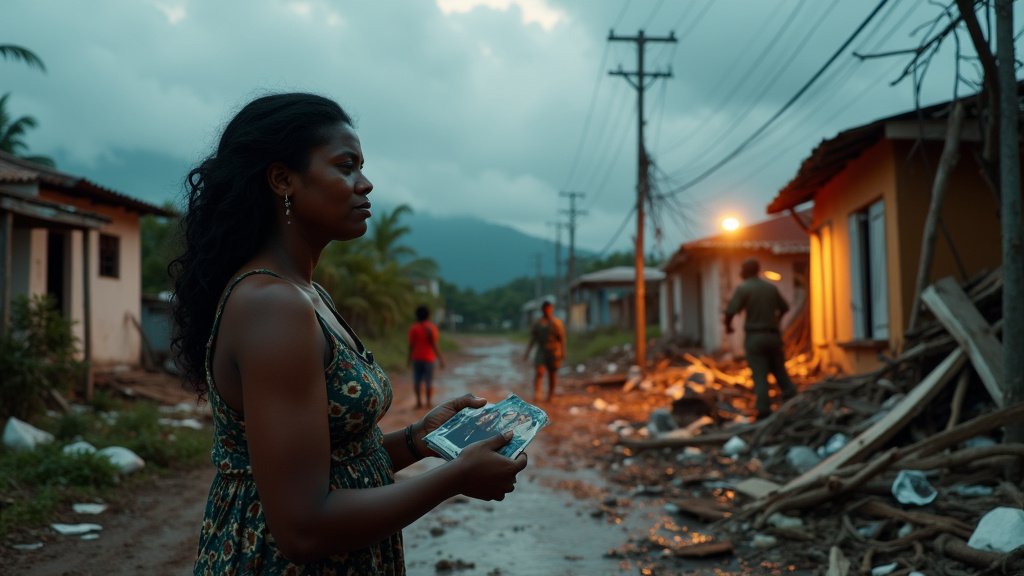
Jamaica is confronting the daunting task of recovery in the wake of Hurricane Melissa, a Category 5 storm that made landfall on October 28, 2025, leaving a trail of unprecedented devastation across the island nation. The hurricane, characterized by 185 mph winds, has been described as the strongest to ever directly hit Jamaica, surpassing historical storms like Gilbert and Beryl. Initial damage estimates place the physical losses at a staggering US$8.8 billion, equivalent to approximately 41% of Jamaica’s 2024 Gross Domestic Product. While this figure represents physical damage, broader economic losses are anticipated to be significantly higher, with some projections suggesting the total economic toll could exceed US$20 billion.
Unprecedented Destruction and Human Cost
The catastrophic impact of Hurricane Melissa has been felt across all sectors of Jamaican life. Residential buildings sustained the most significant damage, accounting for 41% of the total estimated losses, followed by infrastructure at 33%, non-residential buildings at 21%, and agriculture at 5%. The storm’s wrath led to widespread destruction, with thousands left homeless, essential infrastructure crippled, and livelihoods shattered. The human cost is profound, with an official death toll of 45 confirmed, alongside numerous missing persons and ongoing investigations into other fatalities. The United Nations reported that approximately 1.6 million people were affected, with tens of thousands displaced and requiring urgent humanitarian assistance, including food, water, and shelter.
International and Regional Aid Mobilized
In response to the immense crisis, a coalition of international and regional partners has swiftly mobilized to support Jamaica’s recovery efforts. The Development Bank of Latin America and the Caribbean (CAF) approved an emergency grant of US$670,000 to aid humanitarian and recovery initiatives, also facilitating bilateral assistance from El Salvador. The Inter-American Development Bank (IDB) Group has unveiled a comprehensive US$1.26 billion package, including US$300 million available through its Contingent Credit Facility for rapid disaster response and US$500,000 in direct emergency humanitarian assistance. The World Bank, in coordination with the IDB, conducted damage assessments and has provided a US$150 million payout from Jamaica’s catastrophe bond, offering a crucial financial lifeline, though it covers only a fraction of the total damage.
The United States has deployed a Disaster Assistance Response Team and urban search-and-rescue teams, mobilizing nine aircraft to deliver over 779,000 pounds of essential supplies. The United Kingdom has committed significant emergency humanitarian funding to the region. United Nations agencies are actively involved, providing support to shelters, community kitchens, distributing agricultural tools, and reinforcing health services.
Key Players in On-the-Ground Recovery
Jamaica Public Service Company (JPS) crews have been working tirelessly to restore power across the island. As of mid-November, electricity had been restored to approximately 300,000 customers, representing 64% of its service base, with a strategic focus on critical services like hospitals, water pumps, and economic centers. The government is in discussions with JPS regarding financial support for extensive restoration work, as the company seeks an extension of its license to secure necessary capital for repairs.
The Jamaica Defence Force (JDF) has mobilized its National Reserve personnel to support relief operations, search and rescue missions, logistics, and security efforts, working in close partnership with the Office of Disaster Preparedness and Emergency Management (ODPEM). World Central Kitchen (WCK) has been a crucial partner, establishing Field Kitchens and collaborating with over 30 local restaurants to serve nearly 400,000 meals to affected communities, even making door-to-door deliveries to remote areas.
Resilience and Long-Term Reconstruction
Prime Minister Andrew Holness has declared the entire island a disaster area and emphasized a commitment to strict oversight and transparency in the management of all recovery funds. The government’s recovery plan is structured across four overlapping phases: immediate relief, emergency relief, stabilization and recovery, and long-term reconstruction. Despite the immense challenges, including blocked roads hindering aid delivery and widespread infrastructure damage, the spirit of resilience among Jamaicans is evident. The nation is not only focused on immediate relief but also on rebuilding with greater resilience to withstand future climate events. Organizations like UNESCO are also contributing by supporting educational continuity and the stabilization of cultural heritage sites damaged by the storm. The coordinated efforts by governmental agencies, international bodies, NGOs, and community groups underscore a collective determination to overcome the devastation and rebuild Jamaica stronger. This news serves as a stark reminder of the Caribbean’s vulnerability to extreme weather events and the critical importance of sustained international cooperation and disaster preparedness.