
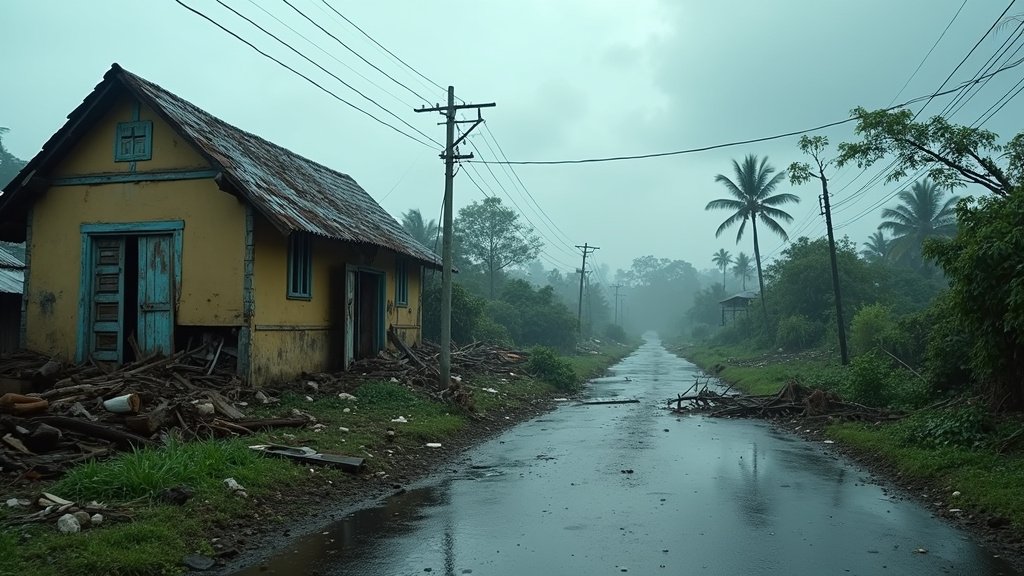
KINGSTON, JAMAICA – Hurricane Melissa, a monstrous Category 5 storm, made a catastrophic landfall in Jamaica on October 28, 2025, marking the most powerful hurricane on record to strike the island nation and unleashing devastation that will require years to overcome. The storm brought with it life-threatening winds reaching up to 185 miles per hour, a devastating storm surge of up to 13 feet along the southern coast, and torrential rainfall, leaving behind a landscape of ruin and overwhelming humanitarian needs across the Caribbean.
The Fury of Category 5 Melissa
Forecasters at the World Meteorological Organization (WMO) and the U.S. National Hurricane Center tracked Hurricane Melissa as it rapidly intensified in the central Caribbean Sea, reaching Category 5 status with winds near 300 km/h (186 mph) before striking Jamaica. The storm’s slow movement exacerbated its impact, leading to catastrophic flash flooding and numerous landslides, particularly in mountainous areas. Officials warned of “total structural failure” in areas directly in the path of Melissa’s eye.
Jamaica Under Siege: Widespread Devastation
The island nation bore the brunt of Melissa’s wrath, with extensive damage reported across its western and southern regions. More than 122,000 dwellings were demolished or severely damaged, and up to 90 percent of buildings in some areas were impacted. Power outages affected at least 75 percent of customers, plunging large swaths of the island into darkness for extended periods. Communications infrastructure was also severely compromised. Landslides and flooding rendered numerous roads impassable, significantly delaying initial damage assessments and the delivery of critical relief supplies. The human toll has been significant, with confirmed deaths reported in the dozens, and thousands of residents displaced and seeking refuge in emergency shelters.
Regional Ripple Effects Across the Caribbean
Jamaica was not the only nation to suffer from Melissa’s destructive path. The hurricane also caused significant damage in Cuba, Haiti, the Dominican Republic, the Bahamas, and Turks and Caicos Islands, exacerbating existing hardships and triggering widespread displacement. In Haiti, the storm deepened existing crises, contributing to a tragic death toll, with at least 88 fatalities reported across the region, including children.
Government Mobilization and International Response
In response to the unprecedented scale of destruction, Prime Minister Andrew Holness declared the entire island a “disaster area” and “catastrophic zone,” mobilizing hundreds of emergency shelters and ordering widespread evacuations. The Office of Disaster Preparedness and Emergency Management (ODPEM), supported by the Jamaica Defence Force (JDF) and the Jamaica Fire Brigade, led the immediate response efforts. Regional bodies, including the Caribbean Disaster Emergency Management Agency (CDEMA) and CARICOM, swiftly activated their mechanisms to coordinate aid and support. Pledges of assistance poured in from international partners, including the United Nations, the United States, the European Union, and various CARICOM member states, underscoring a united front in the face of the crisis.
Economic and Social Repercussions: A Nation Reeling
Hurricane Melissa has inflicted an economic blow of staggering proportions on Jamaica. Initial estimates from the World Bank and the Inter-American Development Bank place the physical damage at an astonishing US$8.8 billion, equivalent to approximately 41 percent of Jamaica’s 2024 GDP. Some disaster modelers project potential economic losses could reach up to US$14 billion, threatening to unravel decades of economic progress. The vital tourism sector, a cornerstone of Jamaica’s economy and a significant driver of entertainment and leisure activities, has been severely impacted, with major hotel chains reporting extensive damage and some not expected to reopen until May 2026. The agricultural sector also sustained heavy losses, impacting staple crops and livestock, while infrastructure damage, including roads and utilities, has further complicated recovery. Jamaica did receive a US$150 million payout from its catastrophe bond, offering a crucial financial lifeline, though it covers only a fraction of the total estimated damage.
The Long Road to Recovery and Resilience
In the aftermath of the storm, the focus has shifted to debris removal, with an estimated 4.8 million tonnes of rubble and waste posing significant challenges to restoring access and services. The government has announced the establishment of the National Reconstruction Resilience Authority to coordinate rebuilding efforts. Efforts are underway to restore power and water systems, repair critical infrastructure, and provide essential humanitarian assistance. The unfolding disaster dominated news cycles across the globe, highlighting the escalating threat of extreme weather events driven by climate change, a critical news narrative for the region. The resilience of the Jamaican people is being tested, but their determination to rebuild remains strong, supported by ongoing regional and international solidarity.
The devastation wrought by Hurricane Melissa serves as a stark reminder of the Caribbean’s vulnerability to increasingly intense climate-related disasters and the urgent need for sustained investment in resilient infrastructure and preparedness measures.