
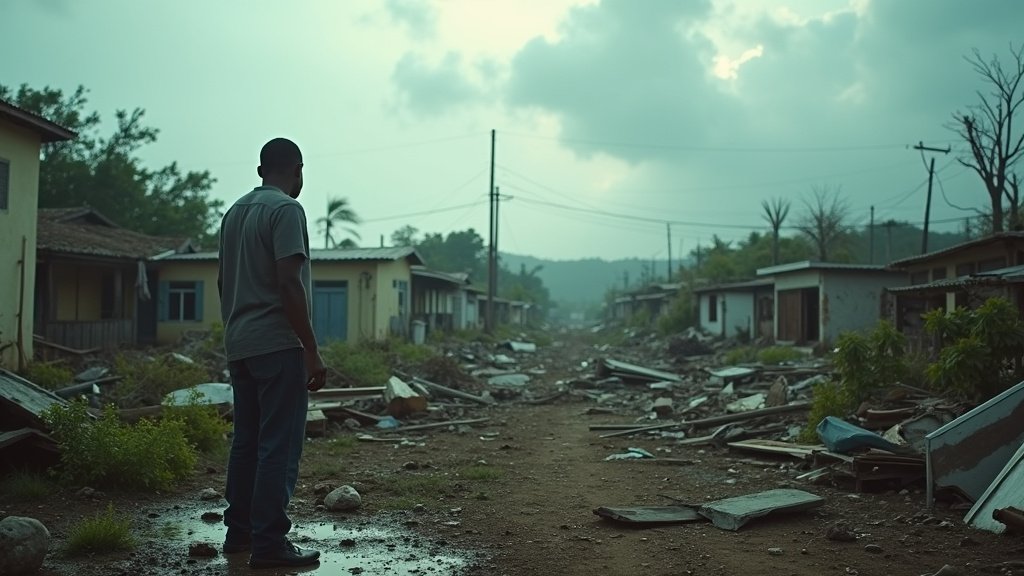
Kingston, Jamaica – The catastrophic impact of Hurricane Melissa continues to unfold across Jamaica, with authorities reporting a significant rise in the death toll and grappling with immense challenges in recovery and body identification. The Category 5 storm, one of the strongest Atlantic hurricanes on record, made landfall on October 28, 2025, unleashing widespread destruction and leaving a trail of devastation, particularly in the island’s western and southern parishes.
The Escalating Human Cost
As of mid-November 2025, official figures indicate that at least 45 lives have been lost in Jamaica due to Hurricane Melissa, with 15 individuals still missing. This grim tally is expected to climb further as authorities work to reach isolated communities and verify unconfirmed reports. The initial context of 28 discovered bodies has been surpassed, underscoring the severity of the storm’s impact. Prime Minister Andrew Holness has vowed that every victim will be accounted for, even if it necessitates the exhumation of bodies already buried, highlighting the government’s commitment to accurate reporting and closure for grieving families. This monumental task involves forensic teams working to identify victims and determine the cause of death, a process complicated by the extensive damage and decomposition exacerbated by the warm, humid climate.
Unprecedented Destruction and Economic Shock
Hurricane Melissa’s fury left an indelible mark on Jamaica, causing an estimated US$8.8 billion in physical damage, a figure equivalent to nearly 41% of the country’s entire GDP for 2024. Homes bore the brunt of the storm’s impact, accounting for 41% of the total damage, followed by infrastructure (33%), non-residential buildings (21%), and agriculture (5%). Roads and bridges were rendered impassable, with over 150 roads impacted island-wide, and landslides and fallen trees blocking critical access routes. Millions of tonnes of debris, including building materials, vegetation, and household waste, now litter affected areas, hindering relief efforts and the restoration of essential services. The agricultural sector, a vital part of the island’s economy and food security, suffered losses exceeding J$20 billion, threatening livelihoods and future food availability.
Challenges in Recovery and Relief Efforts
Recovery efforts are being hampered by the sheer scale of destruction, severe power and communication outages, and persistent flooding. Access to many communities, particularly in the hardest-hit parishes of St. Elizabeth and Westmoreland, remained severely limited for weeks, necessitating aerial support for aid delivery and casualty evacuation. The restoration of basic services, including electricity and water supply, is a slow and arduous process, with power companies working to restore service to over 60% of customers by mid-November. The Ministry of Health and Wellness, led by Dr. Christopher Tufton, has outlined a three-phase response program focusing on immediate relief, service re-establishment, and reconstruction, while also warning the public about heightened risks of water-borne and food-borne diseases due to compromised environmental conditions and infrastructure.
A Wider Caribbean Context
Hurricane Melissa’s devastating passage serves as a stark reminder of the vulnerability of the Caribbean region to increasingly intense weather events. The 2025 Atlantic hurricane season was predicted to be an active one, and Melissa proved to be a prime example of climate change-fueled extreme weather. The storm also inflicted significant damage and loss of life in Cuba and Haiti, underscoring the interconnected challenges faced by nations across the Caribbean. This major news event has overshadowed typical regional concerns, including those in the entertainment sector, as the focus shifts entirely to humanitarian aid and long-term recovery. The economic toll on Jamaica alone is staggering, necessitating significant international support and innovative financing models to rebuild lives and restore opportunity. The long road to recovery for Jamaica and its Caribbean neighbors will require sustained international cooperation and a renewed commitment to disaster resilience and climate action.