
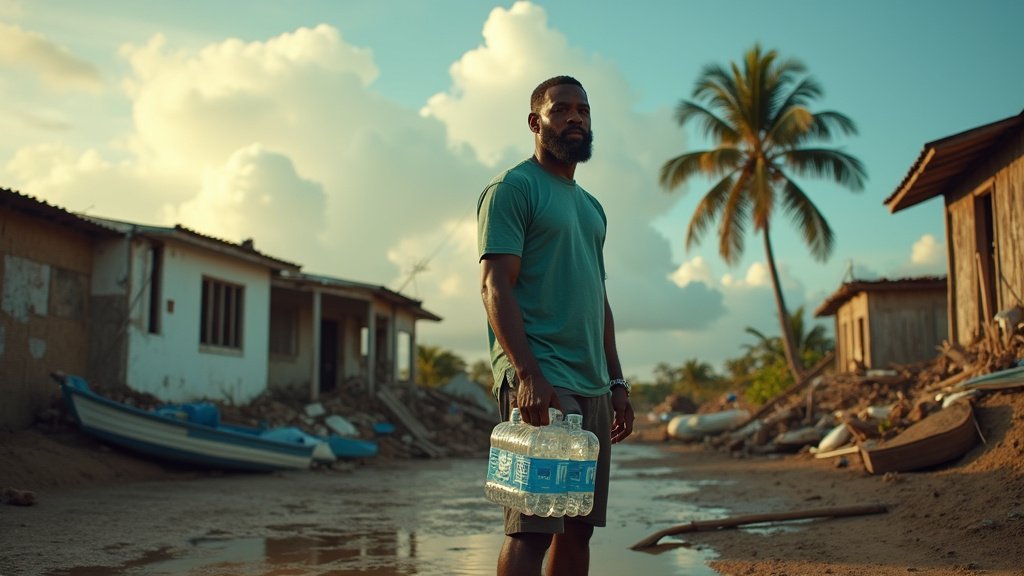
Jamaica is confronting a monumental recovery effort in the wake of Hurricane Melissa, a Category 5 storm that inflicted an unprecedented $8.8 billion in physical damage across the island. The catastrophic event, which made landfall on October 28, 2025, with winds nearing 185 miles per hour, has been declared the costliest natural disaster in Jamaica’s recorded history. The sheer force of Melissa has devastated communities, leading to significant loss of life, widespread displacement, and extensive destruction of homes, infrastructure, and agricultural lands. In response to this crisis, a multi-faceted relief operation is underway, bolstered significantly by a powerful wave of support from Jamaica’s vibrant entertainment industry and global allies.
The Devastation of Hurricane Melissa
Hurricane Melissa struck Jamaica with Category 5 fury, unleashing extreme winds, torrential rainfall, and life-threatening storm surges. The impact was immediate and widespread, particularly in the western and southern parishes, with St. Elizabeth, Westmoreland, and St. James bearing the brunt of the storm’s power. Preliminary assessments reveal that residential buildings suffered the most damage, accounting for 41% of the total estimated loss, followed closely by infrastructure at 33%. Non-residential buildings incurred 21% of the damage, while the agriculture sector, crucial to the island’s economy, sustained 5% in physical losses, including damage to livestock and farm facilities. The storm’s destructive path demolished or severely damaged over 122,000 dwellings, left thousands homeless, and led to a confirmed death toll of at least 45, with 15 individuals still missing. Weeks after landfall, many communities remained cut off due to impassable roads, hindering the delivery of essential aid and slowing the restoration of vital services like power and communication networks.
A Nation Mobilizes for Recovery
In the immediate aftermath, government agencies, international organizations, and non-governmental organizations (NGOs) launched extensive relief operations. The World Bank and the Inter-American Development Bank (IDB) have provided crucial damage assessments, estimating the total economic fallout at $8.8 billion, equivalent to 41% of Jamaica’s 2024 Gross Domestic Product (GDP). The United Nations, through agencies like the World Food Programme (WFP) and the Office for the Coordination of Humanitarian Affairs (OCHA), has been instrumental in providing food assistance, distributing hygiene kits, and supporting disease prevention efforts. Organizations such as Direct Relief, World Central Kitchen, Team Rubicon, and the United Way of Jamaica are on the ground, delivering essential supplies, operating field kitchens, clearing debris, repairing critical infrastructure, and implementing both immediate aid and long-term recovery strategies. The UK also deployed an Emergency Medical Team and naval support to aid in medical care and infrastructure repair.
Entertainment Stars Unite for Relief
Adding significant momentum to the recovery efforts is an outpouring of support from Jamaica’s influential entertainment community. Global music icons and local stars have mobilized their foundations, resources, and fan bases to provide critical assistance. Grammy Award-winning artist Shaggy has partnered with Orlando attorney Dan Newlin to fly in emergency supplies via private jets, delivering water, medicine, and other essentials to hard-hit areas. Dancehall superstar Sean Paul has pledged to match donations up to $50,000 through his Sean Paul Foundation, collaborating with Food For The Poor Jamaica. Beenie Man has deployed his Beenie Man Foundation Crisis Rescue Team, delivering supplies directly to hospitals and rural communities.
Further demonstrating the sector’s commitment, dancehall artist Bounty Killer, through his Bounty Foundation, and American music producer DJ Khaled, via his We The Best Foundation, jointly donated $8 million to four hospitals in western Jamaica, including Savanna-la-Mar Public General Hospital and Black River Hospital, prioritizing the health sector’s critical role in recovery. Other prominent figures like Spice, through her Grace Hamilton Foundation, have focused on assisting vulnerable groups, while Vybz Kartel has funded rebuilding projects and youth shelters through his foundation. Romeich Major, CEO of Romeich Entertainment, has been actively involved through his MADE Foundation, leading initiatives to clear debris and distribute essential supplies. The collective action extends to international stars, with Rihanna‘s Clara Lionel Foundation launching a fund to aid rebuilding efforts across the Caribbean. Winnie Harlow, alongside DJ Diplo, has personally delivered aid by boat, while artists like Konshens, Buju Banton, and Tyrese have organized aid drives, coordinated large-scale airlifts, and provided on-the-ground assistance.
A Long Road to Rebuilding
The scale of Hurricane Melissa’s devastation presents a long and challenging road to recovery for Jamaica. The economic impact is staggering, and the immediate focus remains on providing humanitarian aid, restoring essential services, and beginning the arduous process of rebuilding homes and infrastructure. The unified response, spanning governmental bodies, international aid organizations, and the significant contributions from the entertainment world, underscores Jamaica’s resilience and the deep sense of community that drives its recovery efforts. As the nation rebuilds, the continued involvement of its cultural ambassadors and global partners will be vital in restoring not just structures, but also hope and opportunity across the island.