
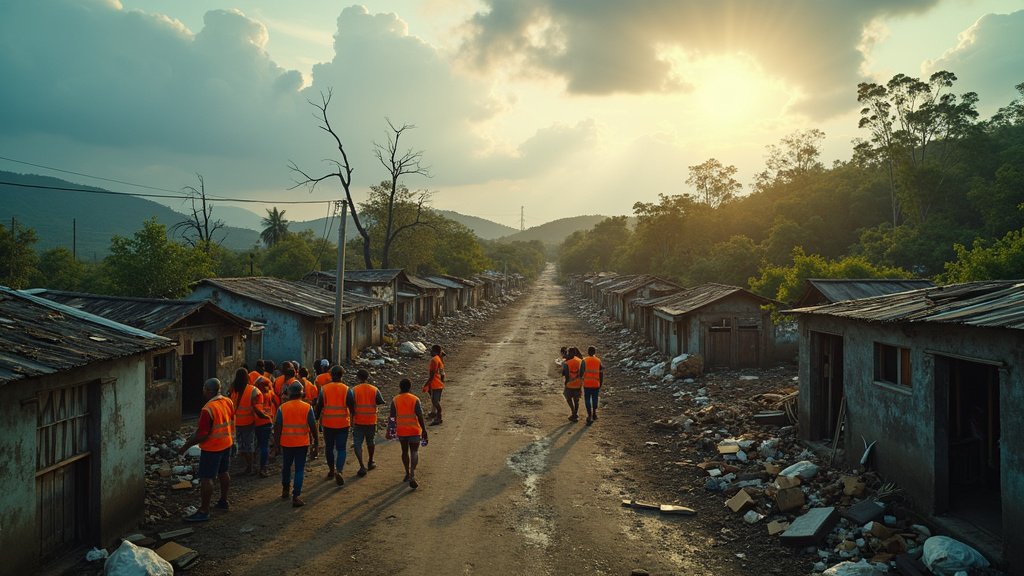
Jamaica is grappling with the monumental aftermath of Hurricane Melissa, a catastrophic Category 5 storm that made landfall on October 28, 2025, leaving a trail of widespread devastation and triggering a massive, multi-faceted mobilization of aid and recovery efforts across the island. The hurricane, the strongest ever recorded to hit Jamaica and one of the most intense Atlantic storms on record, inflicted an estimated US$8.8 billion in physical damage, equivalent to 41% of the nation’s 2024 GDP, according to preliminary assessments by the World Bank and the Inter-American Development Bank.
Unprecedented Fury and Widespread Destruction
Hurricane Melissa struck with sustained winds of 185 mph, bringing devastating storm surge and torrential rainfall. The southwestern parishes of St. Elizabeth, St. James, and Westmoreland bore the brunt of the storm, experiencing near-total destruction in some communities. Homes suffered the most significant damage at 41% of the total impact, followed by infrastructure at 33% and non-residential buildings at 21%. Thousands of structures were damaged or destroyed, leaving tens of thousands homeless and in urgent need of assistance. Tragically, at least 46 lives were lost in Jamaica due to the storm’s fury.
A Nation Mobilizes: Government and International Aid Pour In
In response to the scale of the disaster, the Jamaican government has moved swiftly to establish the National Reconstruction and Resilience Authority (NaRRA). This statutory body, with special powers to coordinate and fast-track rebuilding efforts, will oversee the extensive recovery operation and has immediate access to US$1.15 billion to commence its work.
The international community has responded with a significant wave of humanitarian aid. Trinidad and Tobago initiated a coordinated national relief effort, shipping eight containers of critical supplies and deploying Defence Force officers. The International Federation of Red Cross and Red Crescent Societies (IFRC) dispatched 64 tons of aid, including shelter kits and solar lamps, and launched an emergency appeal for millions in funding. Japan provided emergency relief goods, while the United States committed over US$22 million in assistance, including search-and-rescue teams and essential supplies.
The Chinese community in Jamaica has been actively involved, with businesses and the Chinese Benevolent Association (CBA) donating thousands of care packages containing food, toiletries, and clothing to affected areas. Samaritan’s Purse established an emergency field hospital in Black River to provide critical medical care, treating over 1,000 patients. The International Organization for Migration (IOM) and Airbnb.org are partnering to offer free emergency housing for displaced families and frontline responders.
Rebuilding Key Sectors Amid Health Warnings
The agricultural and fisheries sectors, vital to Jamaica’s economy and food security, suffered catastrophic blows. Preliminary assessments indicate over J$20 billion in agricultural losses, with near-total destruction of banana and plantain crops, significant damage to vegetables, and substantial losses to livestock. The fisheries sector faces billions in losses, with fishing vessels, aquaculture ponds, and processing facilities wiped out, threatening the livelihoods of thousands of artisanal fishers.
In the wake of widespread flooding, health officials have issued urgent advisories regarding waterborne diseases like leptospirosis and gastroenteritis. The Ministry of Health and Wellness has intensified surveillance and is working with organizations like WaterStep to ensure access to safe water and sanitation in affected communities.
The judicial system is also recovering, with the St. James Parish Court resuming full operations after disruptions caused by the storm.
A Path Forward: Resilience and Reconstruction
As Jamaica navigates this immense challenge, the spirit of resilience among its people is evident. The ongoing efforts underscore the critical need for robust disaster preparedness and coordinated reconstruction strategies in the Caribbean. The establishment of NaRRA signifies a commitment to building back better, focusing on climate-resilient infrastructure, safer housing, and the introduction of new economic opportunities in devastated areas. The recovery process will be long and arduous, but the solidarity shown by local communities and international partners offers a beacon of hope for rebuilding a stronger, more resilient Jamaica. This news serves as a stark reminder of the vulnerability of island nations to extreme weather events and the importance of global cooperation in the face of climate-induced disasters.