
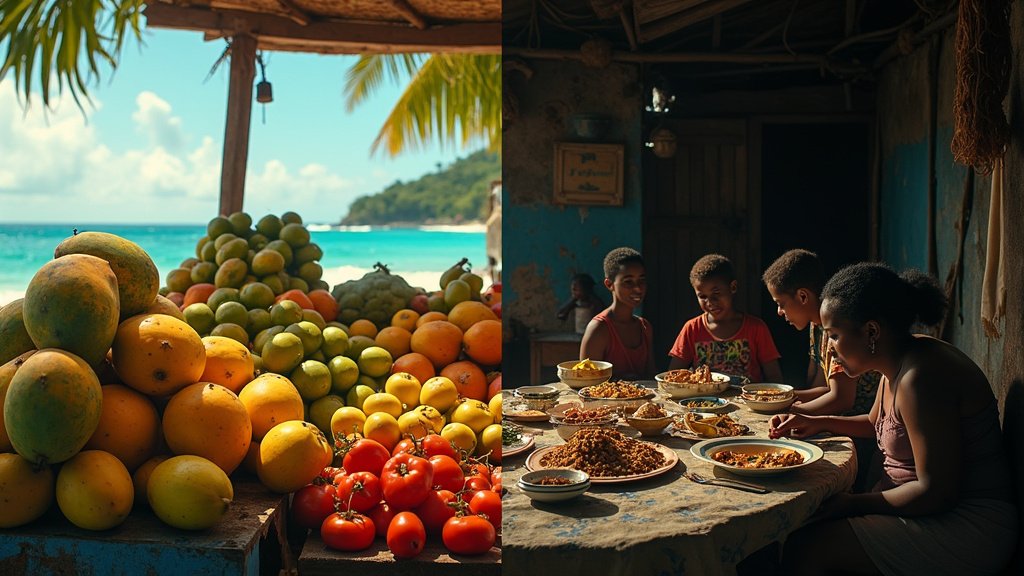
Despite Jamaica’s vibrant image as a tropical paradise and a rebounding tourism sector fueling economic growth, a significant portion of its population grapples with persistent food insecurity. Latest data reveals a troubling stagnation in the nation’s ability to ensure sufficient and affordable food for all its citizens, a challenge exacerbated by rising inflation and a deep reliance on imports.
The Lingering Shadow of Hunger
Recent findings from the Caribbean Food Security and Livelihoods Survey, released in July 2025, paint a stark picture for Jamaica and the wider English and Dutch-speaking Caribbean. Approximately 42% of the population endured moderate to severe food insecurity in June 2025, a figure that has remained unchanged since 2024. This plateau follows a brief recovery period and signifies a worrying persistence, with current levels still higher than those recorded between 2020 and 2022. Historical data from 2021-2023 indicated that a considerable 55.1% of Jamaicans experienced moderate to severe food insecurity, with 22.1% facing the most extreme forms. This translates into tangible daily struggles; in the week preceding the June 2025 survey, 30% of respondents, including Jamaicans, reported skipping meals or eating less than usual—a figure that has remained stable but is a dramatic increase from the 17% observed in 2021.
Inflation’s Grip on the Pantry
The primary driver behind this enduring food insecurity is the relentless pressure of inflation. Jamaica recorded the highest food price increase in the Caribbean, with a year-on-year inflation rate of 7.4% for food and non-alcoholic beverages in January 2025. While overall inflation for the period of January 2024 to January 2025 stood at 4.7%, the cost of essential food items disproportionately impacts household budgets. This surge erodes the purchasing power for imported staples like rice and flour, which constitute a significant portion of the Jamaican diet. Over 94% of regional respondents, including those in Jamaica, reported higher costs for food, fuel, and transport in the preceding quarter, forcing many to opt for cheaper alternatives or reduce portion sizes. This economic strain makes the goal of affording a healthy diet—already one of the most expensive in the region, costing an estimated USD 6.42 PPP dollars per person per day in 2022—increasingly elusive for many.
Disproportionate Burdens and Structural Vulnerabilities
The challenges of food insecurity are not evenly distributed across the population. Female-headed households, which comprise more than half of Jamaica’s population and a significant majority of those living below the poverty line, are particularly vulnerable. Women often face higher unemployment rates, lower incomes, and a greater burden of household responsibilities, making them more susceptible to the impacts of economic shocks and rising food prices. Beyond immediate economic pressures, Jamaica, like many nations in the Caribbean, remains susceptible to external shocks. Its heavy reliance on food imports, estimated at 80-90% for staples, leaves it exposed to global price fluctuations and supply chain disruptions. Furthermore, the increasing frequency and intensity of climate-related events, such as hurricanes, droughts, and floods, pose a continuous threat to local agricultural production and overall food system stability.
Cultivating Hope: Revitalization Efforts
In response to these pressing issues, the Jamaican government is undertaking significant initiatives. A cornerstone of this effort is the revitalization of the agricultural sector. The Ministry of Agriculture, Fisheries and Mining has earmarked $6 billion over the next six years to redevelop key agricultural research stations, including Bodles, Hounslow, Orange River, and Montpelier. This ambitious program aims to modernize facilities, enhance research capabilities, and bolster domestic production methodologies to meet world-class standards. The objective is to achieve local production of at least 70% of the nation’s food consumption. Partnerships are also being forged with the tourism sector to deepen linkages, encouraging hotels to source more local produce through programs like the Agri-Linkages Exchange (ALEX).
Complementing agricultural reforms is the implementation of the National School Nutrition Policy. Approved in May 2025 and set for rollout in September, this policy aims to ensure that over 500,000 students across all educational levels have access to safe and nutritious foods. It includes measures to limit the sale and marketing of sugary drinks and ultra-processed foods within school environments, mandates nutrition education, and aims to source 10% of produce for school meals from local farmers. These efforts are part of a broader National Food and Nutrition Security Policy that addresses food availability, access, utilization, and stability.
A Path Forward Amidst Challenges
While these interventions signal a commitment to addressing food insecurity, the path forward remains complex. The lingering effects of inflation, the inherent vulnerability of an import-dependent economy, and the undeniable impact of climate change present ongoing hurdles. The high cost of healthy diets and the shift towards less nutritious food options also contribute to a growing burden of non-communicable diseases. Sustained investment in agricultural research and development, alongside robust social protection programs and community-level engagement, will be crucial. As Jamaica navigates these challenges, the goal remains clear: to transform its tropical abundance into genuine food security for all its people, ensuring that the current news today offers hope for a more nourished future. For those seeking to explore Jamaican cuisine, understanding the local ingredients and their availability is key, and many traditional recipes can be adapted to incorporate more readily available, nutritious produce, contributing to both cultural heritage and food security.