
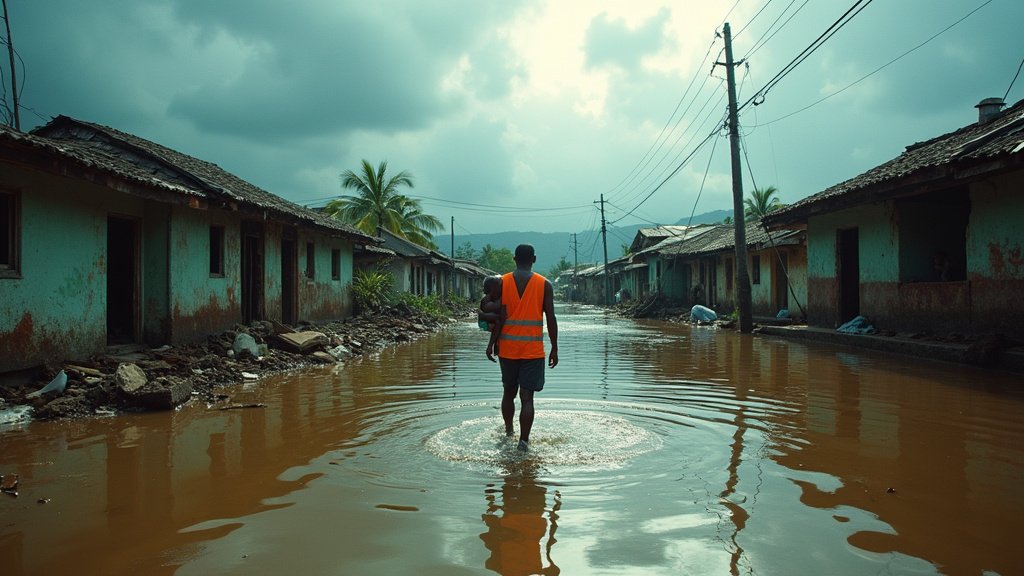
KINGSTON, JAMAICA – Hurricane Melissa, a catastrophic Category 5 storm and the most powerful of the 2025 Atlantic hurricane season, has left a trail of unprecedented destruction across Jamaica and the wider Caribbean, triggering a severe economic crisis and an immense humanitarian response.
The Unprecedented Fury of Melissa
Making landfall in southwestern Jamaica on October 28, 2025, Hurricane Melissa struck with sustained winds of 185 mph (295 km/h), tying records for the strongest Atlantic hurricane ever to make landfall. Its central pressure plummeted to an astonishing 892 millibars, ranking it among the most intense Atlantic storms on record and solidifying its status as the strongest tropical cyclone globally in 2025. Scientists have pointed to amplifying human-driven climate change and warming ocean temperatures as key factors that intensified Melissa’s destructive power. The storm’s rapid intensification, escalating from a tropical storm to a Category 5 hurricane in under 40 hours, caught many by surprise.
Jamaica Bears the Brunt of the Storm’s Wrath
Jamaica bore the brunt of Hurricane Melissa’s fury, experiencing catastrophic damage particularly in its western and southern parishes, including St. Elizabeth, Westmoreland, St. James, Trelawny, and Hanover. The storm’s eyewall, packing winds estimated at around 125 mph on the south coast, ripped roofs off buildings, toppled utility poles, and decimated crops and infrastructure. Widespread flooding and landslides transformed towns into waterlogged disaster zones, isolating communities and rendering roads impassable. At one point, nearly 75 percent of the island was without electricity, and telecommunications were severely disrupted, leaving vast areas cut off.
Official figures confirm at least 45 deaths in Jamaica, with 15 individuals still missing and the number potentially rising. Thousands of families have been displaced, and preliminary assessments indicate over 4.8 million tonnes of debris now litter western Jamaica, complicating recovery efforts.
Widespread Devastation Across the Caribbean
Beyond Jamaica, Hurricane Melissa inflicted severe damage across the Caribbean. Cuba was hit as a Category 3 hurricane, causing significant damage to homes, roads, and agricultural lands, leading to the evacuation of over 700,000 people. Haiti suffered catastrophic flooding and landslides, reporting the highest number of fatalities, with at least 23 to 43 deaths attributed to the storm. The Dominican Republic also experienced overflowing rivers and landslides. The Bahamas, Turks and Caicos Islands, and Bermuda also felt the storm’s destructive impact.
Economic and Infrastructure Toll: A Nation in Crisis
The economic aftermath for Jamaica is staggering. The World Bank and the Inter-American Development Bank estimate the physical damage at US$8.8 billion, an amount equivalent to 41 percent of Jamaica’s 2024 GDP, making it the costliest hurricane in the island’s recorded history. This figure, however, only represents physical damage, with broader economic losses, including business interruptions and lost productivity, expected to be substantially higher. Some analyses suggest total economic losses could exceed US$20 billion, potentially eclipsing Jamaica’s entire annual economic output. AccuWeather preliminary estimates place the total damage and economic losses between $48 billion and $52 billion.
Within Jamaica, residential buildings accounted for the largest portion of damage (41%), followed by infrastructure (33%), non-residential buildings (21%), and agriculture (5%). While physical damage to agriculture was lower, the sector faces severe economic repercussions due to disrupted supply chains and damaged croplands. The vital tourism sector came to a complete standstill, with all international airports temporarily closed.
Humanitarian Response and Child Protection Efforts
In the immediate aftermath, humanitarian efforts have focused on restoring essential services like water, sanitation, and healthcare, alongside providing shelter and child protection services. Organizations like UNICEF, the World Bank, the IDB, and numerous NGOs are on the ground, delivering critical supplies including food, water, medical equipment, hygiene kits, and temporary shelter materials.
UNICEF is leading child-focused initiatives, distributing over 47,000 kilograms of relief supplies, including learning materials and recreational kits to help restore stability for children. The agency is working to reunite separated children with their families, establish child-friendly spaces, and provide crucial psychosocial support. An estimated 280,000 children in Jamaica alone require humanitarian assistance. The disruption to schooling has affected nearly 477,000 children across the Caribbean, with UNICEF supporting temporary learning spaces and the rehabilitation of damaged schools.
The United States has committed nearly $12.6 million in additional aid to Jamaica and Haiti, bringing its total assistance to approximately $37 million. Royal Caribbean Group has also pledged over $1 million in aid and supplies to support recovery efforts in Jamaica and The Bahamas.
Widespread Travel Disruptions Paralysis
Hurricane Melissa’s impact extended to travel infrastructure across the Caribbean. At its peak, the storm led to 167 flight cancellations and 96 delays at regional airports and harbors, stranding thousands of travelers. Major airlines, including JetBlue, Copa, Southwest, Air Canada, and Caribbean Airlines, experienced significant disruptions. Airports such as Sangster International in Montego Bay (72 cancellations) and Norman Manley International in Kingston (35 cancellations, 28 delays) were severely affected, forcing airlines to implement flexible rebooking policies.
The Long Road to Recovery and Climate Resilience
As the region shifts from emergency response to long-term recovery, the challenges are immense. The extensive damage to infrastructure, coupled with ongoing flooding and the sheer scale of debris, means that rebuilding will be a protracted and costly process. The devastating impact of Hurricane Melissa underscores the escalating threat posed by climate change and the urgent need for increased resilience and adaptation strategies throughout the Caribbean and other vulnerable regions worldwide.