
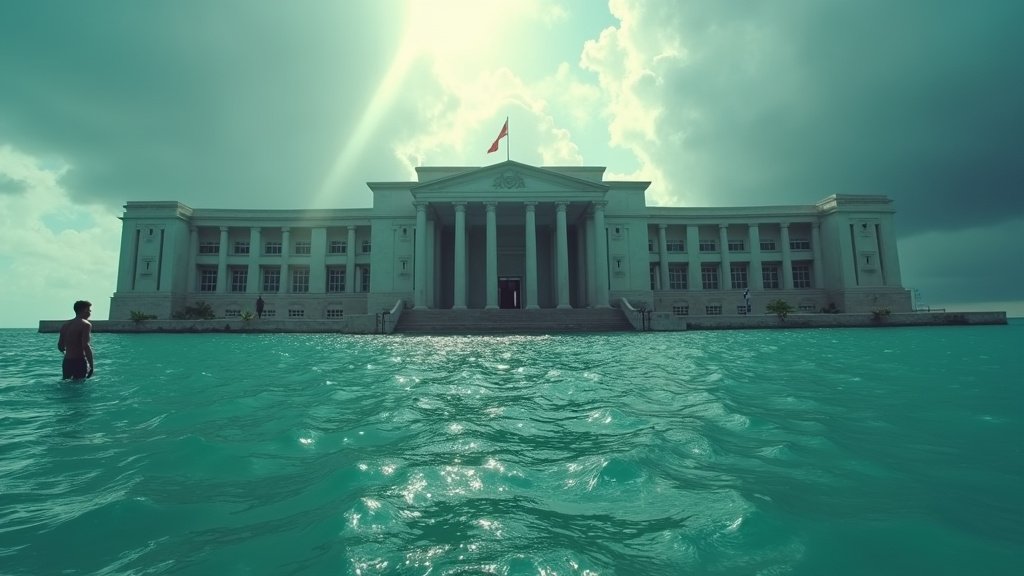
A Dutch court has ordered the government to act. This is big news. The ruling protects Bonaire residents. They live on a Caribbean island. Climate change poses a serious threat. The court found the government failed its duty. It did not protect Bonaire adequately. This is a landmark decision. It highlights climate justice.
Court Orders Dutch Government to Protect Bonaire
The Hague District Court issued a significant ruling. It orders the Dutch government to act. The order addresses climate change impacts. Bonaire residents will receive protection. The court found the government guilty. It failed to take timely measures. This failure amounts to discrimination. Bonaire is a Dutch Caribbean island. It has about 20,000 residents. They are Dutch citizens.
Bonaire’s Vulnerability to Climate Change
Bonaire is highly vulnerable. It sits in the Caribbean Sea. Its low-lying geography is a factor. Fragile ecosystems are also a concern. Rising sea levels are a major threat. Extreme rainfall causes flooding. Tropical storms are a problem too.
Conservative forecasts are alarming. They predict parts of Bonaire underwater by 2050. This is less than 30 years away. Coastal inundation risks are high. Even low-risk climate scenarios show this. Nature reserves are also at risk. Lac Bay and saliñas face permanent flooding.
The Legal Battle and Its Background
Greenpeace Netherlands led the case. Eight Bonaire residents joined them. They sued the Dutch government. The lawsuit began in early 2024. Greenpeace acted on behalf of Bonaire’s interests.
The court partially ruled for Greenpeace. It found the government breached human rights. Specifically, Article 8 and 14 of the ECHR. These protect private life and prohibit discrimination. The court criticized the government’s inaction. It said measures were delayed for Bonaire. They were also less organized.
There was no valid justification for this. Residents of Bonaire received less protection. This is a breach of anti-discrimination law. The government failed to protect its citizens. This includes impacts on their lifestyle and well-being.
Key Court Mandates for the Government
The court issued specific orders. The government must create a plan. This plan is for climate adaptation. It must address Bonaire’s specific needs. Full implementation must occur by 2030.
Furthermore, the government must act on emissions. It must set legally binding targets. These targets aim for emission reductions. They must align with the Paris Climate Agreement. The government has 18 months for this.
The court also found current climate policy insufficient. The Dutch Climate Act lacks intermediate targets. There is a low likelihood of meeting 2030 goals. The government failed to quantify its emission allowance.
Implications and Significance of the Ruling
This ruling is a world first. It’s the first time a European court ordered such action. Countries must protect all citizens from climate change. The ruling could set a precedent. Other legal challenges may follow.
The Dutch government reacted. They called the ruling a firm decision. The Ministry of Infrastructure and Water Management takes it seriously. However, the government can appeal the decision.
Greenpeace hailed it as a historic victory. They stated the current policy is inadequate. Incoming Prime Minister Jetten must address this. Bonaire residents expressed relief. One resident stated: “We are no longer second-class citizens”.
The case highlights a legal gap. The Dutch Caribbean lacks frameworks. It cannot implement Paris Agreement goals. While the European Netherlands has policies, the Caribbean parts are unprotected. This ruling helps bridge that gap. It stresses the need for concrete action. Funding and expertise are now crucial. This news impacts global discussions on climate justice. It shows the power of legal action. It brings climate news to the forefront.
Protecting the Caribbean Lifestyle
Climate change threatens Bonaire’s lifestyle. The island’s economy relies on tourism. Coral reefs are vital for this. They attract divers. Climate change damages these reefs. This affects tourist arrivals. It impacts Bonaire’s GDP significantly.
Adaptation measures are vital. They protect inhabitants’ well-being. Without timely planning, impacts could be serious. This ruling emphasizes the urgent need for action. It ensures the future of Bonaire’s lifestyle. It is a victory for the Caribbean region. It brings important climate news.