
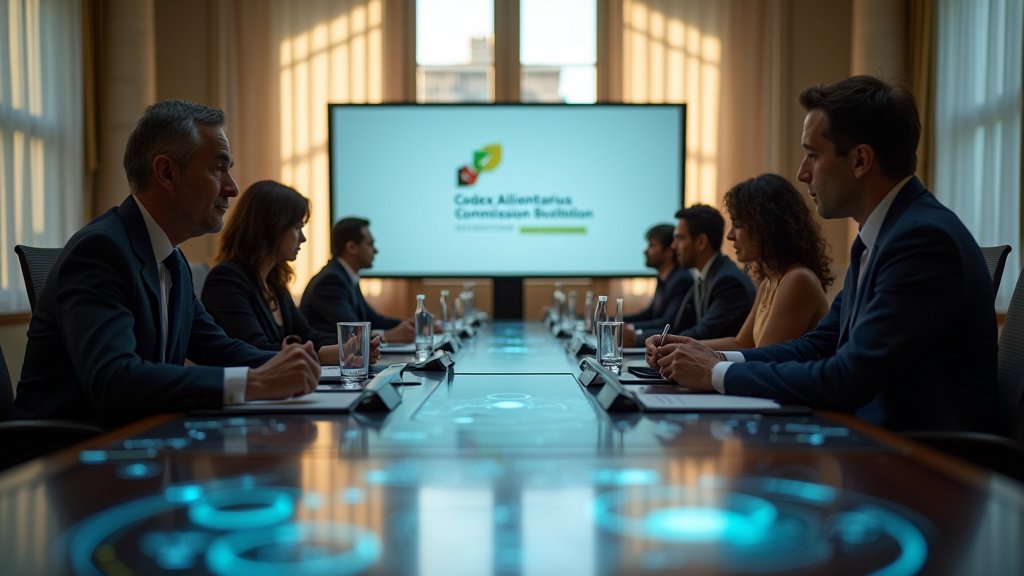
Rome, Italy – The Food and Agriculture Organization of the United Nations (FAO) and the World Health Organization (WHO) jointly concluded the 48th Session of the Codex Alimentarius Commission (CAC48) on November 14, 2025, marking a significant stride in global food safety and trade. Held at FAO headquarters from November 10-14, the Commission adopted a suite of new and revised international food standards, guidelines, and codes of practice, reinforcing its role as the principal global body for setting food safety and quality benchmarks. This pivotal session also saw the launch of “Ms FAO AI,” an innovative artificial intelligence tool designed to enhance internal organizational efficiency and inclusivity, reflecting FAO’s commitment to modernization.
The Cornerstone of Global Food Standards: The Codex Alimentarius Commission
Established in 1963, the Codex Alimentarius Commission, often referred to as the “Food Code,” has been instrumental in protecting consumer health and ensuring fair practices in international food trade for over six decades. Operating under a joint FAO/WHO Food Standards Programme, the Commission brings together 189 member countries and one member organization, the European Union, to develop consensus-based standards grounded in scientific evidence. The CAC48 session underscored the critical need for these harmonized standards in an increasingly globalized and complex food system, where food produced in one region can impact consumers worldwide.
Advancing Consumer Safety: Key Standards Adopted at CAC48
The 48th session saw the adoption of several crucial standards aimed at enhancing food safety and quality:
* First International Standard for Fresh Dates: After a decade of work, the Commission approved the inaugural international standard for fresh dates. This standard establishes uniform criteria for quality, safety, and labeling, which is expected to be a significant boon for date-producing and trading nations and facilitate global commerce.
* Maximum Levels for Lead in Spices and Herbs: New maximum contaminant levels (MLs) for lead were set for dried bark (cinnamon) at 2.5 mg/kg and for dried culinary herbs at 2.0 mg/kg. These limits have been incorporated into the General Standard for Contaminants and Toxins in Food and Feed (CXS 193-1995).
* Revision of the General Standard for Food Additives (GSFA): Over 500 food additive provisions were reviewed, with updates made to the use of various colors in different food categories. This includes the revocation of certain provisions and the adoption of new ones, ensuring additives remain safe and technologically justified.
* Updated Code of Practice for Aflatoxin in Peanuts: The Code of Practice for the Prevention and Reduction of Aflatoxin Contamination in Peanuts (CXC 55-2004) has been revised. The updated guidelines now encompass the entire supply chain, from pre-harvest stages through transport, storage, manufacturing, and roasting, and also include recommendations for feed derived from peanut by-products.
* Guidelines for Pesticide Residue Testing: New guidelines were adopted to monitor the purity and stability of reference materials used in pesticide residue analysis. These are designed to help laboratories maintain confidence in their testing results while reducing costs and minimizing waste.
* Regional Standard for Castilla Lulo: A regional standard for Castilla lulo (Naranjilla), a fruit native to Latin America, was adopted. This initiative is particularly relevant for the Caribbean and Latin American regions, setting global norms for quality, packaging, and contaminant limits, thereby fostering regional trade and supporting local lifestyle by promoting access to safe, quality produce.
These developments are part of ongoing efforts by the FAO and WHO to ensure that global food trade is underpinned by robust, science-based safety measures, which are vital news for consumers and businesses alike.
Embracing Innovation: “Ms FAO AI” Enhances Internal Operations
In line with its digitalization strategy, the FAO launched “Ms FAO AI,” its first Artificial Intelligence-powered HR avatar and virtual colleague [Initial Context, 16, 29, 31]. This multilingual tool, available 24/7, is designed to assist FAO employees worldwide with HR-related queries, from insurance and leave to learning and career development. Director-General QU Dongyu described Ms FAO AI not as a robot, but as a “companion,” emphasizing that this initiative reflects FAO’s willingness to learn, change, and lead by modernizing its internal systems. This internal application of AI aims to improve efficiency, reliability, and inclusivity within the organization, ultimately strengthening its capacity to serve member countries and communities and contributing to a healthier global food system.
Global Implications and Regional Impact
The standards adopted at CAC48 have far-reaching implications. They provide a critical framework for national regulatory authorities and food business operators to align their practices, thereby strengthening consumer protection and facilitating international trade. For developing countries, adherence to these international benchmarks is essential for accessing global markets and fostering economic growth.
The FAO’s extensive work with the Caribbean Community (CARICOM) demonstrates a long-standing commitment to improving food security, nutrition, and agriculture in the region. The adoption of regional standards, such as the one for Castilla Lulo, directly supports these efforts by establishing clear benchmarks that can enhance local food production, improve market access, and contribute to the well-being and lifestyle of the region’s population.
Looking Ahead: A Unified Approach to Food Safety
The 48th session of the Codex Alimentarius Commission concluded with a strong emphasis on collaboration, transparency, and science-based decision-making. The adopted standards and the introduction of “Ms FAO AI” highlight FAO’s forward-looking approach, adapting to contemporary challenges in food safety and internal operations. As global food systems continue to evolve, the Commission’s work remains indispensable in safeguarding public health, promoting fair trade, and ensuring a safe and nutritious food supply for all. This news signifies continued international cooperation towards a healthier global future.