
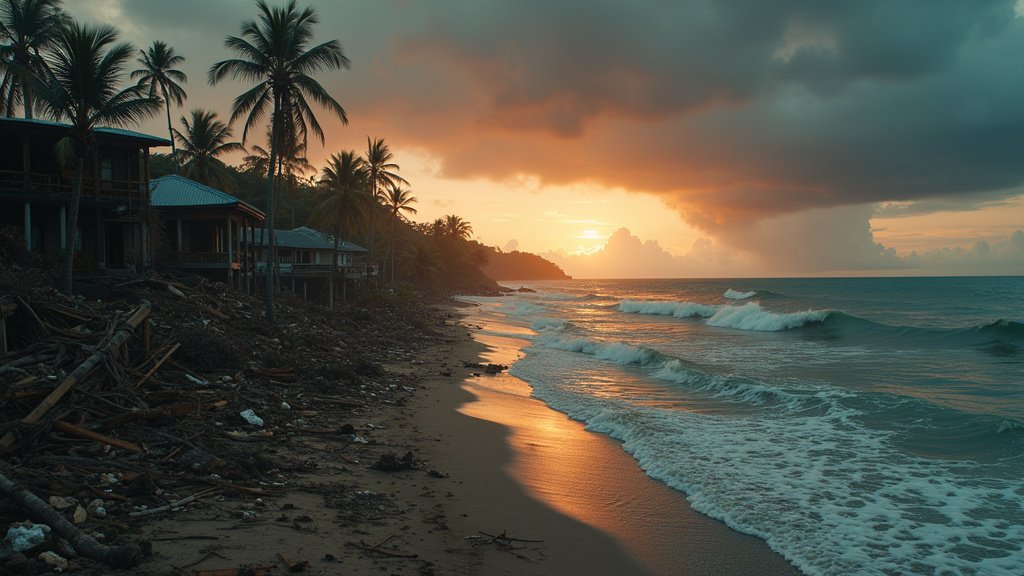
The Caribbean is grappling with the aftermath of Hurricane Melissa, a monstrous Category 5 storm that slammed into Jamaica with unprecedented force, leaving behind a trail of catastrophic destruction, loss of life, and widespread devastation. The hurricane, which formed on October 21, 2025, rapidly intensified into one of the strongest Atlantic storms on record before making landfall near New Hope, Westmoreland Parish, on October 28, 2025, at its peak intensity with sustained winds of 185 mph (295 km/h).
Genesis of a Monster Storm Fueled by Warming Oceans
Hurricane Melissa began as a tropical wave emerging from West Africa, eventually developing into Tropical Storm Melissa in the central Caribbean Sea on October 21. Fueled by exceptionally warm ocean waters—estimated to be 2 to 3 degrees Celsius above normal for the time of year and conditions made 500 to 900 times more likely by human-caused climate change—the storm underwent extreme rapid intensification. In a stunning display of meteorological ferocity, Melissa escalated from a tropical storm to a Category 5 hurricane in just days, reaching peak winds of 185 mph and a minimum central pressure of 892 mbar, tying records for the strongest Atlantic storm on landfall and marking it as the strongest tropical cyclone globally in 2025.
Catastrophic Landfall and Devastation in Jamaica
The impact on Jamaica was nothing short of catastrophic. Making landfall as a Category 5 hurricane, Melissa unleashed winds capable of obliterating structures and torrential rains that triggered life-threatening floods and landslides. The southern and western parishes, particularly Westmoreland and Saint Elizabeth, bore the brunt of the storm’s fury, experiencing near-total destruction. Prime Minister Andrew Holness declared Jamaica a “disaster area” on October 30, 2025, following widespread infrastructural damage and inundation.
At least 45 lives were confirmed lost, with nearly 1.6 million people affected by the storm’s passage, according to reports from November 12, 2025. Over 90,000 households were displaced, and more than 191,000 buildings sustained damage. Agricultural losses alone were estimated at J$20 billion (approximately US$124.5 million), severely impacting livelihoods and food security. Power outages affected up to 75% of the island at one point, and essential communication lines were severely disrupted, especially in the western regions.
Health Infrastructure Under Siege
The hurricane’s impact on Jamaica’s health infrastructure was profound. Roughly 75% of hospitals and clinics in the affected areas sustained major damage and were rendered inoperable, exacerbating the humanitarian crisis. Despite the widespread destruction, some facilities that had undergone resilience upgrades, as part of the ‘Smart Hospitals Initiative,’ were able to resume services sooner, highlighting the critical importance of disaster-proofing essential infrastructure. Recovery efforts have seen the gradual resumption of health services, supported by multi-agency deployments.
Ripple Effects Across the Wider Caribbean
Jamaica was not the only nation to suffer Melissa’s wrath. The storm’s outer bands brought heavy rains to Hispaniola, causing severe flash floods and landslides in Haiti, where at least 43 people died. Cuba was struck by a Category 3 hurricane, resulting in collapsed houses and blocked roads, prompting the evacuation of over 700,000 residents. The Dominican Republic also experienced flooding and landslides, with one reported death. The Bahamas and Turks and Caicos Islands faced localized flooding and power outages, while Bermuda experienced hurricane-force gusts.
Government Response and International Aid
In anticipation of the storm, the Jamaican government declared the entire island a “threatened area” under the Disaster Risk Management Act, empowering authorities to enact precautionary measures. Evacuation orders were issued for high-risk zones, and an emergency trade order was put in place to prevent price gouging on essential goods. In the aftermath, a multi-phase emergency plan was initiated, focusing on restoring infrastructure and clearing roads. International response efforts have been robust, with UN agencies, NGOs, and countries like the United States, the United Kingdom, and Canada providing critical aid, including food, water, medical supplies, and search and rescue teams. Samaritan’s Purse established an emergency field hospital in Black River, Jamaica, to fill the void left by damaged medical facilities.
Climate Change and Future Preparedness
The devastating intensity of Hurricane Melissa underscores the growing threat posed by climate change to the Caribbean region. Scientists note that warmer ocean temperatures are increasing the likelihood of rapid intensification, making storms more powerful and harder to predict. The long-term economic and social repercussions for Jamaica and the wider Caribbean are significant, with estimates suggesting that damage from natural disasters costs the country an annual average of two percent of its GDP. As recovery efforts continue, the focus is not only on rebuilding but also on enhancing resilience against future, potentially stronger, storms. The news of Melissa serves as a stark reminder of the vulnerability of island nations and the urgent need for global action on climate change, impacting the very lifestyle and future of these communities.
As communities begin the arduous process of rebuilding, the scale of the devastation wrought by Hurricane Melissa serves as a critical lesson in disaster preparedness and a somber reminder of the escalating climate crisis affecting the Caribbean and the world.