
Hurricane Melissa’s Fury Reshapes Jamaica: A Turning Point for Housing and Climate Resilience
The catastrophic impact of Hurricane Melissa, the strongest storm ever to make landfall in Jamaica, has irrevocably altered the island’s housing market and accelerated a critical reevaluation of its climate resilience strategies. The Category 5 hurricane, which struck on October 28, 2025, left a trail of devastation estimated at US$8.8 billion in physical damage, representing approximately 41% of Jamaica’s 2024 GDP. This colossal figure underscores the profound economic shockwaves that have rippled across the nation, impacting nearly every facet of its infrastructure and societal fabric.
Devastation and Economic Repercussions
Hurricane Melissa’s fury was unprecedented, with sustained winds of 185 mph and torrential rainfall causing widespread destruction. Official reports indicate that 46 lives were lost in Jamaica, with 15 people missing and 96 injured. The sheer scale of the disaster is evident in the staggering statistics: over 116,000 homes were damaged or destroyed, impacting an estimated 900,000 people. Beyond residential properties, critical infrastructure, including roads, bridges, utilities, and public facilities, suffered immense damage, with infrastructure losses alone estimated at US$2.9 billion. The agricultural sector, a vital component of Jamaica’s economy, also bore a significant blow, with preliminary losses exceeding J$20 billion (approximately US$124.5 million), exacerbating concerns about national food security and export revenue.
The economic fallout extends far beyond immediate physical repairs. The World Bank and the Inter-American Development Bank (IDB) have estimated that physical damage totals US$8.8 billion, but broader economic losses are expected to be even more significant. These include disruptions to tourism, a key foreign exchange earner, and the agricultural supply chain. The sheer magnitude of the damage, dwarfing the country’s readily available financial instruments, highlights Jamaica’s vulnerability and the immense challenge of reconstruction.
The Housing Market in Crisis: Collapse and Rekindled Demand
The immediate aftermath of Hurricane Melissa has plunged Jamaica’s housing market into an unprecedented crisis. With over 116,000 homes damaged or destroyed, the island has experienced a drastic collapse in housing supply. This severe deficit has predictably triggered a surge in rental demand as displaced families and workers seek immediate, albeit temporary, shelter. This imbalance is likely to reshape property values, with flood-prone coastal areas potentially seeing a decline in desirability and real estate values, while inland communities offering greater safety may experience increased demand.
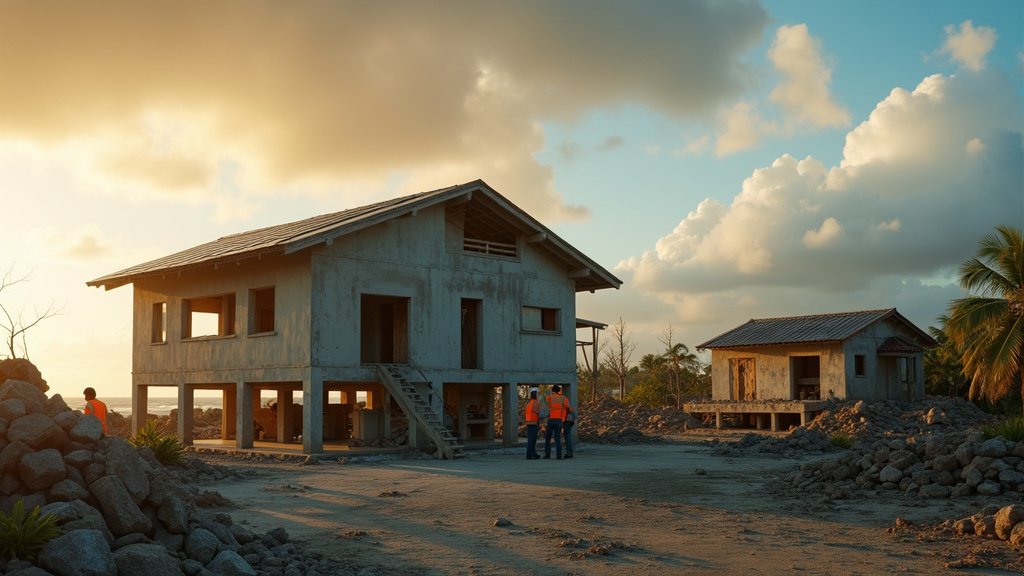
The storm has underscored the urgent need for climate-resilient housing solutions. Prospective residents and investors are increasingly prioritizing homes designed to withstand extreme weather. This paradigm shift favors properties with elevated lots, robust concrete roofs, and reliable off-grid energy systems, signaling a move towards a more secure and sustainable lifestyle. Developers who can integrate modern design with climate-smart engineering are poised to capture a growing market share.
Government and Institutional Response: Moratoriums and Support
In response to the widespread devastation, the Jamaican government, led by Prime Minister Dr. Andrew Holness, has implemented a series of measures aimed at alleviating the immediate burden and kickstarting recovery. The National Housing Trust (NHT) has provided a six-month automatic moratorium on mortgage payments for mortgagors in the hardest-hit parishes, a relief measure expected to benefit approximately 20,000 homeowners. Beyond this, the NHT is offering home improvement loans and special grants to assist with repairs.
A significant governmental initiative is the MP-driven Building Support Programme, which allocates substantial funds to constituencies in the most affected parishes, aiming to fast-track rebuilding efforts. These programs, while crucial, represent a fraction of the total reconstruction needs. The nation’s financial preparedness, including a US$150 million catastrophe bond issued with the World Bank, offers a vital layer of support but is insufficient to cover the full extent of the damage, underscoring the need for broader international assistance and innovative financial mechanisms.
A Turning Point for Climate Resilience in the Caribbean
Hurricane Melissa has served as a stark, real-time case study of Jamaica’s climate vulnerability and the escalating threat of extreme weather events amplified by climate change. Scientists have indicated that climate change likely increased Melissa’s wind speeds and rainfall intensity, making it a clear example of an event influenced by a warming planet. The storm’s impact on communities, disproportionately affecting those with fewer resources and historical marginalization, highlights the intertwined nature of climate justice and social equity.
The devastation prompts a fundamental reevaluation of how Jamaica and the wider Caribbean region build and plan for the future. The concept of “normal” has been redefined, with a growing emphasis on building back smarter, stronger, and fairer. This includes not only enhancing building codes and construction standards to withstand future storms but also considering the relocation of communities from high-risk coastal zones to safer inland areas. The long-term recovery will necessitate access to affordable building materials, fair insurance practices, and comprehensive technical guidance.
The Future of Housing and Real Estate in Jamaica
The path to recovery is arduous, but Hurricane Melissa may indeed mark a turning point for Jamaica’s housing market and its approach to climate resilience. The event has accelerated discussions about the need for stronger building codes, the integration of green building practices, and the development of seismic- and climate-resilient housing. The focus is shifting from merely rebuilding what was lost to constructing a more robust and sustainable future.
Developers and policymakers are now faced with the imperative to innovate, incorporating advanced engineering and materials to create homes capable of withstanding increasingly severe weather. The concept of homeownership itself is being redefined, with climate resilience moving from an afterthought to a primary consideration. This profound transformation, born from immense tragedy, offers an opportunity for Jamaica to emerge as a leader in climate adaptation and resilient development within the Caribbean and beyond. The news of the storm’s aftermath serves as a global reminder of the urgent need for comprehensive climate action and investment in disaster preparedness.