
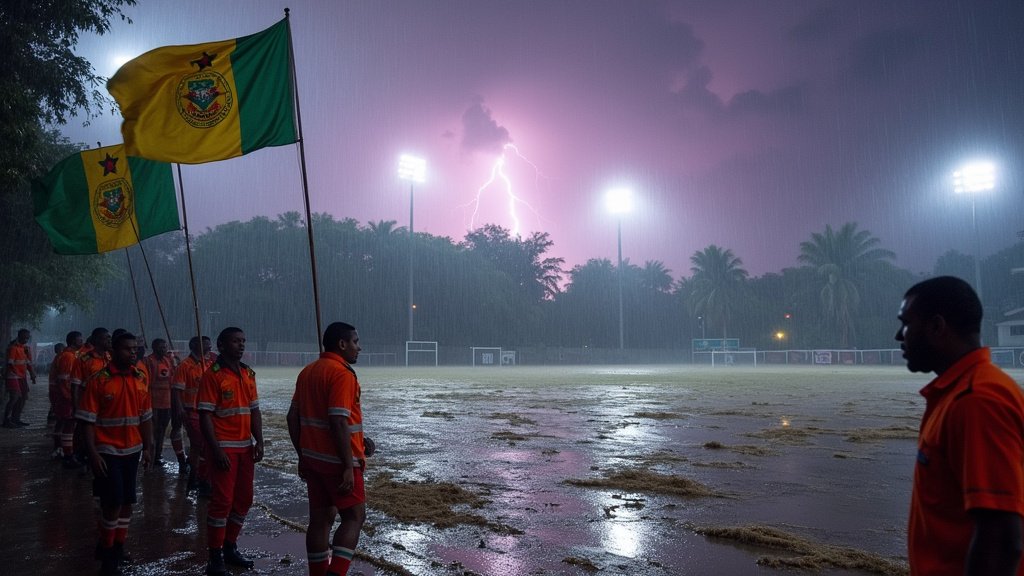
The 2025 Concacaf Caribbean Cup, a premier regional club football competition, has experienced significant disruptions to its crucial playoff schedule due to the formidable impact of Hurricane Melissa. Concacaf, the confederation overseeing the tournament, has announced a series of postponements and reschedulings for key semi-final fixtures, prioritizing the safety and well-being of all participants amidst the severe weather threat. This significant development in Caribbean sports news highlights the region’s vulnerability to natural disasters and Concacaf’s commitment to managing such crises.
Hurricane Melissa’s Destructive Path
Hurricane Melissa, which rapidly intensified into a catastrophic Category 5 storm, became one of the most powerful Atlantic hurricanes on record for 2025. It made landfall in Jamaica on October 28, unleashing devastating winds exceeding 185 mph and causing widespread destruction. The storm’s path left a trail of devastation across multiple Caribbean islands, including Jamaica, Cuba, Haiti, and the Dominican Republic, resulting in extensive flooding, landslides, significant infrastructure damage, and tragic loss of life. Authorities reported widespread power outages, affecting millions and displacing a substantial number of residents across the affected nations.
Concacaf’s Proactive Response to Weather Threats
As Hurricane Melissa barreled towards the Caribbean, Concacaf acted swiftly to ensure the safety of players, officials, and fans. The confederation announced on October 23 and 24, 2025, that critical playoff matches would be rescheduled. These decisions were made in close consultation with local authorities and the participating clubs, underscoring a commitment to robust safety and security protocols that are integral to the organization’s operations.
Rescheduled Fixtures and Impacted Teams
Two pivotal semi-final series within the 2025 Concacaf Caribbean Cup were directly impacted by the impending and eventual landfall of Hurricane Melissa. The second leg of the playoff between Jamaica’s Mount Pleasant FA and Trinidad & Tobago’s Defence Force FC, originally slated for Thursday, October 30, was postponed. It was subsequently rescheduled to Wednesday, November 5, allowing the tournament to proceed once conditions were deemed safe.
Similarly, the two-legged semi-final series featuring O&M FC and Cibao FC faced schedule alterations. The first leg, initially set for October 23, was moved to Thursday, October 30. The return leg, which was originally scheduled for October 30, was rescheduled to Thursday, November 6. These adjustments ensured that the safety of those involved in the matches in the Dominican Republic was not compromised by the severe weather.
The Stakes in the Caribbean Cup
The Concacaf Caribbean Cup is a vital competition for Caribbean club football, serving not only as a platform for regional supremacy but also as a crucial pathway to the prestigious 2026 Concacaf Champions Cup. The champion of the Caribbean Cup earns a direct bye to the Round of 16 of the Champions Cup, with other top finishers also securing berths. Therefore, any disruption to the playoff schedule carries significant weight for the teams vying for these coveted international spots.
Navigating a Season of Challenges
The rescheduling of these high-stakes matches underscores the realities of hosting major sporting events in the Caribbean, a region frequently susceptible to tropical weather systems. Concacaf’s proactive stance in adjusting the calendar demonstrates its dedication to maintaining the integrity of its competitions while upholding the highest standards of safety. The organization’s Safety and Security Guidelines are comprehensive, outlining procedures for managing various interruptions, including those caused by adverse weather conditions, ensuring a structured approach to unprecedented events.
As the region recovers from the devastation of Hurricane Melissa, the football community looks to the rescheduled matches to bring a measure of normalcy and sporting excitement back to the islands. The resilience shown by the affected communities and the swift adaptation by sporting bodies like Concacaf are testaments to the enduring spirit of the Caribbean.