
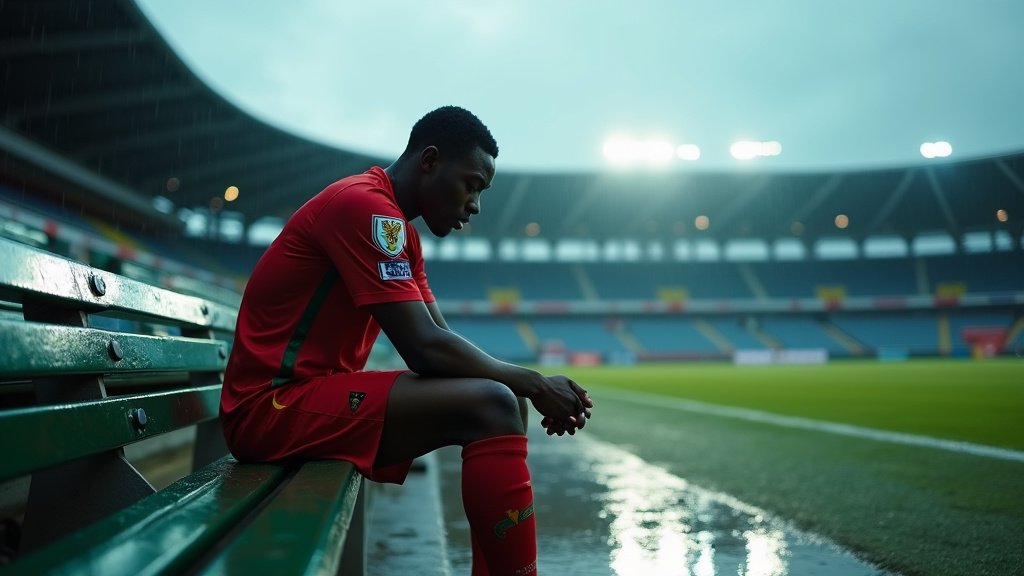
Trinidad and Tobago’s quest for the 2026 FIFA World Cup has ended. The Soca Warriors failed to qualify for the tournament. Their final group match ended in a 1-1 draw against Jamaica. This result sealed their fate. The team finished third in Group B. They accumulated only 7 points from six games. This outcome brought significant disappointment to the nation.
Key Reasons for Failure
Several factors contributed to this qualification failure. A major issue was missed scoring chances in winnable matches. The team lacked a cutting edge at critical times. Striker Levi Garcia, a key player, struggled to adapt to the number nine position. He often played out wide, which limited his goal-scoring impact early on.
Long-standing governance problems plagued the Trinidad and Tobago Football Association (TTFA). The association faced significant debt and instability. This affected long-term planning for the national team. Issues like financial mismanagement and a lack of transparency persisted. Such instability undermined efforts to build a strong team.
Tactical consistency also proved elusive. Coaches Angus Eve and Dwight Yorke brought different ideas. Eve provided stability but highlighted defensive frailties. Yorke introduced better tactics and home performances. However, the team only managed one win in their six qualifying matches.
The squad itself was still developing its identity. They relied heavily on young players finding their form. Coaching changes and player development pathways lacked continuity.
Furthermore, the team’s marketing efforts lagged behind. Outdated communication methods failed to engage fans effectively. This hindered the creation of strong emotional connections and national pride. These are vital for a thriving football culture.
The Path Forward
Significant changes are needed for future success. Tactical improvements must focus on attacker development. Dedicated finishing programs are essential. A clear, consistent playing philosophy should guide all national teams. Improving defensive solidity and late-game decision-making is also paramount.
Sports science and physical conditioning require investment. Better injury prevention and load management are crucial. The team must benchmark its physical capabilities against top CONCACAF opponents.
Player development pathways need strengthening. Continuity in coaching staff is important, particularly under Dwight Yorke. A unified coaching curriculum for all levels of T&T football is necessary. Better links between school football (SSFL) and the national team are vital.
Administrative reforms are critical for the TTFA. Transparent financial management and increased investment are essential. A dedicated high-performance unit for analysis, scouting, and sports science would greatly benefit the program. Better coordination between the domestic league (TTPFL) and the national team on scheduling is also needed.
Building regional competitiveness is key. Tournaments like the Gold Cup and Nations League should serve as preparation for World Cup cycles. Setting clear, measurable goals for teams is important.
Modernizing marketing is also a priority. Utilizing platforms like TikTok and Instagram can reach younger fans. A data-driven digital strategy can foster deeper fan engagement and national pride. The TTFA must also stabilize its finances and develop robust grassroots, youth, and women’s football programs.
A New Era for Caribbean Sports
Trinidad and Tobago’s football journey continues. The nation has a history of success, including qualifying for the 2006 World Cup. However, the current landscape demands adaptation. Other Caribbean nations are achieving historic results. Curaçao’s qualification is a testament to this shift.
To reclaim its status, Trinidad and Tobago must overhaul its football administration. This involves improving league structure and financial health. The focus must shift from short-term results to long-term structural development. These comprehensive changes are essential for the future of sports in Trinidad and Tobago.