
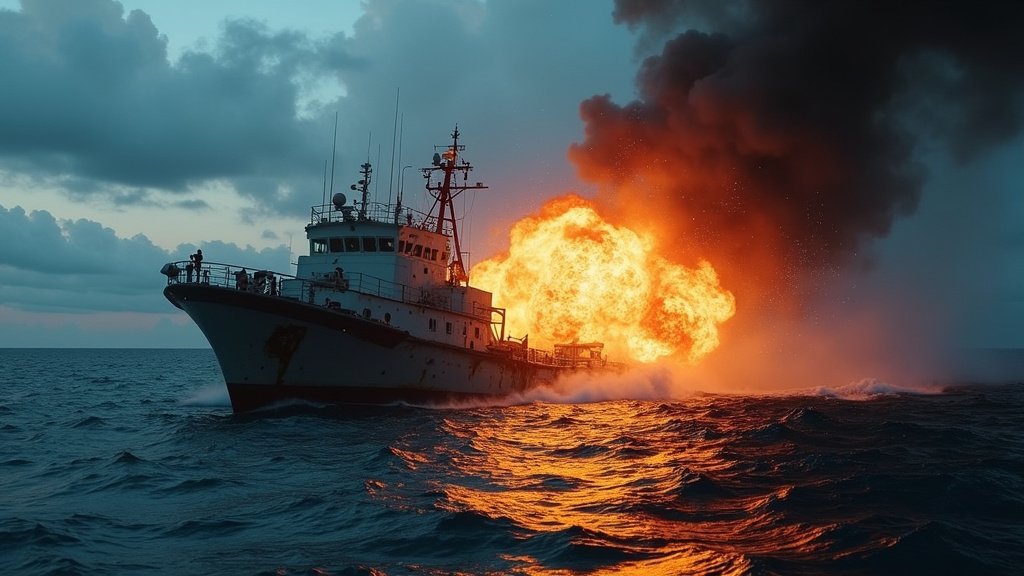
The U.S. military announced a strike. It hit a suspected drug-smuggling boat. This incident occurred in the Caribbean Sea. Three individuals died in the attack. US Southern Command confirmed the action. The strike happened on Monday, February 23, 2026.
Details of the Strike
U.S. Southern Command (SOUTHCOM) stated the vessel was operating on known smuggling routes. Intelligence confirmed its narco-trafficking activity. The command identified the deceased as “male narco-terrorists”. No U.S. service members were harmed. SOUTHCOM released video footage of the strike. It showed the small boat exploding.
Operation Southern Spear
This action is part of a larger campaign. It’s called Operation Southern Spear. The U.S. launched this operation in September 2025. It targets alleged traffickers in maritime operations. This reflects an intensified strategy. Military action against drug traffickers is a key component. This aligns with past National Defense Strategies.
Targeting “Narco-Terrorists”
The U.S. military designated the targeted vessel’s operators. They were linked to “Designated Terrorist Organizations”. Groups like Tren de Aragua and the ELN have been named. The Trump administration has formally labeled some cartels as terrorist groups. This designation is unusual. It typically applies to groups with political aims, not just financial ones.
Broader Campaign and Context
This strike is not an isolated event. It is one of many in a sustained campaign. Since September 2025, over 150 people have died in similar strikes. President Trump has justified these actions. He cited the need to stem drug flow into the U.S.. He also described the situation as “armed conflict” with cartels.
Technology and Interdiction
Advanced technology plays a vital role. Surveillance systems track vessels in the Caribbean. This includes radar and aerial reconnaissance. The U.S. military uses naval ships and aircraft for interdiction. These operations aim to disrupt criminal networks. They also seek to seize illicit cargo. The fight against drug smuggling relies on this technology.
Criticisms and Concerns
The campaign has drawn significant criticism. Critics question the legality of using military force against suspected criminals. International law experts argue for a law enforcement approach. They state civilians are not lawful targets for military strikes. Some question the evidence provided by the administration. Additionally, many fatal U.S. drug overdoses involve fentanyl. This drug is often trafficked overland from Mexico. This raises questions about the sole focus on maritime interdiction.
Ongoing Conflict
The U.S. maintains its strategy is necessary. It aims to disrupt drug flows and protect national security. The Caribbean remains a key transit zone for smugglers. The operations are part of a larger effort against transnational crime. This ongoing conflict highlights the complex challenges of combating illicit trade. News of these strikes underscores the persistent threat. The fight against drug trafficking continues actively. It requires sustained dedication and adaptation.