
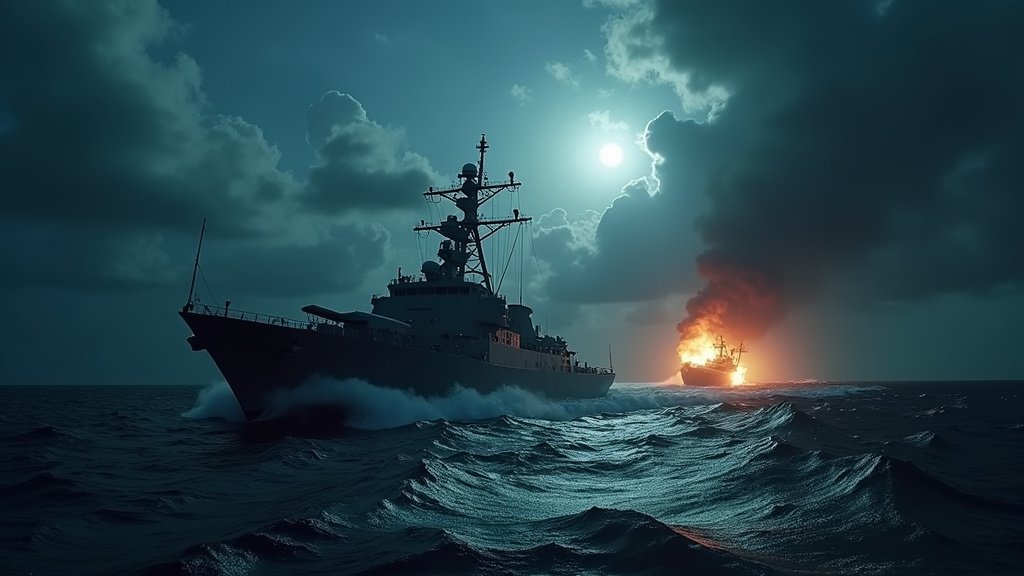
The United States military has conducted precision strikes against suspected drug-carrying vessels departing from Venezuela, President Donald Trump announced on September 2, 2025. These operations, part of a broader escalation of U.S. efforts to combat transnational drug trafficking, have resulted in multiple fatalities and significantly altered the U.S. approach to maritime interdiction in the Caribbean and beyond.
Operation Southern Spear: A New Era of Maritime Interdiction
The initial strike, announced by President Trump, targeted a vessel allegedly operated by the Tren de Aragua gang, a notorious transnational criminal organization originating from Venezuela. The operation, which occurred in international waters, resulted in the deaths of 11 individuals aboard the vessel, who were reportedly transporting illegal narcotics destined for the United States. Secretary of State Marco Rubio confirmed the strike, identifying the vessel as being operated by a designated narco-terrorist organization and emphasizing that such actions were necessary to combat groups flooding the U.S. with drugs and destabilizing the region. This event marked a significant shift from traditional law enforcement methods, such as those employed by the U.S. Coast Guard, to a more aggressive military-led strategy.
Background and Escalation
The intensified military campaign, reportedly dubbed “Operation Southern Spear,” began in mid-August 2025 with the deployment of U.S. Navy warships and personnel to the Caribbean. This buildup aimed to combat drug cartels that President Trump has blamed for trafficking illicit substances into the U.S. and fueling violence in American cities. By mid-November 2025, there had been at least 21 strikes on 22 vessels across the Caribbean Sea and the Eastern Pacific Ocean, resulting in the deaths of at least 83 individuals. These actions have been justified by the administration as a necessary escalation to stem the flow of drugs, with President Trump asserting that the U.S. is in an “armed conflict” with drug cartels.
Key Players and Context
The Tren de Aragua gang has become a focal point in the U.S. counternarcotics strategy. This organization, originating from a Venezuelan prison, has expanded its operations across Latin America and into the United States, engaging in activities ranging from human trafficking to drug smuggling. The U.S. Department of the Treasury sanctioned Tren de Aragua as a “transnational criminal organization” in July 2024, highlighting the severity of its threat. Secretary of State Marco Rubio has been a vocal proponent of the new strategy, stating that interdictions alone are insufficient and that the U.S. must deter these operations by force.
Implications and Criticisms
The shift to military strikes has drawn scrutiny and criticism. Legal experts have raised concerns about the legality of these strikes, with some deeming them unlawful, extrajudicial killings that violate international law and humanitarian principles. Venezuela has insisted that some of the targeted vessels were carrying fishermen, not drug smugglers. Furthermore, the effectiveness and proportionality of these operations have been debated, with some experts suggesting that traditional law enforcement methods, when adequately resourced, could be more sustainable and legal.
The Role of Technology
Modern technology plays an increasingly critical role in maritime drug interdiction efforts. Advanced tools such as satellite surveillance, artificial intelligence (AI)-powered analytics, and unmanned aerial vehicles (UAVs) enhance maritime domain awareness, enabling real-time monitoring and predictive analysis to identify high-risk vessels and trafficking routes. While these technologies offer significant advantages in surveillance and detection, their implementation faces challenges, including high costs, operational complexities, and the continuous adaptation of traffickers to evade detection. The U.S. military’s use of precision strikes, reportedly supported by intelligence and surveillance technology, represents an application of these advancements in a more aggressive counternarcotics posture.
The heightened military posture in the Caribbean and the Pacific, coupled with statements from U.S. officials, indicates a determined effort by the Trump administration to confront transnational criminal organizations engaged in drug trafficking. This evolving news landscape underscores the complex challenges in combating illicit narcotics, balancing security objectives with legal and humanitarian considerations, and leveraging advanced technology in the ongoing “war on drugs”.