
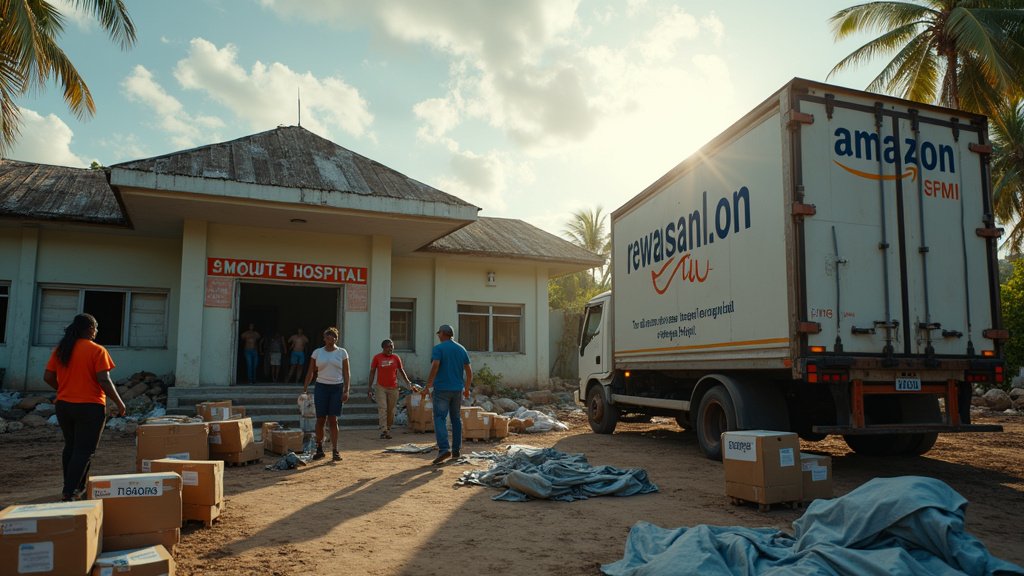
When Hurricane Melissa, a monstrous Category 5 storm, made landfall in Jamaica on October 28, 2025, it unleashed unprecedented devastation across the Caribbean island. As the strongest hurricane to ever hit Jamaica and one of the most powerful Atlantic storms on record, Melissa left a catastrophic trail of destruction, impacting nearly every facet of life for its inhabitants. In the wake of this immense crisis, Amazon has stepped forward with a significant aid initiative, deploying cutting-edge disaster relief technology and essential supplies to support the island’s recovery efforts.
The Fury of Hurricane Melissa
Hurricane Melissa intensified with astonishing speed, transforming from a tropical storm into a Category 5 behemoth in just a few days. Its arrival on Jamaica’s shores brought with it life-threatening winds of up to 185 mph, torrential rains, devastating storm surges, and widespread flooding. The impact was immediate and profound, with widespread power outages affecting hundreds of thousands, and communication networks collapsing in many western parishes.
The storm inflicted catastrophic damage on critical infrastructure, tearing through homes, hospitals, schools, and vital public buildings. Estimates suggest that as many as 76 percent of buildings in storm-impacted areas suffered damage, with entire towns in parishes like St. Elizabeth and Westmoreland being decimated. The sheer volume of debris—estimated at over 4.8 million tonnes—further complicated access to affected areas, hindering rescue and relief operations. Tragically, the hurricane claimed dozens of lives, left hundreds injured, and displaced over 30,000 households, plunging many communities into crisis. The economic toll is staggering, with preliminary damage assessments reaching an estimated $8.8 billion USD, equivalent to nearly half of Jamaica’s annual GDP, making Melissa the costliest natural disaster in the country’s recorded history.
Amazon’s Swift Response and Technological Prowess
Recognizing the urgent need for support, Amazon’s Disaster Relief team activated its global network, notably its hub near Atlanta, Georgia. This facility, one of 15 worldwide, is strategically positioned to rapidly deploy essential supplies to disaster-stricken regions. In a significant move, Amazon dispatched over 150,000 emergency supplies, including tarps, generators, water filters, and hygiene kits, to aid the affected communities in Jamaica.
A key highlight of Amazon’s response is the deployment of its innovative portable technology solutions. This initiative marked the first time the company has delivered its advanced disaster relief technology outside of the United States. The shipment included 2,500 pounds of solar-fueled batteries and satellite-powered Wi-Fi connectors. These vital resources were specifically designated to power and connect critical facilities such as hospitals, police stations, and emergency operations centers that were crippled by widespread power outages.
Powering Recovery and Sustaining Communities
The donation of solar batteries and satellite Wi-Fi is crucial for restoring essential services. With power infrastructure facing months of repair, these technologies provide immediate, sustainable solutions for life-saving operations. Hospitals can resume critical care, police stations can maintain communication, and emergency response teams can better coordinate their efforts in areas left in darkness and isolation. Amazon also provided thousands of solar lights and power banks, offering a glimmer of hope and essential charging capabilities for devices in communities struggling without electricity.
Beyond technology, Amazon addressed the fundamental need for sustenance by donating over 67,000 shelf-stable food items, such as tuna, green beans, and milk, for meal boxes. Furthermore, the company partnered with Operation BBQ Relief, donating crucial warehouse space near Tampa, Florida. This enabled the nonprofit to prepare and dispatch over 228,000 meals to Jamaica, directly combating the hunger faced by displaced families.
A Network of Support for the Caribbean Community
Amazon’s robust response is amplified by its collaboration with numerous nonprofit organizations and UN agencies. Partnerships with groups like Global Empowerment Mission, Operation BBQ Relief, United Way Jamaica, Project HOPE, and Direct Relief are essential for ensuring that aid reaches the most vulnerable populations across the island. These organizations play a critical role in assessing needs on the ground, distributing supplies, and providing specialized assistance, tailoring efforts to the specific requirements of each impacted community.
The recovery effort in Jamaica is a testament to the power of global collaboration. Amazon’s contribution highlights its commitment to humanitarian aid, leveraging its extensive logistics network and technological expertise to support disaster-stricken regions beyond its domestic borders. The company’s role extends beyond mere donations, serving as a technology advisor to help restore power and internet connectivity, and demonstrating a deep understanding of the multifaceted needs during a crisis.
The Road Ahead
While Amazon’s timely intervention provides critical support, the scale of Hurricane Melissa’s destruction underscores the immense challenge Jamaica faces in its recovery. The rebuilding process for infrastructure, homes, and livelihoods will be a long and arduous journey for the resilient Caribbean nation. The stories of survival and resilience emerging from affected communities highlight both the devastating impact and the enduring spirit of the Jamaican people. Amazon’s role, particularly its pioneering deployment of advanced relief technology, represents a significant step in providing immediate relief and fostering long-term recovery in the community and beyond.