
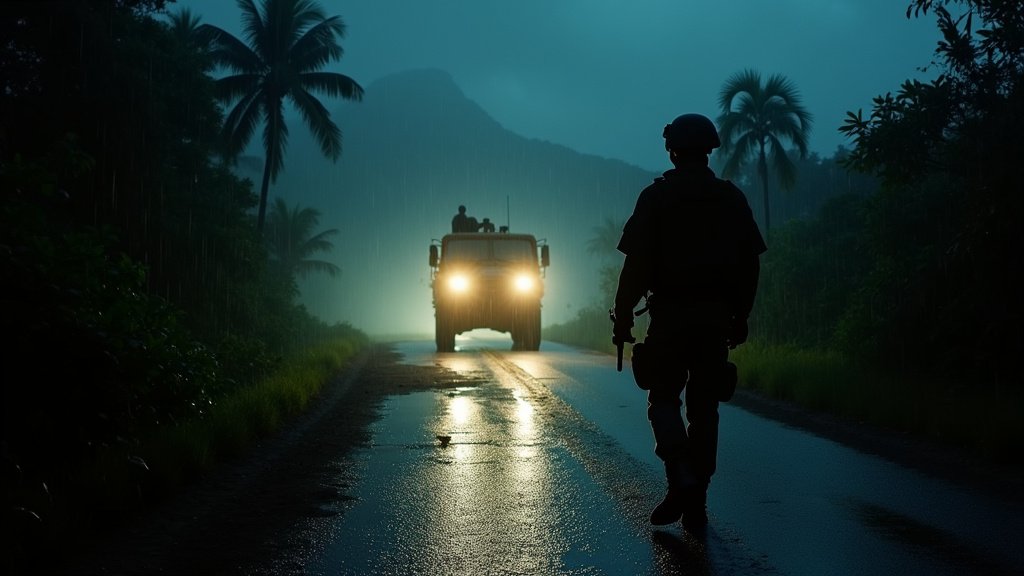
US Signals Impending Land Strikes on Venezuelan Drug Traffickers Amid Tensions
President Donald Trump announced a new phase of action. The US will soon target Venezuelan drug traffickers on land. This statement escalates existing tensions. It follows months of maritime operations. These actions have drawn international scrutiny. The news emerged today. It casts a shadow over the Caribbean region.
Trump’s Land Action Threat
Trump spoke to US military members. He did this via virtual address. He stated action would begin “very soon.” Sea-based efforts are reportedly 85% successful. However, traffickers are shifting tactics. They are avoiding sea deliveries. Therefore, land operations are now deemed necessary. “The land is easier,” Trump noted. He warned traffickers to “stop being poison to our country.” This marks a significant shift in strategy. It signals a potential ground offensive.
Previous Maritime Operations
This announcement builds on prior US military actions. Since September 2025, US forces conducted strikes. These targeted alleged drug boats. They operated in the Caribbean and Pacific oceans. Reports indicate at least 21 strikes occurred. These actions resulted in at least 83 reported deaths. The US has not provided public evidence for these claims. Critics label these strikes extrajudicial killings. The UN has also raised concerns. It condemned similar actions. The naval buildup has been extensive. It includes an aircraft carrier group. Several warships also patrol the waters. This military presence is notable.
US Justification and Claims
The US administration cites combating drug trafficking. It claims President Nicolas Maduro’s government supplies illegal drugs. These drugs allegedly harm Americans. The US government has designated a Venezuelan group. It calls it the “Cartel de los Soles.” This group is now a foreign terrorist organization. The US alleges Maduro leads this network. This designation unlocks broader sanctions. It also blurs lines of military action.
Venezuelan Counterclaims and Skepticism
Venezuela vehemently denies these accusations. President Maduro calls the claims “ridiculous hogwash.” He views the US campaign as a pretext. It is allegedly for regime change. Venezuela believes the US seeks its oil. It also wants its gas and gold reserves. Maduro states the US is the “world center for drug trafficking.” He argues real mafias are in the US. Regional leaders express similar doubts. Some experts question the US evidence. UN data shows Venezuela is mainly a transit country. Most cocaine reaching the US comes from Colombia or Mexico. Fentanyl mostly originates in Mexico. The US has not shared proof of targeted vessels carrying drugs. It also lacks evidence of them posing a direct threat. This lack of transparency fuels suspicion.
Regional Context and Concerns
The escalating US actions stir regional anxiety. The Organization of American States (OAS) urged de-escalation. Its head stressed the region does not want war. He advocates for adherence to international law. The US military presence is vast. It’s the largest in the Caribbean since 1989. This build-up fuels fears. Some see it as preparation for intervention. The US has also authorized covert CIA operations. This adds another layer to the pressure campaign.
Potential Implications of Land Action
The exact nature of “land action” remains unclear. Experts suggest possibilities. These include air or missile strikes. They could target drug labs or storage sites. Special operations raids are also possible. Expanded drone use is another option. Such moves could cross international borders. This raises significant legal questions. It could destabilize the region further. It also impacts US-Venezuela relations. The legal boundaries of US military action are tested.
The “Cartel de los Soles” Controversy
The designation of “Cartel de los Soles” faces scrutiny. Critics suggest it’s not a formal cartel. It may be a shorthand for corrupt officials. Venezuela dismisses it as a “despicable lie.” They say the group is nonexistent. This designation might provide legal cover. It could justify further US action. The US has also targeted Tren de Aragua. This Venezuelan gang is designated a terrorist group. However, some reports question its transnational drug role. Their activities focus more locally.
Broader Drug Trafficking Landscape
Data from the UN Office on Drugs and Crime is informative. It shows Venezuela plays a minor role. It is mostly a transit route. Cocaine often originates in Colombia. Fentanyl, a major US drug crisis driver, predominantly comes from Mexico. The US military’s focus on Venezuela’s maritime routes may miss primary sources. This suggests the US strategy might overlook key trafficking origins. The news today highlights these complex dynamics.
Conclusion
President Trump’s announcement of impending land action signals an escalation. It follows months of controversial maritime strikes. These actions occur amid high regional tensions. Venezuela denies US claims. It accuses the US of seeking regime change. The lack of public evidence fuels doubt. Regional bodies urge restraint. The exact impact of these potential land operations is unknown. However, they undoubtedly heighten instability. The Caribbean remains a flashpoint. This news underscores the ongoing conflict. It is a critical moment for regional diplomacy.