
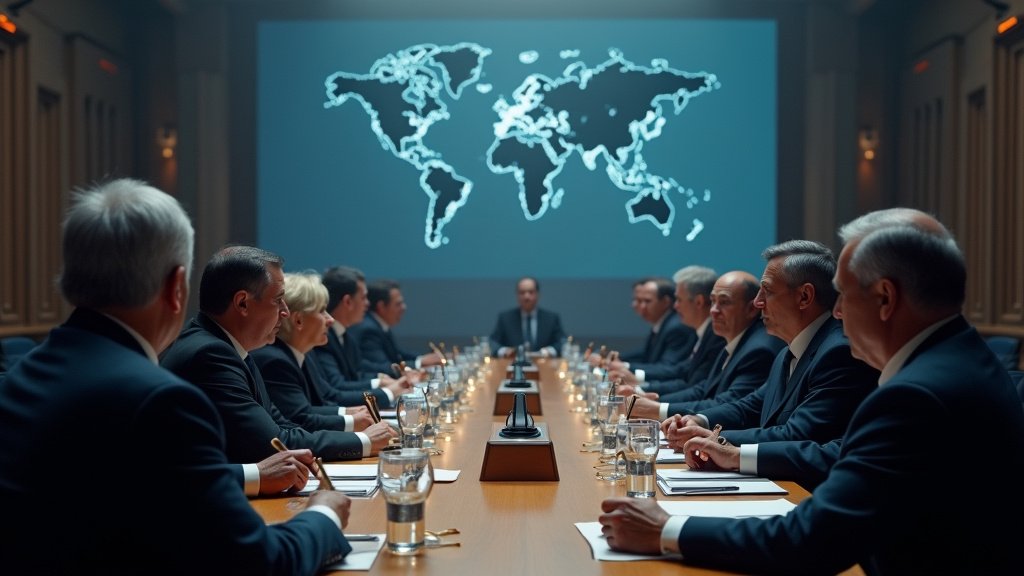
Trans-Atlantic Tensions and Global Order Shift Dominate Munich Security Conference 2026
The annual Munich Security Conference opened Friday, February 13, 2026. This year’s event focuses on deepening transatlantic tensions. Leaders gathered in Munich. They discussed global security challenges. German Chancellor Friedrich Merz delivered the opening address. U.S. Secretary of State Marco Rubio also attended. He heads the American delegation. Many European officials are present. Approximately 15 EU heads of state or government are there. The conference runs until Sunday, February 15.
A World in Transition
The Munich Security Conference is a key global forum. It addresses pressing international security issues. This year’s gathering occurs at a critical juncture. The existing world order faces significant pressure. Longstanding alliances are being questioned. The rules-based international system is eroding. This creates mounting instability. Escalating conflicts add to global anxiety. The conference theme for 2026 is “Under Destruction.” This highlights profound geopolitical upheavals. It underscores the rise of destructive forces. These forces prioritize demolition over reform.
Key Figures and Discussions
Chancellor Merz spoke about Germany’s role. He emphasized strengthening Europe. He called for greater economic competitiveness. He also stressed enhancing European defense capabilities. Merz highlighted the need for Europe to be a key global player. He called for increased defense spending. He also pledged deeper NATO cooperation. His remarks also included support for Ukraine. He stressed sovereignty and territorial integrity. Secretary of State Marco Rubio leads the U.S. delegation. He acknowledged a changing world. Rubio stated, “The old world is gone.” He believes a new geopolitical era requires re-examination. He plans to discuss shared global challenges. These include the war in Ukraine and Middle East instability. Issues involving China are also on the agenda.
Europe’s Stance and Strategy
European leaders are seeking greater autonomy. They aim to chart a more independent course. This comes after a year of transatlantic confrontation. Last year’s conference featured a controversial speech. U.S. Vice President J.D. Vance criticized European allies. This speech marked a period of strain. Washington’s policies have challenged allies. There were threats of tariffs. U.S. actions on Greenland also caused friction. EU foreign policy chief Kaja Kallas noted a “big blow” to relations. She stated relations have taken a significant hit. However, European leaders express a desire to preserve alliances. They want to avoid junking 80 years of cooperation. Germany’s government is committed to Europe’s security. It shows willingness to assume responsibility.
U.S. Foreign Policy and Global Order
The U.S. delegation includes many members of Congress. Secretary Rubio emphasized U.S. national interests. He stated the State Department’s priority is America. He believes every action must make America safer. It must also make it stronger and more prosperous. The U.S. strategy seems to focus on America first. This has caused concern among allies. Many see a divergence in approaches. Some reports suggest the U.S. seeks strategic autonomy. It aims to avoid concessions. This marks a shift from past policies. The U.S. seeks to redefine its global role.
Major Global Challenges
The conference addresses numerous global crises. The war in Ukraine remains central. Ukrainian President Volodymyr Zelenskyy is attending. He will accept an award for the Ukrainian people. The Middle East situation is also a key topic. Conflicts in Gaza and Sudan are discussed. Competition between major powers is a significant concern. Russia’s actions are under scrutiny. China’s rising influence is also a focus. Technological advancements create new security risks. Artificial intelligence and cyber threats are debated. The erosion of international norms is a major theme.
The Future of Alliances
Transatlantic relations are vital. They form the backbone of the conference. However, confidence has eroded. The future of U.S. alliances is uncertain. European leaders are reassessing their security. They seek stronger defense capabilities. Military mobility is a critical enabler. Europe must upgrade infrastructure. It needs to cut red tape. Funding dual-use corridors is essential. The concept of “wrecking-ball politics” is prominent. It describes actions that cause destruction. This contrasts with careful reforms. The post-1945 international order is under strain. Its destruction is a serious risk.
Looking Ahead
The Munich Security Conference serves as a crucial platform. It facilitates global dialogue. It helps deepen strategic discussions. It aims to strengthen necessary cooperation. This is vital for tackling global challenges. The event brings together diverse leaders. They represent different regions and interests. Their discussions will shape future security policies. The world watches these deliberations closely. The goal is to navigate a complex and changing landscape. Cooperation remains essential for global stability.