
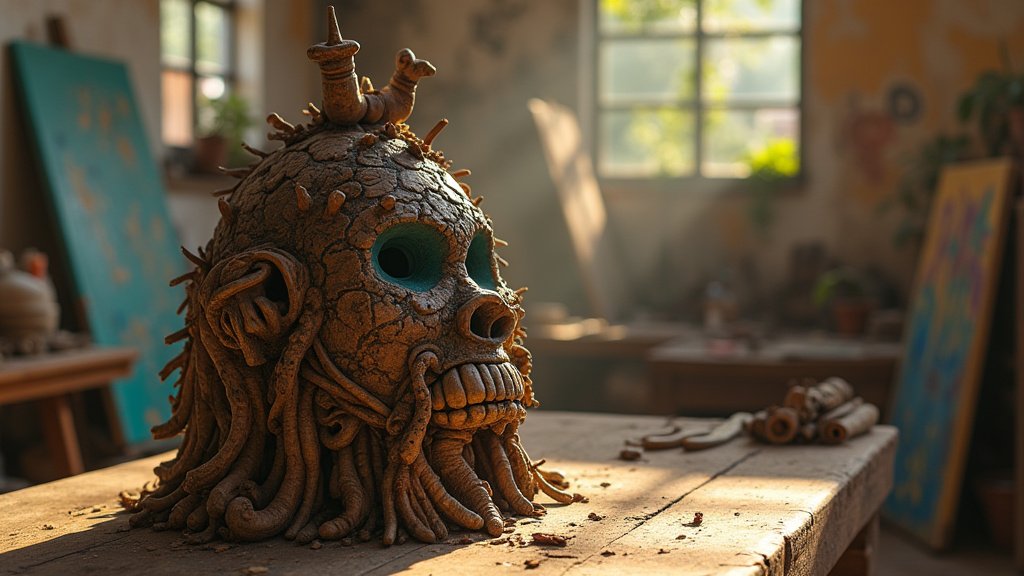
In a momentous convergence of Caribbean heritage and international art-world prestige, renowned Haitian-American artist Edouard Duval-Carrié is opening the doors to his Little Haiti studio this Friday, April 24, 2026. This exclusive “Pre-Venice Studio Night,” titled ‘Tout moun fèt,’ serves as both a celebration and a cultural beacon, offering collectors, curators, and the community a rare, intimate look at the conceptual rigor and thematic depth of the works he will bring to the 61st Venice Biennale. As Duval-Carrié prepares to represent his homeland on one of the world’s most prestigious stages, this Miami-based event underscores the pivotal role that the Caribbean diaspora plays in shaping global art history, proving that the most profound conversations about art often begin in the quiet sanctity of an artist’s personal workspace.
Key Highlights:
- Exclusive Preview: A one-night-only event in Little Haiti allows a behind-the-scenes look at works related to Duval-Carrié’s upcoming Venice Biennale installation.
- Global Recognition: The exhibition marks a major milestone for Haitian art, with Duval-Carrié presenting in the prestigious Central Pavilion of the Giardini.
- Cultural Dialogue: The evening features a critical salon conversation with art historian Erica Moiah James and curator Vanessa Selk, exploring the intersections of Haitian history and global identity.
- Immersive Experience: A celebration of Haitian culture, featuring music by DJ Gardy Girault and a culinary showcase, bridging the gap between studio process and public engagement.
The Studio as Crucible: A Prelude to Venice
A Master at Work
For Edouard Duval-Carrié, the act of creation has always been inextricably linked to the narrative of Haiti—its turbulence, its spiritual resilience, and its profound historical significance. The “Pre-Venice Studio Night” is not merely an exhibition; it is an immersion into the artist’s psyche. As the global art world turns its gaze toward Venice, where the 61st Venice Biennale will host a significant representation of Caribbean perspectives, Duval-Carrié’s choice to host a preview in his Little Haiti studio speaks volumes about his commitment to his roots. The studio at 225 NE 59th Street has long been a creative laboratory, but on this eve of global exhibition, it takes on a more potent meaning. It is a space where the past—represented by the history of slavery, colonization, and rebellion—meets the present, manifesting in intricate, mixed-media sculptures and vibrant, haunting canvases that challenge viewers to confront the complexities of Haitian identity.
Visitors to the studio will find themselves surrounded by the evidence of a process that is as much archival as it is aesthetic. Duval-Carrié has often spoken about the responsibility of the artist to act as a witness to history. In this latest body of work, he continues to interrogate themes that have long defined his career: the spiritual dimensions of Vodou, the enduring trauma of the colonial era, and the resilient trajectory of the Haitian people. While the pieces intended for the Venice Biennale are already en route to Italy, the studio exhibition features a collection of works that define the journey, the “remnants” that carry the same conceptual weight as the primary installations. This allows attendees to see the full arc of his artistic development, from initial sketches and maquettes to final, large-scale expressions.
The Venice Biennale and the Weight of History
The 2026 Venice Biennale, centered around the theme “In Minor Keys,” represents a pivotal moment for Haitian art. Conceived by the late, visionary curator Koyo Kouoh, the exhibition theme calls for a re-examination of history through the lenses of those often marginalized or silenced by dominant narratives. Duval-Carrié’s inclusion is a testament to his status as one of the most vital voices in contemporary art. His dialogue with Kouoh—rooted in an accidental yet fateful encounter at Art Basel Miami where she gifted him her own catalogue—has blossomed into a project that seeks to answer the fundamental question: “What did Africa bring to the world?”
This question serves as the heartbeat of his Venice contribution. The work is not just an aesthetic object; it is a political, spiritual, and historical inquiry. In the context of the Venice Biennale, where national pavilions often engage in high-stakes cultural diplomacy, Duval-Carrié’s work offers a more intimate, perhaps more urgent, perspective. He navigates the legacy of French colonialism in Haiti, the subsequent establishment of the world’s first free Black republic, and the ongoing struggle for recognition in the modern era. By presenting this work in Venice, he is ensuring that the Haitian story is not relegated to the footnotes of global art history but is positioned at its center.
The Diaspora as a Cultural Engine
The choice to host the preview in Little Haiti is a strategic and symbolic affirmation of Miami’s place in the international art ecosystem. Little Haiti is not merely a geographic location; it is a cultural engine. It is here that the rhythm of the diaspora, the language of the street, and the collective memory of the Caribbean meet the high-art sensibilities of institutions like the Tout-Monde Art Foundation. Founded by Vanessa Selk, the foundation’s commitment to supporting Caribbean artists is evident in the meticulous organization of this pre-Biennale event. It creates a space where collectors and the local public can engage on equal footing, breaking down the barriers that often separate “high art” from community life.
This event also highlights the role of the gallery or studio as a site of intellectual exchange. The planned salon conversation between Duval-Carrié and art historian Erica Moiah James is designed to contextualize the work, providing the necessary historical frameworks to fully appreciate the density of symbols and references within the art. It is a reminder that art is a conversation—a dialogue between the artist, the critic, and the viewer. In an era where digital consumption of art often leads to surface-level engagement, this “analog” experience of being in the studio, feeling the textures of the paint, and hearing the artist speak, is invaluable.
Looking Ahead: The Sound and Soul of the Caribbean
The evening’s conclusion, a set by Haitian DJ Gardy Girault, is not merely entertainment; it is an essential component of the cultural narrative. Girault’s music, which seamlessly blends traditional Haitian rhythms with cutting-edge electronic textures, mirrors the core of Duval-Carrié’s own methodology: taking the traditional, the ancestral, and the historical and reinterpreting them through a contemporary lens. The music provides a sensory layer to the evening, creating an environment where the visual and auditory come together to present a holistic view of the Caribbean experience.
As the night unfolds, the significance of this moment will resonate beyond the walls of the studio. It sets the stage for the Venice Biennale, providing a “home base” for the work that is about to travel across the Atlantic. For Duval-Carrié, this is a homecoming of sorts, even before he departs. It is an acknowledgment that his art, while destined for global platforms, remains deeply, inextricably anchored in the soil of Little Haiti. The work that he brings to Venice will carry the energy, the history, and the spirit of this Miami community with it, ensuring that the voice of Haiti is heard, loud and clear, on the global stage.
FAQ: People Also Ask
1. What is the significance of the “Pre-Venice Studio Night” in Little Haiti?
This event offers a rare behind-the-scenes look at the creative process of Edouard Duval-Carrié before his major participation in the 2026 Venice Biennale. It connects the local community to global art conversations and showcases works that carry the same conceptual themes as his Venice-bound pieces.
2. Who is Edouard Duval-Carrié?
He is a renowned Haitian-American artist, painter, and sculptor known for his work exploring Haitian history, the African diaspora, Vodou, and the complexities of colonial legacy. He is a prominent figure in the Miami art scene and globally recognized for his sophisticated, symbolic narratives.
3. What is the theme of the 2026 Venice Biennale?
The 2026 Venice Biennale is titled “In Minor Keys,” a theme conceived by the late curator Koyo Kouoh. The exhibition focuses on re-examining history and exploring marginalized narratives, with Duval-Carrié specifically exploring the question of Africa’s contributions to the world.
4. How does the Tout-Monde Art Foundation support this event?
The Foundation, led by Artistic Director Vanessa Selk, organized the event to ensure that Duval-Carrié’s work remains accessible to the local community while also fostering a deeper understanding of the artist’s practice through salon-style conversations and educational programming.