
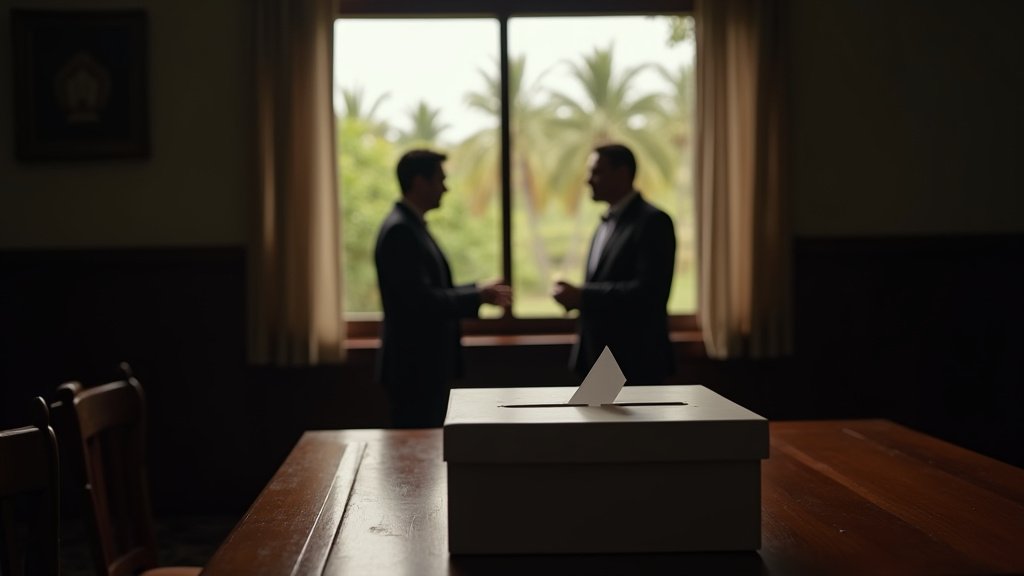
The Caribbean Community (CARICOM) has officially deployed a nine-member Election Observation Mission to Antigua and Barbuda, signaling a robust international commitment to democratic oversight ahead of the nation’s pivotal general elections scheduled for April 30, 2026. This deployment, coordinated at the request of Prime Minister Gaston Browne, arrives amidst a highly charged political atmosphere as the ruling Antigua and Barbuda Labour Party (ABLP) seeks to defend its parliamentary majority against a fragmented opposition. The mission is tasked with maintaining the highest standards of transparency, verifying the integrity of the polling process, and fostering confidence among the electorate in the twin-island nation.
Key Highlights
- Strategic Deployment: A nine-member CARICOM Election Observation Mission (CEOM) arrived in Antigua and Barbuda on April 23, 2026, to oversee the pre-election environment and the conduct of the April 30 vote.
- Leadership: The mission is headed by Ms. Maxine McClean, a seasoned expert from Barbados’ Electoral and Boundaries Commission, supported by deputy Herman St. Helen, the Chief Elections Officer of Saint Lucia.
- Stakeholder Engagement: The observers have initiated a comprehensive series of consultations, engaging with government officials, political party leaders, the Antigua and Barbuda Electoral Commission, and various civil society groups, including youth organizations and labour unions.
- Monitoring Scope: The team will observe every stage of the electoral process, from the opening of polling stations to the final counting of ballots, aiming to provide an independent assessment of whether the election meets regional and international democratic standards.
The Role of Regional Oversight in Caribbean Democracy
The presence of the CARICOM Election Observation Mission (CEOM) in Antigua and Barbuda is more than a formality; it is a vital mechanism for preserving democratic stability across the region. In the Caribbean, where political discourse can be intense and closely contested, the role of international and regional observers serves as a critical buffer against allegations of electoral malpractice. By establishing a neutral, independent body to verify the conduct of the proceedings, CARICOM aims to minimize the potential for post-election disputes that could destabilize the nation’s governance.
Mandate and Methodology
The mandate of the CEOM is strictly non-partisan and data-driven. The mission is not merely a passive observer; it acts as an active verification entity. Upon their arrival, the team began immediate assessments of the pre-election climate. This includes evaluating the readiness of the Antigua and Barbuda Electoral Commission, ensuring that voter identification protocols are strictly followed, and examining the equitable access of political parties to media and campaigning resources. The mission’s methodology involves both quantitative and qualitative analysis. Observers are deployed across the constituencies to monitor the opening of polls, the casting of ballots, the security of ballot boxes, and the crucial tallying phase. This comprehensive coverage ensures that every step of the democratic process is scrutinized, providing a verified record of the election’s conduct.
Stakeholder Consultations: Building Consensus
One of the most important aspects of the current mission is its engagement with a wide cross-section of Antiguan and Barbudan society. Before the first ballot is cast, the mission is scheduled to meet with Prime Minister Gaston Browne’s administration, opposition leaders, and representatives from the United Progressive Party (UPP) and the Barbuda People’s Movement (BPM). These consultations are designed to identify potential friction points and address concerns regarding electoral fairness before they escalate. By inviting feedback from civil society—including religious organizations, women’s groups, and the private sector—the mission ensures that the electoral process is perceived as inclusive and representative of the national interest, rather than merely a battle between established political elites.
The Political Landscape: Contextualizing the 2026 Vote
The 2026 general election occurs at a defining moment for Antigua and Barbuda. Prime Minister Gaston Browne, leading the ABLP, has framed this election as a crucial referendum on a decade of economic transformation and social policy reform. Having navigated the economic challenges of the post-pandemic era and the complexities of regional debt management, the ABLP is campaigning on a platform of continued economic stability and infrastructure expansion.
Opposition Challenges and Internal Dynamics
However, the political landscape is not without significant opposition. The United Progressive Party (UPP) has positioned itself as the primary alternative, capitalizing on public dissatisfaction regarding the cost of living and the transparency of government procurement. The political atmosphere is characterized by a high degree of mobilization, with intense campaigning from both sides. The opposition has consistently raised concerns about the fairness of the electoral map and the need for institutional reform. It is within this context of high-stakes political competition that the CARICOM mission’s presence becomes particularly essential. Their role is to ensure that the intense campaigning environment does not compromise the institutional integrity of the electoral process.
The Future of Regional Governance
Beyond the immediate outcome of the April 30 election, the deployment of this mission reinforces the broader CARICOM framework of collective security and democratic cooperation. When CARICOM deploys an observer mission, it is an implicit statement that the democratic health of one member state is a concern for the entire region. As the team prepares to issue its preliminary statement shortly after the polls close on April 30, and a final, detailed report thereafter, the focus will be on the mission’s findings regarding the fairness of the environment. Their work will provide a critical baseline for assessing the legitimacy of the incoming government, influencing both domestic stability and international investor confidence in the twin-island nation’s democratic institutions.
FAQ: People Also Ask
1. What is the main purpose of the CARICOM Election Observation Mission?
The primary goal of the CEOM is to observe and assess the electoral process to ensure it is free, fair, and credible. By providing an independent, neutral account of the voting procedures, the mission helps to bolster public confidence in the outcome and deter potential electoral misconduct.
2. Who are the key figures leading the mission in Antigua and Barbuda?
The mission is led by Ms. Maxine McClean, a distinguished official with experience from Barbados’ Electoral and Boundaries Commission. She is supported by a deputy, Herman St. Helen, the Chief Elections Officer of Saint Lucia, and other regional experts.
3. Will the mission influence the actual election results?
No. The CARICOM mission does not have the authority to change, influence, or count the votes. Their role is to observe, document, and report on the integrity of the process. They verify whether the procedures followed during the election align with regional and international democratic standards.
4. What happens after the mission completes its observation?
Following the completion of the election and the counting of ballots, the mission will issue a preliminary statement sharing its initial findings. This will be followed by a comprehensive final report submitted to the CARICOM Secretary-General, which is then shared with the Government of Antigua and Barbuda, the Electoral Commission, and the public.
5. Why was CARICOM invited to observe this specific election?
International and regional observer missions are invited by host governments to demonstrate their commitment to democracy. Prime Minister Gaston Browne extended the invitation to CARICOM (as well as other bodies like the OAS) to ensure that the electoral process remains transparent and above reproach, reflecting the country’s dedication to democratic norms.