
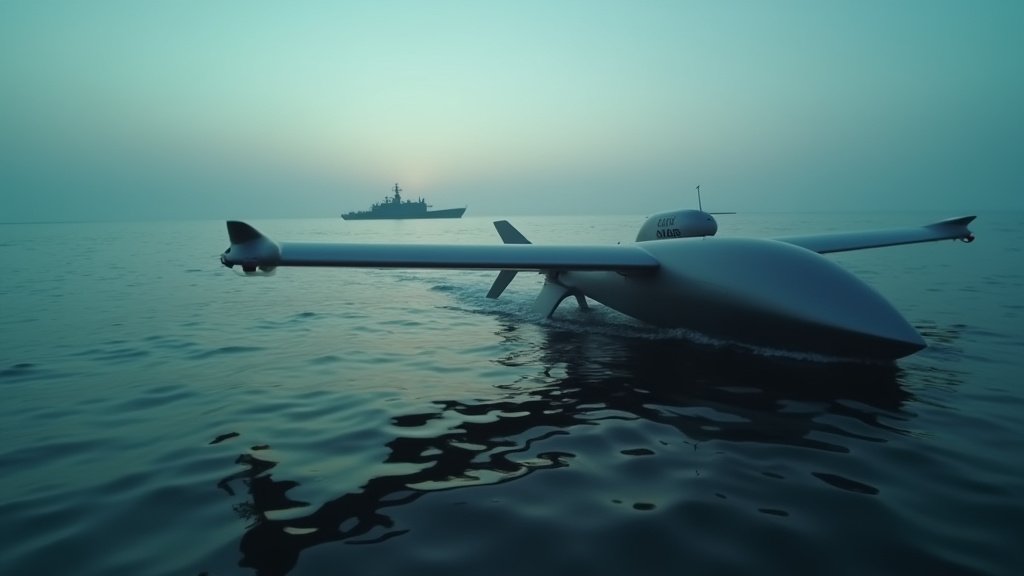
The U.S. Navy has reported the destruction of six Iranian small boats in the Strait of Hormuz following an engagement. The incident, which occurred amid heightened tensions in the region, saw U.S. naval forces neutralize the threats posed by the vessels.
Key Highlights:
- U.S. Navy forces engaged and sank six Iranian small boats.
- The incident took place in the strategically vital Strait of Hormuz.
- This event underscores the ongoing maritime security challenges in the Persian Gulf.
- The U.S. military has stated its commitment to ensuring freedom of navigation.
Maritime Confrontation in the Strait of Hormuz
The Strait of Hormuz, a narrow waterway connecting the Persian Gulf to the Gulf of Oman, is a critical chokepoint for global oil transport and a perennial theater for geopolitical friction. In a recent development, U.S. naval assets were compelled to engage and ultimately sink six small vessels identified as belonging to Iran. The U.S. Navy’s Fifth Fleet, responsible for the region, confirmed the engagement, detailing that the boats posed a threat to maritime operations. While specific details regarding the exact nature of the threat or the sequence of events leading to the engagement remain limited, the incident highlights the volatile security environment in one of the world’s most important maritime passages.
Background of Regional Tensions
The waters around the Strait of Hormuz have been a focal point for regional instability for decades. Iran, facing international sanctions and seeking to assert its influence, frequently conducts naval exercises and patrols in these waters. The U.S. Navy, as part of its broader mission to ensure freedom of navigation and deter aggression, maintains a significant presence in the Persian Gulf. Encounters between U.S. and Iranian naval forces, while not uncommon, are always closely watched due to their potential to escalate. This latest incident occurs against a backdrop of broader geopolitical maneuvering and a history of naval standoffs.
U.S. Military’s Stance and Rules of Engagement
U.S. military officials have consistently emphasized their right to self-defense and the imperative to maintain open maritime routes. The rules of engagement for naval forces in such volatile areas are designed to de-escalate while ensuring the safety of personnel and vessels. The decision to employ lethal force, such as sinking the Iranian boats, is typically a last resort, undertaken when a vessel is deemed an imminent threat. The U.S. military’s primary objective in this region is to ensure that international maritime law is upheld and that commercial shipping, particularly oil tankers, can transit safely. This includes countering any actions that could be construed as harassment or intimidation by any regional power.
The Role of Drones and Unmanned Systems
While the initial reports focused on the sinking of the boats, the involvement of U.S. naval assets suggests that advanced technology, potentially including unmanned systems or drones, may have played a role in monitoring or engaging the Iranian vessels. The U.S. military has been increasingly incorporating unmanned technologies into its naval operations, enhancing situational awareness and providing options for engagement with reduced risk to personnel. Such systems can provide persistent surveillance and, in certain scenarios, can be equipped for defensive or offensive capabilities. The precise capabilities employed in this incident are not fully disclosed but represent the evolving nature of naval warfare.
International Implications and Freedom of Navigation
The Strait of Hormuz handles approximately 20-30% of the world’s seaborne oil trade, making any disruption to its passage a matter of global economic concern. International bodies and major maritime nations, including the United States, have a vested interest in maintaining the free flow of commerce through this waterway. Incidents like this, even if localized, carry the potential for wider diplomatic repercussions and can influence international energy markets. The U.S. commitment to freedom of navigation is a cornerstone of its foreign policy in the region, and such actions are often framed as necessary to uphold this principle against perceived Iranian assertiveness.
FAQ: People Also Ask
What is the Strait of Hormuz?
The Strait of Hormuz is a strategically important strait connecting the Persian Gulf and the Gulf of Oman. It is the only sea passage from the Persian Gulf to the open ocean and is one of the world’s most vital oil transit points, with roughly one-fifth of global oil consumption passing through it.
Why are there tensions between the U.S. and Iran in the Strait of Hormuz?
Tensions stem from a complex history of geopolitical rivalries, Iran’s nuclear program, sanctions imposed on Iran, and Iran’s regional military posture. The U.S. Navy’s presence is aimed at ensuring freedom of navigation and deterring Iranian aggression, while Iran views this presence as a threat and seeks to assert its regional influence.
What kind of vessels were involved?
Reports indicate that the Iranian vessels were small boats, often used by Iran’s Islamic Revolutionary Guard Corps (IRGC) for naval patrols and asymmetric warfare tactics. The U.S. Navy deployed its assets, which could include destroyers, cruisers, or other naval vessels, potentially supported by unmanned systems.
What are the consequences of such incidents?
Such incidents can lead to increased diplomatic friction, potential economic impacts on oil prices, and a heightened risk of broader military escalation. They also serve as a reminder of the fragility of regional security and the constant need for maritime vigilance.
How does the U.S. Navy ensure safety in the Strait of Hormuz?
The U.S. Navy employs a combination of naval patrols, aerial surveillance, intelligence gathering, and the use of advanced technologies, including unmanned systems. They also conduct joint exercises with regional partners to enhance collective security and respond to threats to freedom of navigation.