
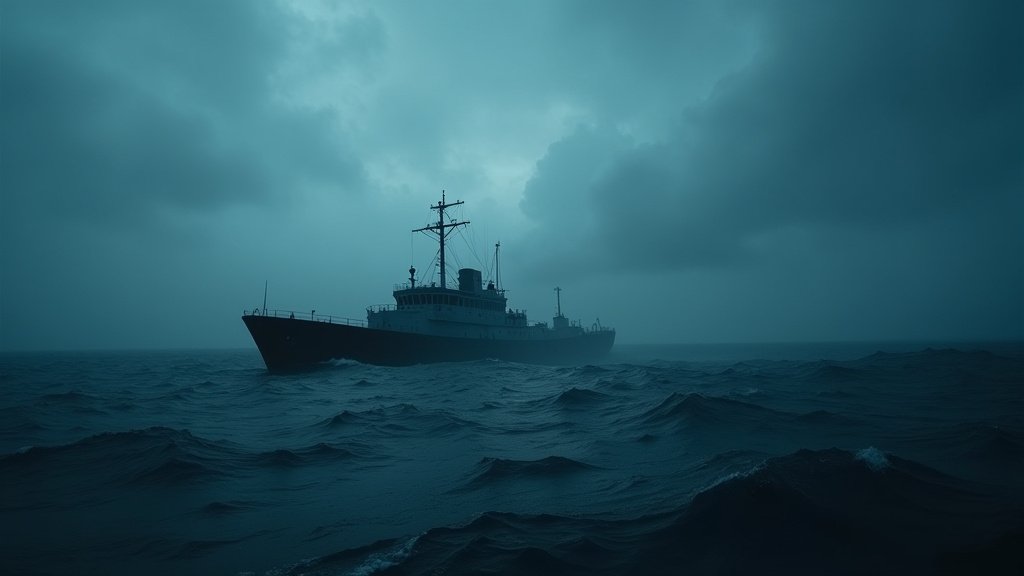
A U.S. military operation in the Caribbean targeting suspected drug smugglers resulted in the deaths of two individuals, U.S. officials confirmed.
- Two suspected drug smugglers were killed during a U.S. military operation.
- The operation took place in international waters in the Caribbean.
- The U.S. Navy vessel involved interdicted a suspected smuggling vessel.
- Investigations into the incident are ongoing.
Caribbean Interdiction Operation
The U.S. military has confirmed that a strike targeting a suspected drug smuggling vessel in the Caribbean Sea led to the deaths of two individuals. The incident occurred in international waters, a common transit zone for illicit narcotics trafficking, prompting a response from naval forces. According to preliminary reports from U.S. defense officials, the vessel in question was identified as potentially engaged in illegal smuggling activities, leading to the interdiction. The specifics of the engagement, including the type of weapon systems used and the ROE (Rules of Engagement) under which the action was taken, are currently under review.
The Interdiction Process
Naval operations in regions like the Caribbean are a critical component of U.S. efforts to disrupt transnational criminal organizations, particularly those involved in drug trafficking. These operations often involve surveillance, identification, and ultimately, interdiction of vessels suspected of carrying contraband. The U.S. Coast Guard and U.S. Southern Command (SOUTHCOM) frequently collaborate on such missions, utilizing a range of assets including ships, aircraft, and specialized interdiction units. The goal is to intercept illegal narcotics before they reach U.S. shores and to dismantle the financial networks supporting these criminal enterprises.
Rules of Engagement and Force Application
The use of lethal force in maritime interdictions is governed by strict Rules of Engagement (ROE), which are designed to ensure that force is applied only when necessary and with proportionality. These rules are particularly stringent when operating in international waters, where jurisdictional complexities and the potential for unintended escalation are significant. Military personnel undergo extensive training to operate within these guidelines, which typically involve identifying hostile intent or imminent threats before resorting to lethal measures. The investigation into this incident will likely scrutinize whether these ROE were adhered to.
Impact on Drug Trafficking Routes
The Caribbean remains a vital, albeit challenging, corridor for drug trafficking, primarily cocaine destined for the United States and Europe. Smugglers employ various methods, including go-fast boats, semi-submersible vessels, and even commercial shipping containers, to evade detection. The success of interdiction operations, while crucial, can sometimes lead to traffickers altering their routes or employing more sophisticated concealment techniques. This dynamic requires continuous adaptation and intelligence gathering by law enforcement and military agencies.
International Cooperation and Legal Frameworks
Maritime security operations in international waters often involve cooperation with partner nations. While the U.S. military has the authority to conduct interdictions under certain international legal frameworks, such as the principle of freedom of navigation and bilateral agreements, coordination with littoral states and international bodies is essential for broader effectiveness and legitimacy. The United Nations Convention on the Law of the Sea (UNCLOS) provides a framework for maritime activities, though interpretations and applications can vary.
FAQ: People Also Ask
What is the primary mission of U.S. naval operations in the Caribbean?
The primary mission of U.S. naval operations in the Caribbean is to disrupt and deter illicit drug trafficking, combat transnational organized crime, and ensure maritime security. This includes interdicting narcotics, apprehending smugglers, and contributing to regional stability.
What are Rules of Engagement (ROE)?
Rules of Engagement (ROE) are directives issued by competent military authority that delineate the circumstances and limitations under which forces will initiate and continue combat engagement with other forces encountered.
How do U.S. forces typically interdict suspected drug vessels?
U.S. forces typically interdict suspected drug vessels through a combination of aerial surveillance, naval vessel pursuit, and specialized boarding teams. They may use non-lethal measures to disable a vessel, such as disabling its engines, before attempting to board and secure it. Lethal force is a last resort, employed only when facing a direct threat.
What are the consequences for individuals caught smuggling drugs in international waters?
Individuals caught smuggling drugs in international waters can face severe legal consequences, including lengthy prison sentences and substantial fines. Depending on the jurisdiction and the nationality of the individuals and the vessel, they may be prosecuted by the U.S. or by the laws of a partner nation.