
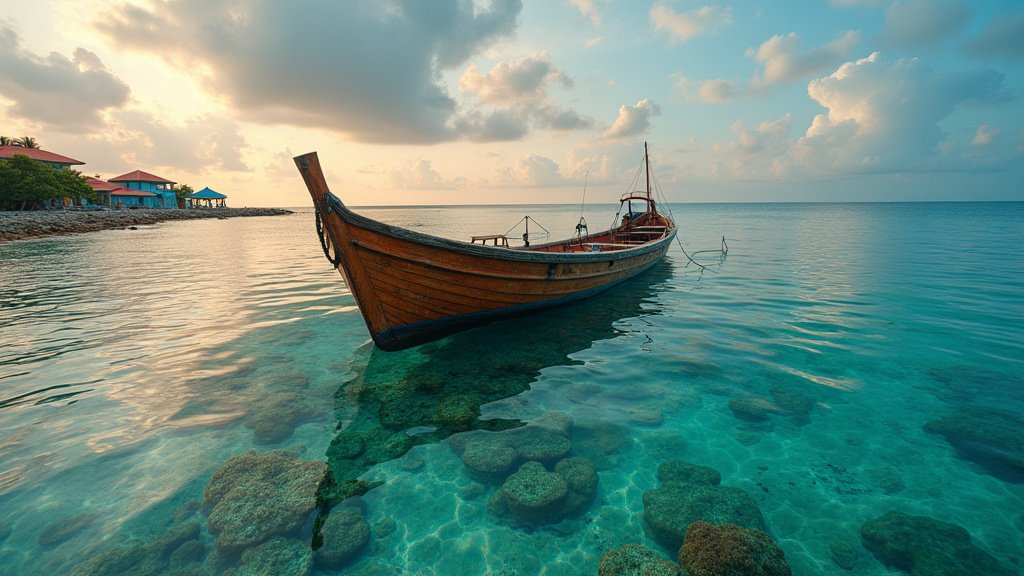
Caribbean nations are set to receive a significant financial injection through a new Loss and Damage initiative designed to address the escalating impacts of climate change. This landmark fund aims to provide crucial support to vulnerable island states already grappling with extreme weather events and rising sea levels.
Key Highlights:
- A new Loss and Damage initiative has been established to aid Caribbean countries.
- The fund will provide financial and technical assistance for climate-related impacts.
- This initiative is a critical step in global climate justice for vulnerable nations.
- It addresses the disproportionate effects of climate change faced by Small Island Developing States (SIDS).
Climate Resilience Fund Launched for Caribbean
The recent launch of a dedicated Loss and Damage fund marks a pivotal moment for the Caribbean, a region particularly susceptible to the devastating consequences of climate change. This initiative, born from extensive international climate negotiations, promises to deliver much-needed financial and technical resources to help these nations cope with and recover from climate-induced disasters. The Caribbean, comprising numerous Small Island Developing States (SIDS), has consistently highlighted its vulnerability to phenomena such as intensifying hurricanes, prolonged droughts, sea-level rise, and coral reef degradation – all exacerbated by global greenhouse gas emissions, to which these countries contribute minimally.
Genesis of the Loss and Damage Fund
The concept of ‘Loss and Damage’ gained significant traction in climate discourse as it became evident that adaptation and mitigation alone were insufficient to address the unavoidable impacts already being felt. Developing nations, particularly SIDS and Least Developed Countries (LDCs), have long advocated for a mechanism to compensate for the irreversible losses they incur due to climate change. The establishment of this fund, formalized at recent international climate summits, represents a hard-won victory for climate justice, acknowledging the historical responsibility of developed nations for the bulk of emissions and the urgent need for solidarity.
Direct Support Mechanisms
The initiative is designed to offer tangible support, moving beyond pledges to concrete action. Funds will be channeled towards several key areas. Firstly, disaster response and recovery, enabling countries to rebuild infrastructure and livelihoods in the aftermath of extreme weather events more effectively. Secondly, slow-onset events, such as sea-level rise and desertification, which pose existential threats to low-lying islands and coastal communities. This includes funding for coastal protection measures, relocation strategies where necessary, and the preservation of vital ecosystems like mangroves and coral reefs. Thirdly, technical assistance will be provided to enhance early warning systems, climate risk assessments, and the development of resilient infrastructure and agricultural practices. The fund is expected to be replenished through contributions from developed nations, private sector entities, and innovative financing mechanisms.
The Caribbean’s Unique Vulnerability
Geographically, the Caribbean is a hotspot for climate-related risks. Its low-lying coastlines are exceptionally vulnerable to storm surges and rising sea levels, threatening vital tourism economies and displacing communities. The warming of ocean waters also fuels more powerful hurricanes, leading to catastrophic damage. Furthermore, the delicate marine ecosystems, including coral reefs that act as natural barriers and support biodiversity, are suffering from bleaching events due to rising sea temperatures and ocean acidification. The region’s economic reliance on climate-sensitive sectors like tourism and agriculture makes it particularly susceptible to climate shocks, hindering sustainable development.
Global Implications and Future Outlook
While this initiative specifically targets the Caribbean, it serves as a crucial precedent for other vulnerable regions worldwide facing similar climate challenges. It underscores the interconnectedness of global climate action and the imperative for equitable solutions. The success of this fund will depend on robust governance, transparent allocation of resources, and sustained financial commitment. It is anticipated that the initiative will foster greater international cooperation and accelerate the transition towards a more resilient and sustainable global future, while also encouraging innovative climate adaptation technologies and strategies within the region.
FAQ: People Also Ask
What is the main goal of the Loss and Damage fund?
The primary goal of the Loss and Damage fund is to provide financial and technical assistance to developing countries, particularly vulnerable ones like those in the Caribbean, that are experiencing irreversible losses and damages due to the adverse effects of climate change.
Which Caribbean countries are expected to benefit?
All Caribbean countries, especially Small Island Developing States (SIDS) that are highly vulnerable to climate impacts such as rising sea levels, intensifying hurricanes, and droughts, are expected to benefit from this initiative.
How will the fund be disbursed?
The fund is expected to be disbursed through various channels, including direct financial aid for recovery and adaptation projects, technical assistance for capacity building and risk assessment, and support for implementing climate resilience measures. Specific disbursement mechanisms are still being finalized by the operational bodies of the fund.
Who is contributing to the fund?
Developed countries are expected to be the primary contributors to the Loss and Damage fund, fulfilling their climate finance commitments. Contributions may also come from private sector entities and other innovative financing sources.
What are ‘slow-onset events’ in the context of climate change?
Slow-onset events are gradual changes in climate patterns that lead to loss and damage over time. Examples include sea-level rise, increasing temperatures, ocean acidification, glacial retreat, and changes in precipitation patterns, which contrast with sudden-onset disasters like floods or storms.