
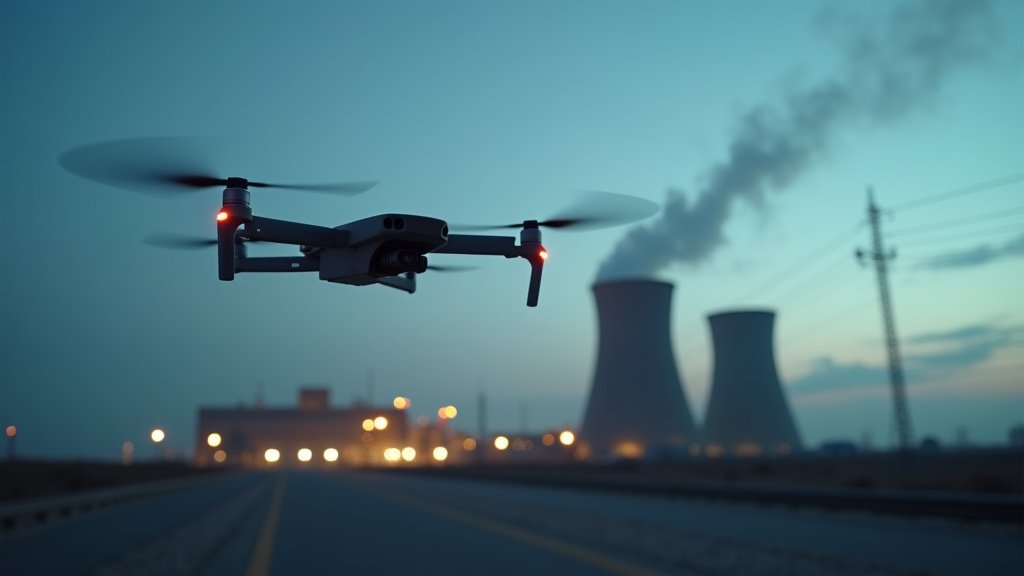
The United Arab Emirates is investigating a drone incident near its Barakah nuclear power facility, a development that underscores growing regional security concerns. The UAE’s Ministry of Foreign Affairs and International Cooperation stated that the drone posed no threat to the facility or the country’s nuclear materials, emphasizing that all safety and security protocols at Barakah remain fully operational. The incident, however, has amplified anxieties in a region already grappling with heightened geopolitical friction.
Key Highlights:
- UAE investigating a drone incident near the Barakah nuclear facility.
- Ministry confirms no threat to the plant or nuclear materials.
- All safety and security systems at Barakah are functioning normally.
- Incident highlights ongoing regional security concerns.
- Barakah is the first operational nuclear power plant in the UAE.
UAE Nuclear Facility Investigates Drone Incident Amid Regional Unrest
The United Arab Emirates has launched an investigation into a drone presence detected in the vicinity of its flagship Barakah nuclear power plant. The Ministry of Foreign Affairs and International Cooperation issued a statement confirming the incident, while crucially asserting that the drone posed no operational risk to the facility or its sensitive nuclear materials. The statement also reassured the public that all safety and security measures at the Barakah plant are functioning as intended, a critical message given the sensitive nature of nuclear infrastructure.
Regional Tensions Cast Shadow Over UAE Nuclear Security
The Barakah plant, a cornerstone of the UAE’s energy diversification strategy and its first operational nuclear facility, finds itself at the center of renewed regional security discussions. The incident, though seemingly contained, occurs against a backdrop of escalating geopolitical tensions in the Middle East. These tensions, often involving proxy conflicts and sophisticated aerial threats, have put vital infrastructure like nuclear power plants on high alert.
Barakah Nuclear Plant: A Strategic Asset
Opened in 2020, the Barakah Nuclear Power Plant is a significant national project for the UAE, designed to provide a substantial portion of the nation’s electricity needs from a clean, carbon-free source. Its strategic importance extends beyond energy security, positioning the UAE as a player in the global nuclear energy landscape. The plant’s safety and security are therefore paramount, not only for national interests but also for regional stability. The investigation into the drone incident underscores the constant vigilance required to protect such critical assets from potential threats.
Official Response and Reassurance
The UAE Ministry of Foreign Affairs and International Cooperation’s prompt statement aimed to quell any public alarm and to demonstrate the nation’s capacity to manage and respond to such events. By specifying that the drone posed no threat and that plant operations were unaffected, the authorities sought to maintain confidence in the country’s security apparatus and its handling of nuclear safety. This balanced approach, acknowledging an incident while emphasizing control and safety, is a common strategy in managing sensitive security-related news.
The Growing Threat of Drone Warfare in the Region
Incidents involving drones in the Middle East have become increasingly frequent and sophisticated. These unmanned aerial vehicles, ranging from simple reconnaissance tools to sophisticated attack platforms, have been employed in various conflicts and by state and non-state actors alike. Their ability to operate discreetly and their potential to carry explosive payloads make them a significant security challenge, particularly for high-value targets such as nuclear facilities, military bases, and critical infrastructure.
Entities and Their Roles
- Barakah Nuclear Power Plant: The specific facility under scrutiny, representing a key element of the UAE’s energy strategy.
- UAE Ministry of Foreign Affairs and International Cooperation: The official government body responsible for issuing statements and managing diplomatic and security-related communications.
- International Atomic Energy Agency (IAEA): While not directly mentioned in the initial reports, the IAEA plays a crucial role in setting nuclear safety and security standards globally and would be a key body for consultation or oversight in such an event.
- Regional Actors: Though unspecified, the context of regional tensions implies the potential involvement or influence of various regional powers and their associated non-state actors.
FAQ: People Also Ask
What is the Barakah nuclear facility?
Barakah is the first operational nuclear power plant in the United Arab Emirates, located in the Al Dhafra region of Abu Dhabi. It consists of four APR-1400 reactors and is a significant part of the UAE’s strategy to diversify its energy sources and reduce its carbon footprint.
Did the drone pose a threat to the nuclear reactors?
The UAE Ministry of Foreign Affairs and International Cooperation stated that the drone posed no threat to the Barakah nuclear facility or its nuclear materials. They assured that all safety and security protocols remain fully operational.
Is the UAE investigating the drone incident?
Yes, the UAE’s Ministry of Foreign Affairs and International Cooperation confirmed that an investigation into the drone presence is underway.
How does this incident relate to regional tensions?
The incident occurs amidst heightened geopolitical tensions in the Middle East. While the drone’s origin and intent are part of the investigation, its proximity to a critical facility like Barakah amplifies concerns about regional security and the potential for threats to vital infrastructure.
What are the safety measures at the Barakah nuclear plant?
The Barakah plant is designed with multiple layers of safety and security systems, adhering to international standards set by bodies like the International Atomic Energy Agency (IAEA). These include robust physical security, advanced monitoring systems, and emergency preparedness plans.