
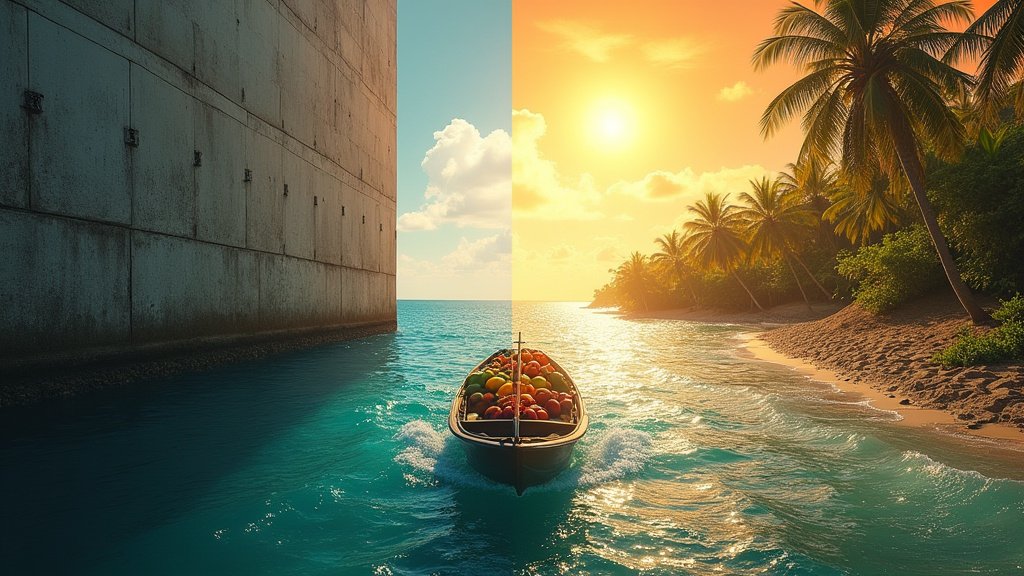
Caribbean nations, under the umbrella of CARICOM, have issued a strong condemnation of the United States’ persistent blockade against Cuba and its perceived threat of military intervention. Simultaneously, the region is being urged to brace for the escalating impacts of climate change, including severe heatwaves, prolonged droughts, and a significant rise in energy costs.
Key Highlights:
- CARICOM denounces US policies towards Cuba, including the economic blockade and military threats.
- The Caribbean Community calls for a unified regional approach to climate change adaptation.
- Warnings issued regarding increased frequency and intensity of heatwaves and droughts.
- Anticipation of substantial increases in energy bills due to global market volatility and climate impacts.
- Regional leaders emphasize the need for enhanced energy security and diversification.
CARICOM’s Stance on US-Cuba Relations and Regional Security
The Caribbean Community (CARICOM) has once again voiced its strong opposition to the United States’ ongoing economic blockade of Cuba, a policy that has been in place for decades and continues to draw international criticism. In a strongly worded statement, CARICOM leaders expressed deep concern over the potential for military action against the island nation, viewing such a move as a destabilizing force in an already complex geopolitical landscape. The bloc reiterated its commitment to diplomatic solutions and respect for national sovereignty, calling for an end to punitive measures that disproportionately affect the Cuban people and hinder regional development. This condemnation highlights a long-standing divergence between Caribbean nations and the US on Cuba policy, with CARICOM consistently advocating for engagement and the normalization of relations.
Historical Context of US-Cuba Relations
The US blockade against Cuba, initiated in the early 1960s, has its roots in the Cold War and has evolved over the years. Despite numerous UN General Assembly resolutions calling for its termination, the blockade has largely persisted, impacting Cuba’s ability to trade, access finance, and import essential goods. CARICOM’s repeated condemnation underscores the collective regional stance that such policies are counterproductive and violate international norms. The threat of military action, however veiled, adds another layer of anxiety for a region that prioritizes peace and stability.
Entities of Influence and Regional Diplomacy
The United States, a significant global power, wields considerable influence over Caribbean nations through trade, aid, and security cooperation. However, on the issue of Cuba, CARICOM has demonstrated a remarkable degree of unity and independence. Key entities within CARICOM, such as the CARICOM Secretariat and the Conference of Heads of Government, play crucial roles in formulating and articulating these regional positions. The consistent diplomatic engagement with international bodies like the United Nations and the Organization of American States (OAS), though with varying degrees of success, reflects the region’s commitment to multilateralism. The US State Department and the Pentagon are the primary US entities involved in shaping and executing policies towards Cuba, often at odds with the consensus within the Caribbean.
Climate Change Imperatives for the Caribbean
Parallel to the geopolitical concerns, CARICOM issued a stark warning about the impending climate crisis and its tangible effects on the Caribbean. The region, known for its vulnerability to environmental changes, is urged to prepare for an intensification of extreme weather events. Projections indicate more frequent and severe heatwaves, which will place considerable strain on public health and infrastructure. Furthermore, prolonged periods of drought are expected, threatening agricultural output and freshwater availability. These climate-induced challenges are compounded by the volatility of global energy markets, leading to anticipated surges in energy bills for households and businesses across the Caribbean.
The Economic Ramifications of Climate Change and Energy Costs
The interconnectedness of climate change and energy costs presents a formidable economic challenge for Caribbean nations. Rising global fossil fuel prices, exacerbated by geopolitical instability, directly translate into higher electricity and transportation costs for island states heavily reliant on imported fuels. Simultaneously, the impacts of climate change, such as damage to tourism infrastructure from hurricanes or reduced agricultural yields due to drought, further strain national economies. CARICOM leaders are emphasizing the urgent need for investment in renewable energy sources, energy efficiency measures, and climate-resilient infrastructure to mitigate these escalating costs and ensure a more sustainable economic future.
Strategies for Resilience and Adaptation
In response to these twin challenges, CARICOM is advocating for a multi-pronged strategy focused on resilience and adaptation. This includes fostering greater regional cooperation in energy security, accelerating the transition to renewable energy sources like solar and wind power, and implementing robust water management strategies to combat drought. Educational campaigns and early warning systems are also being enhanced to better prepare populations for extreme weather events. The goal is to build a more self-sufficient and sustainable Caribbean that can withstand both geopolitical pressures and the undeniable realities of a changing climate.
FAQ: People Also Ask
What is CARICOM?
CARICOM stands for the Caribbean Community. It is an organization of fifteen member states and ten associate members that are located in the Caribbean and South America. CARICOM aims to promote economic integration and cooperation among its members, as well as to coordinate foreign policy and address common issues such as security, health, and education.
Why does the US maintain a blockade against Cuba?
The US blockade against Cuba, officially termed an embargo, was implemented to exert pressure on the Cuban government to enact democratic reforms and improve its human rights record. Over the years, the stated objectives have evolved, but the core aim has remained to isolate the Cuban government economically and politically.
How is climate change affecting the Caribbean?
The Caribbean is disproportionately affected by climate change. Impacts include rising sea levels, increased intensity of hurricanes, coral bleaching, changes in rainfall patterns leading to both droughts and floods, and rising temperatures. These changes threaten the region’s vital tourism industry, agriculture, freshwater resources, and coastal communities.
What are the main energy sources in the Caribbean?
Many Caribbean nations rely heavily on imported fossil fuels, primarily diesel and heavy fuel oil, for electricity generation. However, there is a growing push towards diversifying energy sources, with significant potential for solar, wind, and geothermal energy, as well as improvements in energy efficiency.
What is the significance of CARICOM’s condemnation of US policy towards Cuba?
CARICOM’s condemnation signifies the region’s commitment to multilateralism, national sovereignty, and peaceful resolution of disputes. It highlights a persistent regional disagreement with US foreign policy towards Cuba and underscores the desire for normalized relations and the end of economic sanctions.