
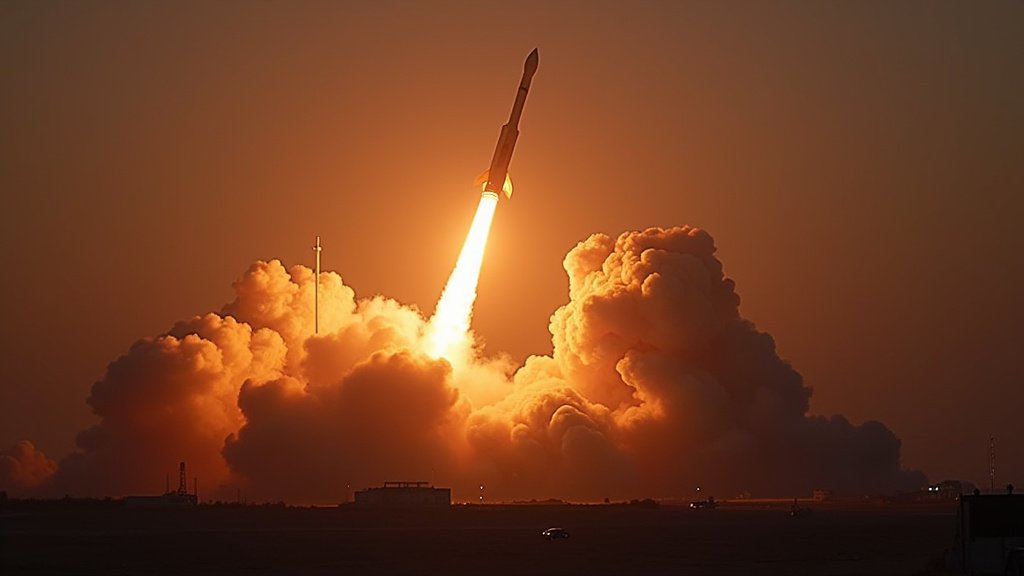
Early Monday morning, U.S. forces successfully intercepted and shot down multiple ballistic missiles launched by Iran, which were reportedly targeted at American troops stationed in Kuwait. The incident marks a significant escalation in regional tensions and highlights the ongoing security challenges in the Middle East.
- U.S. forces intercepted Iranian ballistic missiles targeting American troops in Kuwait.
- The incident occurred early Monday morning.
- No casualties or significant damage have been reported.
- This event represents a considerable escalation of regional hostilities.
Escalation in the Gulf: The Missile Incident
Preemptive Defense and Interception
The early morning hours of Monday were marked by a critical defensive action as U.S. military assets in the region detected and subsequently neutralized an incoming ballistic missile threat. The missiles, attributed to Iran, were reportedly aimed at bases housing American military personnel in Kuwait. The swift response by U.S. air defense systems prevented any potential harm to personnel or infrastructure. This engagement underscores the advanced capabilities of U.S. missile defense systems and their readiness to counter direct threats in volatile operational environments.
Geopolitical Ramifications
The launch of ballistic missiles by Iran, particularly those with a stated or perceived target involving U.S. forces, sends a clear signal of defiance and escalates an already fraught geopolitical landscape. This action is likely to draw strong condemnation from international bodies and allies, potentially leading to further diplomatic pressure or sanctions against Iran. The incident also tests the resolve of regional powers and their commitment to de-escalation.
Kuwait’s Position and Regional Stability
Kuwait, a key U.S. ally and host to significant American military presence, finds itself at the center of this heightened conflict. The incident raises serious questions about Kuwait’s own security and its role in mediating or navigating the escalating tensions between Iran and the United States. The safety of its own population and territory is paramount, and this event will undoubtedly prompt a review of security protocols and diplomatic strategies within the nation.
The Role of Ballistic Missiles in Modern Warfare
Ballistic missiles, like those reportedly used in this incident, are long-range weapons capable of delivering payloads over vast distances. Their development and deployment are often seen as strategic deterrents or offensive capabilities. The precision and destructive potential of these weapons necessitate robust defense mechanisms and careful diplomatic engagement to prevent their use. This event serves as a stark reminder of the proliferation of such advanced weaponry in a volatile region.
Historical Context of Iran-U.S. Tensions
The relationship between Iran and the United States has been marked by decades of animosity, dating back to the 1979 Iranian Revolution. This has manifested in various forms, including proxy conflicts, economic sanctions, and near-direct confrontations. The current incident, while a direct missile threat, fits within this broader historical pattern of strategic brinkmanship and mutual suspicion.
FAQ: People Also Ask
What is a ballistic missile?
A ballistic missile is a missile that follows a ballistic trajectory to deliver one or more warheads to a predetermined target. These trajectories are based on the principles of orbital mechanics, similar to those of artillery shells, but typically over much longer ranges and with a powered ascent phase. They are distinct from cruise missiles, which are powered throughout their flight.
Why are U.S. troops stationed in Kuwait?
U.S. troops are stationed in Kuwait as part of a long-standing security cooperation agreement. Kuwait is a strategic location in the Persian Gulf, and its bases are used to support regional security operations, deter aggression, and provide a forward presence to respond to crises in the Middle East. This presence is crucial for maintaining stability and protecting U.S. interests in the region.
What are the implications of Iran firing missiles at U.S. troops?
Firing missiles at U.S. troops represents a significant escalation and a direct act of aggression. It could lead to severe U.S. military retaliation, increased sanctions, further diplomatic isolation of Iran, and a broader conflict in the Middle East. Such actions threaten regional and global stability and could have severe economic consequences.
How are ballistic missiles detected and intercepted?
Ballistic missiles are detected using a network of surveillance systems, including early-warning radar and satellites. Once detected, they can be intercepted by specialized missile defense systems, such as the U.S. Patriot or THAAD systems, which employ interceptor missiles designed to collide with and destroy the incoming threat at various stages of its flight.