
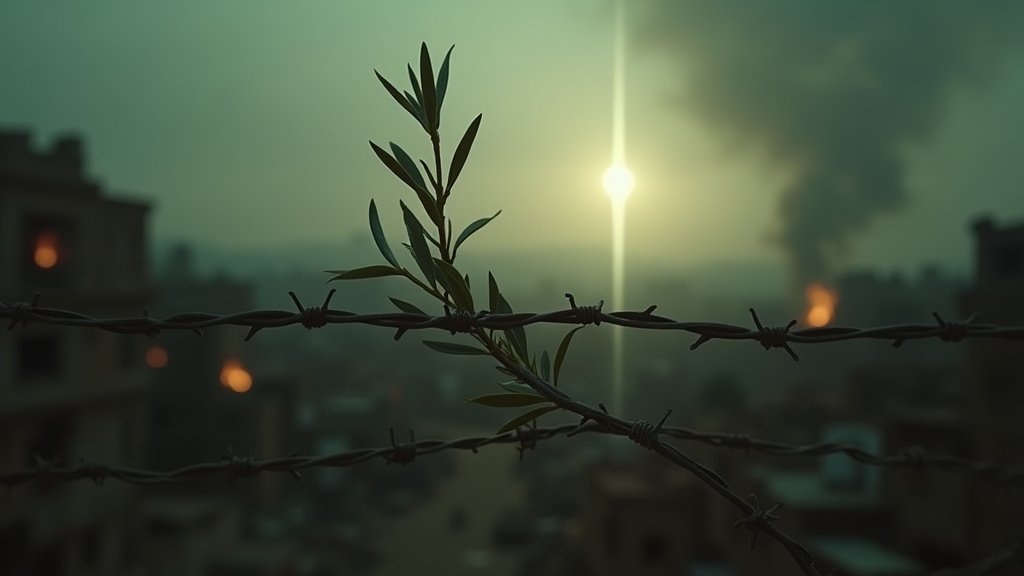
Fighting has intensified in Lebanon, defying a fragile ceasefire, as concerns mount over the stability of a potential US-Iran deal.
Key Highlights:
- Renewed clashes erupt in southern Lebanon, overshadowing a temporary truce.
- Diplomatic efforts to de-escalate tensions face significant hurdles.
- The volatile situation in Lebanon risks wider regional instability.
- Analysts warn of potential repercussions for ongoing nuclear negotiations.
Escalating Tensions on Lebanon’s Southern Front
The delicate calm in Lebanon has been shattered by renewed fighting, casting a dark shadow over hopes for lasting peace. Despite an existing ceasefire agreement, sporadic but intense clashes have erupted along the southern border, primarily involving Hezbollah and Israeli forces. These engagements, characterized by rocket barrages and retaliatory airstrikes, have not only caused casualties and displacement but have also significantly heightened regional anxieties. The persistence of violence underscores the deep-seated animosities and the complex web of proxy conflicts that continue to destabilize the Levant.
Geopolitical Undercurrents: The US-Iran Deal in Peril
Compounding the on-ground volatility is the growing uncertainty surrounding a potential US-Iran diplomatic deal, widely believed to include provisions for de-escalation in regional hotspots like Lebanon. The renewed fighting is seen by many analysts as a direct challenge to the efficacy of such diplomatic overtures. Tehran’s influence over groups like Hezbollah is a critical factor in these negotiations, and the ongoing conflict raises serious questions about Iran’s commitment to fostering stability, or its ability to control its proxies when push comes to shove. The international community, particularly the United States, is closely monitoring the situation, as any breakdown in these delicate talks could have far-reaching implications for Middle East security and global energy markets.
The Human Cost of Proxy Warfare
The immediate and most devastating impact of the renewed fighting is borne by the civilian population. Residents in southern Lebanon have been forced to flee their homes once again, seeking refuge from the indiscriminate shelling and crossfire. The destruction of infrastructure, homes, and livelihoods adds another layer to the protracted humanitarian crisis gripping the country. Lebanon, already grappling with severe economic and political instability, finds itself further pushed to the brink by this renewed outbreak of hostilities. The cycle of violence, fueled by external powers and internal factions, traps ordinary citizens in a perpetual state of fear and displacement.
Historical Context and Future Ramifications
Understanding the current crisis necessitates a look at the historical context of the Israeli-Hezbollah conflict, which has simmered for decades. The current flare-up is not an isolated incident but rather a continuation of a long-standing adversarial relationship, often exacerbated by the shifting geopolitical sands. The involvement of external state and non-state actors, including Iran and to some extent, the US through its regional alliances, has transformed Lebanon into a persistent battleground for larger, international rivalries. The implications of this latest escalation extend beyond Lebanon’s borders, potentially impacting the broader security architecture of the Middle East and influencing global power dynamics. The fragile nature of ceasefires in the region suggests that lasting peace remains an elusive goal, contingent on complex and often precarious diplomatic negotiations.
FAQ: People Also Ask
What is the current status of the ceasefire in Lebanon?
While a general ceasefire has been in place historically, recent events indicate that it is either not being fully respected or has been significantly undermined by renewed clashes between Hezbollah and Israeli forces. Sporadic but intense fighting has erupted, challenging the notion of a stable truce.
How does the fighting in Lebanon relate to the US-Iran deal?
Concerns are high that the renewed fighting in Lebanon could jeopardize ongoing diplomatic efforts between the US and Iran. Iran’s influence over groups like Hezbollah is a key factor in these negotiations, and the conflict raises questions about Iran’s commitment to de-escalation and its control over proxy forces.
What are the humanitarian consequences of the renewed fighting?
The renewed clashes have led to civilian casualties, displacement, and further destruction of infrastructure in southern Lebanon. This exacerbates the already severe humanitarian and economic crisis in the country.
What is the historical background of the conflict in southern Lebanon?
Southern Lebanon has been a site of intermittent conflict for decades, primarily between Israel and Hezbollah, often influenced by regional geopolitical shifts and the involvement of external actors like Iran.
Could the situation in Lebanon escalate into a wider regional conflict?
Analysts express concerns that the volatile situation, coupled with the potential collapse of diplomatic efforts, could spill over and destabilize the broader Middle East region due to the complex network of alliances and proxy relationships.