
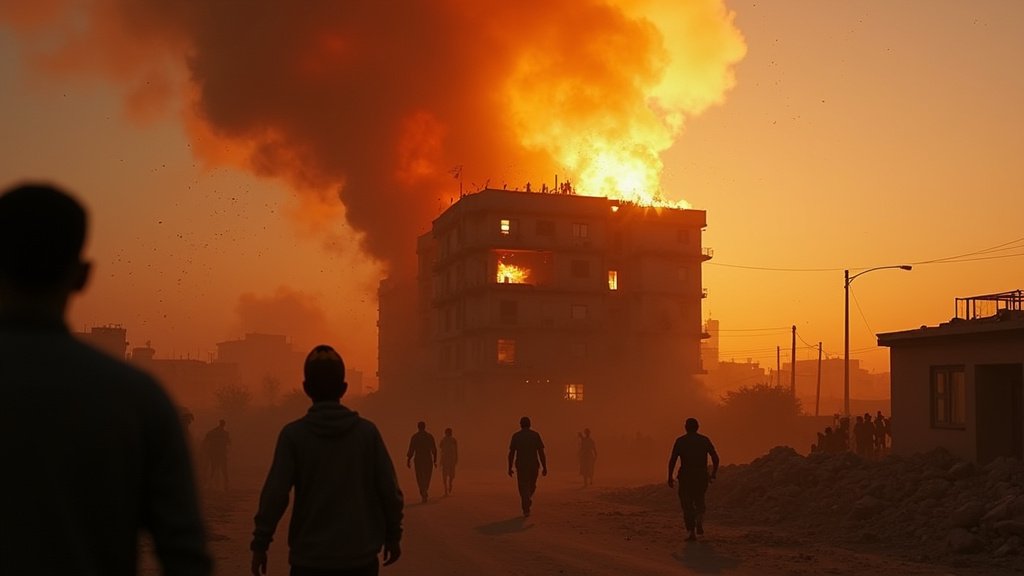
GAZA CITY, Gaza Strip – The fragile U.S.-brokered ceasefire in Gaza has dramatically fractured today, with reports of renewed Israeli airstrikes across the besieged territory, particularly in Khan Younis and northern Gaza City. These strikes have resulted in a significant Palestinian death toll, adding to the mounting casualties since the truce began.
Simultaneously, harrowing allegations have emerged from aid workers detailing horrific signs of torture on the bodies of some Palestinian prisoners recently returned from Israeli detention. Israel has vehemently denied these accusations, while international bodies and humanitarian organizations express grave concern over the escalating violence and the welfare of detainees.
Fragile Truce Unravels Amidst Accusations
The ceasefire, brokered by the United States and initiated around October 10, 2025, aimed to provide a respite after months of intense conflict. However, the current news cycle indicates a serious breakdown, with both Israeli and Palestinian factions trading blame for violations. Israel’s military stated that its forces initiated strikes in response to alleged gunfire from Palestinian militants targeting troops operating in Khan Younis. In contrast, Hamas has denied these claims, characterizing the Israeli actions as a “horrific massacre” and urging the United States to compel Israel to adhere to the ceasefire terms.
The Gaza government media office has asserted that Israel has committed hundreds of breaches of the ceasefire agreement since its inception, leading to substantial Palestinian casualties. These alleged violations underscore the precarious nature of the truce and the deep mistrust that persists between the warring parties, complicating diplomatic efforts to establish lasting peace.
Strikes Target Khan Younis and Northern Gaza City, Civilian Toll Mounts
On Thursday, November 20, 2025, reports indicated a significant increase in casualties. Local health officials stated that Israeli airstrikes killed at least 32 Palestinians across Gaza in the preceding 24 hours, with some reports suggesting overnight strikes resulted in even higher numbers, including many children. Specific incidents highlighted by medics include strikes on residential areas in Khan Younis, a city in southern Gaza, where a strike on a family home reportedly killed several individuals, including women and children.
Strikes were also reported in neighborhoods farther north, including the Zeitoun area of Gaza City, where an air raid on a building housing displaced families led to numerous fatalities. These events add to the hundreds of Palestinians reported killed since the ceasefire commenced. The overall death toll since the conflict’s outbreak in October 2023 remains staggering, with tens of thousands of lives lost, predominantly women and children, according to Gaza’s Health Ministry.
Disturbing Allegations of Torture on Returned Prisoners Surface
Adding a deeply disturbing dimension to the current crisis, aid workers have come forward with allegations of “horrific” signs of torture observed on the bodies of Palestinian prisoners returned as part of exchange agreements. These accounts, corroborated by some reports detailing alleged mistreatment within Israeli detention facilities, paint a grim picture of conditions faced by detainees.
Independent human rights groups, such as Physicians for Human Rights Israel (PHRI), have released reports indicating that nearly 100 Palestinian prisoners have died in Israeli custody since October 2023. These reports allege systemic issues including denial of vital medical care, malnutrition, and brutal violence, with some pointing to deaths resulting from severe injuries sustained during detention or interrogation. The findings call for independent international investigations into these alleged systematic abuses.
Israel has consistently and vehemently rejected all allegations of systematic torture or abuse of detainees. Officials assert that Israeli forces operate strictly within the bounds of domestic and international law, ensuring the rights of detainees. They maintain that any isolated incidents are thoroughly investigated and that claims of systemic wrongdoing are unfounded and inconsistent with the military’s legal and ethical framework.
International Scrutiny and Uncertain Future
The renewed violence and disturbing allegations have drawn sharp international condemnation. Qatar, a key mediator, has condemned the fresh Israeli airstrikes, labeling them a dangerous escalation that threatens to undermine the fragile truce. The United Nations has previously passed resolutions calling for humanitarian truces and a cessation of hostilities, highlighting the global desire for an end to the bloodshed.
The United States, instrumental in brokering the current ceasefire, remains invested in its preservation. While U.S. officials have acknowledged occasional “skirmishes,” they have also reiterated expectations for the truce to hold. However, the escalating situation presents a significant challenge to these diplomatic efforts, with mediators facing immense pressure to reaffirm the ceasefire terms and prevent a broader military escalation.
The ongoing conflict and allegations of abuse paint a stark picture of the humanitarian crisis gripping Gaza. Even as diplomatic efforts continue, the immediate future remains uncertain, with civilian populations caught between continued violence, allegations of severe human rights violations, and the desperate need for humanitarian aid. The world is watching closely as this critical news unfolds today, hoping for a de-escalation that allows for sustained peace and accountability.