
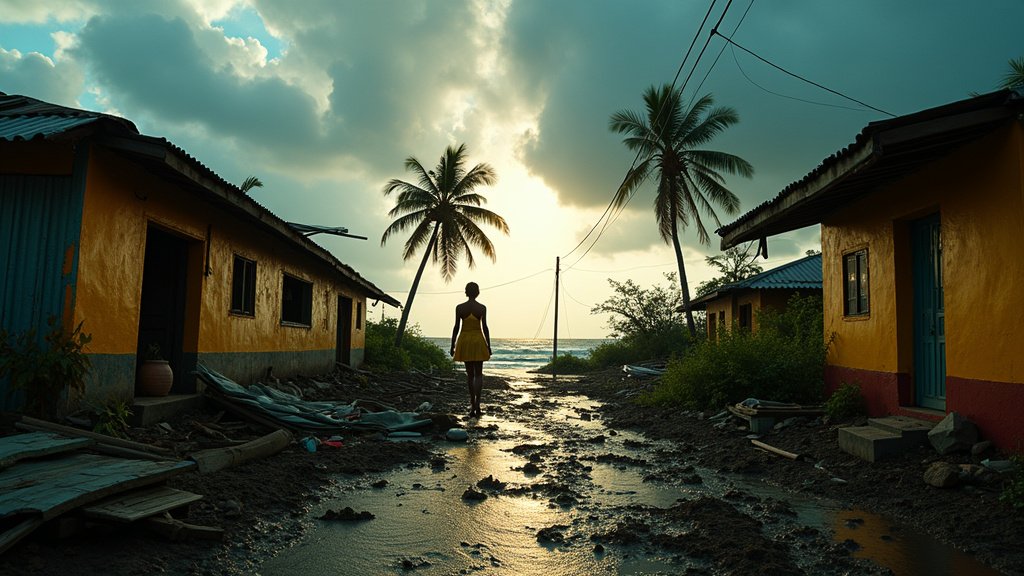
Kingston, Jamaica / San Juan, Puerto Rico – Hurricane Melissa, a colossal Category 5 storm, has inflicted catastrophic damage across Jamaica and the wider Caribbean, leaving a trail of devastation in its wake. The powerful hurricane, one of the strongest on record for the Atlantic basin, made landfall on Jamaica’s southwestern coast as an intense Category 5 storm, bringing with it life-threatening winds, torrential rainfall, and devastating storm surge. Meanwhile, Puerto Rico and the U.S. Virgin Islands, though spared a direct hit, were placed under a Hurricane Watch and tropical storm conditions were anticipated.
Melissa’s Devastating Assault on Jamaica
Hurricane Melissa made landfall in New Hope, Westmoreland Parish, Jamaica, on October 28, 2025, with sustained winds of 185 mph (295 km/h), intensifying to an astonishing 252 mph (406 km/h) gust recorded via dropsonde data. This catastrophic event marked the strongest hurricane to ever make direct landfall on the island, surpassing Hurricane Gilbert in 1988. Officials declared the entire country a disaster area as the storm’s eyewall swept across the island, causing total structural failure in many areas, particularly in the Westmoreland and Saint Elizabeth parishes, which experienced near-total destruction.
The impact on Jamaica was multifaceted and severe. Widespread power outages affected approximately 530,000 people, leaving 75% of the island without electricity at the storm’s peak. Communication lines were also severely impacted, especially in western Jamaica, cutting off many communities. Infrastructure suffered extensive damage, with roads blocked by debris and landslides, rendering many towns impassable and hindering recovery efforts. The agricultural sector, a vital component of the Jamaican economy, sustained significant damage from storm surge, flooding, and high winds. Preliminary estimates placed the damage to Jamaica between $6-7 billion, according to the United Nations Office for the Coordination of Humanitarian Affairs, though other reports suggest losses could be as high as $10 billion. Tragically, at least 45 deaths were confirmed in Jamaica alone, with the total death toll across the Caribbean reaching over 90.
Broader Caribbean Impact and Displacement
Melissa’s destructive path extended beyond Jamaica. The storm struck eastern Cuba as a Category 3 hurricane on October 29, causing widespread damage to homes and roadways and forcing the evacuation of over 700,000 people. Haiti also bore the brunt of Melissa’s fury, with heavy rains triggering deadly landslides and flash flooding, particularly in the Grande-Anse, Sud, and Ouest Departments. Reports indicate at least 43 deaths in Haiti, with thousands of homes flooded or destroyed and crops wiped out in areas already facing severe food insecurity. The Dominican Republic experienced overflowing rivers and landslides, displacing hundreds of people.
The Bahamas and Turks and Caicos Islands also felt the storm’s effects, with wind gusts reaching 85 mph on Crooked Island and localized flooding and power outages reported. Even as Melissa moved into the open Atlantic, it generated swells that affected coastlines as far as Bermuda and the northeastern United States.
Puerto Rico and U.S. Virgin Islands: Watches and Unsettled Weather
While Hurricane Melissa’s center was projected to pass over Puerto Rico and the U.S. Virgin Islands’ waters, these territories were placed under a Hurricane Watch, indicating the potential for hurricane conditions. Although the islands did not experience the direct catastrophic impacts seen in Jamaica, they were still bracing for significant weather disruptions. Forecasters anticipated unsettled conditions throughout the week, including heavy rainfall, gusty winds, and dangerous surf, prompting preparedness measures and reinforcing the importance of the annual hurricane season safety protocols.
The Making of a Monster Storm
Tropical Storm Melissa originated from a tropical wave that emerged from West Africa and traveled across the Atlantic. It formed in the central Caribbean Sea on October 21, 2025, and rapidly intensified. Weak steering currents and moderate wind shear initially caused the storm to meander, but it underwent “extreme rapid intensification” over the weekend of October 25-26, transforming into a formidable Category 5 hurricane. Meteorologists noted that Melissa sustained its high intensity for a prolonged period without undergoing an eyewall replacement cycle, a factor contributing to its devastating power. The National Hurricane Center issued numerous advisories and warnings throughout Melissa’s lifecycle, providing critical updates to emergency managers and the public.
Recovery and Resilience in the Caribbean
In the aftermath of Hurricane Melissa, the focus has shifted to search, rescue, and recovery efforts across the impacted regions. Millions of residents have been displaced, and access to clean water, food, and essential services remains a critical concern. Hundreds of healthcare facilities, including hospitals and primary care centers, sustained severe damage across the Caribbean, severely affecting access to medical services. The U.S. Coast Guard and other relief organizations are coordinating efforts to support the affected populations, highlighting the ongoing need for preparedness and resilience in the face of increasingly powerful extreme weather events. The devastating impact of Melissa underscores the importance of early warning systems and robust disaster response plans in the Caribbean lifestyle. The news of such destruction serves as a stark reminder of the vulnerability of island nations to tropical cyclones.
As the region begins the arduous task of rebuilding, the lessons learned from Hurricane Melissa will be crucial for enhancing future preparedness and mitigating the impacts of severe weather in the Caribbean. The storm officially transitioned into a post-tropical cyclone over the North Atlantic on October 31, 2025, but its legacy of destruction will be felt for years to come.