
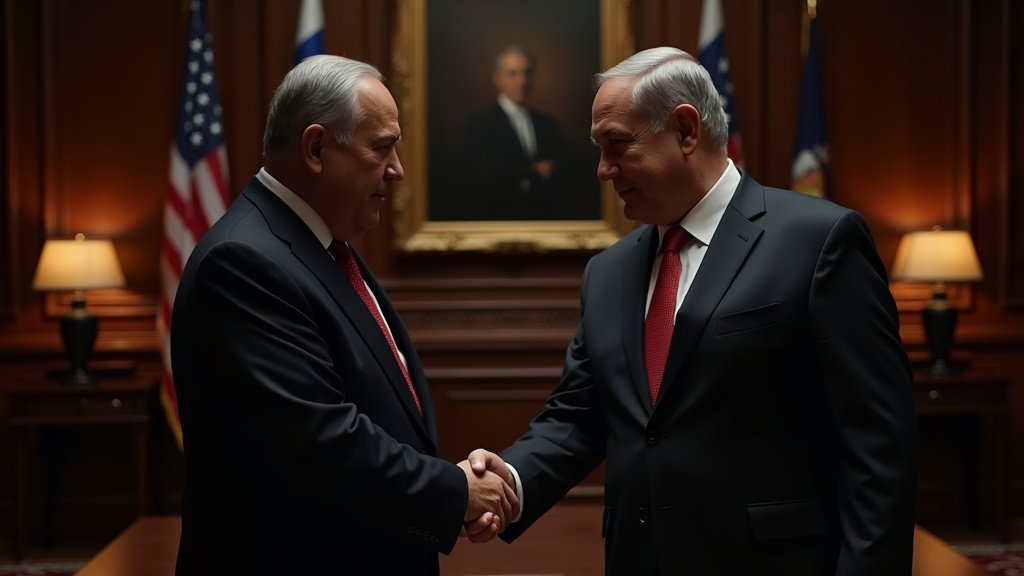
The fragile ceasefire in Gaza is facing renewed challenges as recent violence has claimed numerous Palestinian lives and led to the deaths of Israeli soldiers, threatening the delicate peace brokered by the United States. Amidst this volatile situation, U.S. Vice President J.D. Vance has arrived in Israel, aiming to bolster the ongoing truce and advance the next phases of a U.S.-backed peace plan, which includes establishing new governance structures and disarming Hamas.
Gaza Ceasefire Under Renewed Strain
The past few days have seen a dangerous escalation in the Gaza conflict, shattering the relative calm established by the U.S.-brokered ceasefire that began on October 10th. Reports indicate significant Israeli airstrikes across Gaza, particularly in Khan Yunis and east of Gaza City, resulting in substantial Palestinian casualties, including women and children. The Hamas-run health ministry stated that at least 33 Palestinians were killed and 88 injured in the past day alone due to Israeli strikes. This violence has led to accusations from both sides of violating the ceasefire terms. Hamas has condemned the actions as a “brutal massacre” and a violation of the truce, urging mediators to take urgent action to compel Israel to respect the ceasefire. Israel, in turn, has stated its actions were in response to alleged fire on its forces. Humanitarian aid deliveries to Gaza have resumed, partly due to international pressure and the operational needs of intensified fighting, with fuel and essential supplies entering through the Rafah border crossing. However, the ongoing conflict and humanitarian crisis persist.
Vance’s Diplomatic Mission to Israel
U.S. Vice President J.D. Vance arrived in Israel, signaling the administration’s commitment to stabilizing the situation and progressing towards a long-term resolution. His visit is intended to push Israeli Prime Minister Benjamin Netanyahu to engage in negotiations regarding the future governance of Gaza and the critical issue of Hamas disarmament. Vance expressed “great optimism” about the ceasefire, describing it as “durable” and “going better than expected,” while also issuing a stark warning that Hamas would be “obliterated” if it did not cooperate. The U.S. strategy, as outlined in President Trump’s 20-point peace plan, aims for an immediate ceasefire, the release of hostages, prisoner exchanges, the demilitarization of Gaza, and the establishment of a new, technocratic Palestinian governing body under international supervision. The UN Security Council has endorsed this U.S.-brokered plan, which includes provisions for an international stabilization force. However, Hamas has rejected clauses related to disarmament, posing a significant obstacle to reconstruction and future stability.
Broader Geopolitical Context in Global News Today
The events in Gaza are unfolding against a backdrop of significant global developments, underscoring the interconnectedness of world affairs. In a stark reminder of the conflict’s reach, U.S. federal prosecutors have arrested a Gaza man residing in Louisiana, Mahmoud Amin Ya’qub Al-Muhtadi, for his alleged involvement in the October 7th attacks on Israel. This arrest highlights the U.S. Justice Department’s ongoing efforts to hold accountable those responsible for the atrocities.
Concurrently, U.S. President Donald Trump recently held a high-stakes meeting with Chinese President Xi Jinping in South Korea, resulting in a fragile trade truce. Key outcomes included agreements to ease tariffs and discussions on critical minerals, reflecting a complex global economic landscape where supply chain resilience is paramount. This diplomatic engagement occurred shortly after the U.S. and Australia signed a significant deal to boost their supplies of rare earth and critical minerals, a strategic move aimed at reducing dependence on China.
In another significant development shaping the world’s security calculus, the U.S. Pentagon has approved the transfer of Tomahawk cruise missiles to Ukraine, pending White House consent, marking a potential escalation in military aid to Kyiv. This decision comes amid ongoing efforts to bolster Ukraine’s capabilities for striking deeper targets, while also navigating concerns about further escalation with Russia.
Unresolved Challenges and Future Outlook
The path forward for Gaza remains fraught with challenges. While the ceasefire holds precariously, the fundamental issues of Hamas disarmament, the establishment of a new Palestinian administration, and the extensive reconstruction of the territory are far from resolved. The U.S.-led peace plan, endorsed by the UN Security Council, envisions an international stabilization force and a pathway to Palestinian self-determination, but Hamas’s refusal to disarm threatens these prospects.
Vice President Vance’s visit underscores the international community’s concerted effort to manage the Gaza crisis while navigating a complex web of global security and economic interests. The coming days will be critical in determining whether the fragile ceasefire can be strengthened into a lasting peace or if renewed violence will further destabilize the region and impact the broader world stage today. The news from Gaza today is a stark reminder of the delicate balance of international relations and the ongoing quest for peace amidst persistent conflict.