
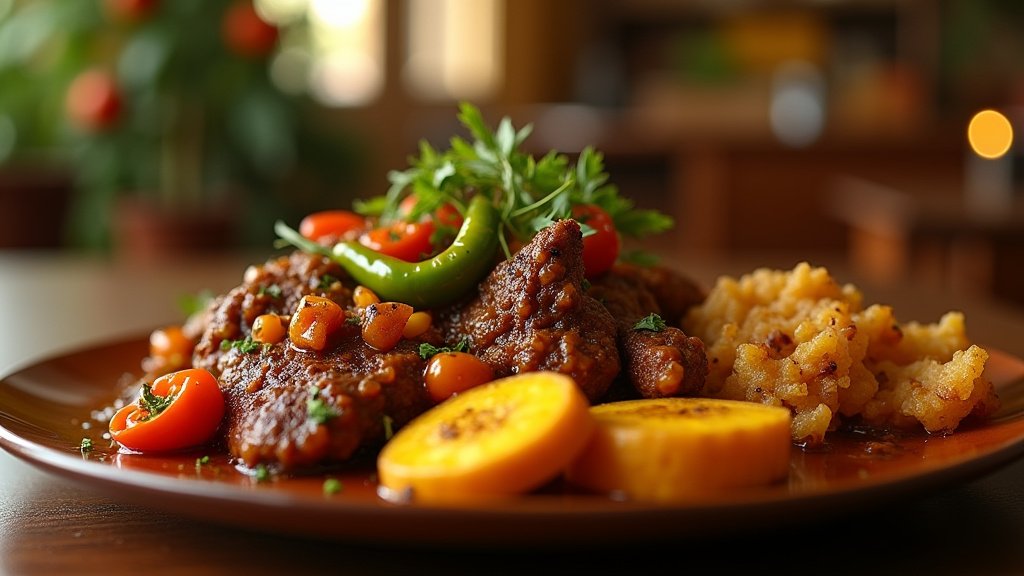
Students of Caribbean Ancestry (SOCA) transformed the campus atmosphere at Ramapo College during their recent Caribbean Heritage Week, hosting a ‘Taste of the Caribbean’ event that turned a dining hall into a vibrant hub of cultural exchange. The event, which drew over 50 students, focused on the power of traditional recipes to build community, offering a literal and figurative seat at the table for students of all backgrounds to explore the rich, complex flavors of the Caribbean while fostering deep social connections.
Key Highlights
- Culinary Connection: The event served as a focal point for Caribbean Heritage Week, prioritizing food as a universal language for building community.
- Menu Highlights: Attendees enjoyed a spread featuring jerk chicken, curry chicken, curry goat, mixed rice with shrimp, and fried plantains, followed by traditional desserts like flan and tres leches.
- Combating Homesickness: SOCA President Jestina Brown emphasized that the event serves as a crucial mechanism for lowering feelings of loneliness and homesickness among students by replicating the warmth of family dinners.
- Educational Outreach: Beyond eating, the event focused on the history and cultural significance of the dishes, teaching students about the ingredients and traditional preparation methods that define the Caribbean diaspora.
The Sociology of the Caribbean Table: Beyond Just Food
When we analyze the success of events like SOCA’s ‘Taste of the Caribbean,’ we are looking at much more than a successful campus gathering; we are observing the intersection of cultural preservation and psychological well-being. Food, in the context of the Caribbean diaspora, is rarely just sustenance. It is an artifact of history, a repository of identity, and a primary bridge between the family home and the ‘built home’ of an academic institution. For students navigating the often-isolating experience of higher education, these communal dining experiences serve as critical infrastructure for mental health and social integration.
The Historical Weight of the Menu
The menu served by SOCA at Ramapo College was carefully curated, not merely for flavor, but for its historical and cultural resonance. The inclusion of dishes like curry goat and jerk chicken is significant. Curry goat, for example, is a cornerstone of Jamaican culinary identity, reflecting the deep influence of Indian indentured laborers on the Caribbean archipelago. The technique of slow-cooking, combined with specific spice profiles, tells a story of survival, adaptation, and the eventual synthesis of distinct global cultures into a singular, resilient identity.
Similarly, jerk chicken—often synonymous with the Caribbean in the global consciousness—represents a specific fusion of Taino and African cooking techniques. By educating attendees on these origins, SOCA is providing a masterclass in cultural history. When a student learns why a dish is prepared a certain way, they are learning the geography of the Caribbean and the migrations that shaped its people. This educational component shifts the event from a casual meal to a workshop in heritage, allowing students to ‘consume’ knowledge alongside their dinner.
Culinary Diplomacy and Community Building
One of the most profound secondary angles of the ‘Taste of the Caribbean’ event is its role as a tool for ‘culinary diplomacy.’ Within the modern university environment, silos can easily form. Students often gravitate toward familiar demographics, which, while comfortable, can lead to stagnant social growth. By opening the event to the broader student body, SOCA created a neutral, welcoming space where barriers are naturally lowered.
Sociologists have long argued that the act of sharing a meal induces a state of vulnerability that facilitates deeper conversation. As reported by those in attendance, the table conversation at the event quickly moved from the quality of the curry chicken to deeper discussions about personal backgrounds and family history. When SOCA President Jestina Brown noted that ‘seeing people enjoy our foods from our country is so special,’ she was highlighting the validation that occurs when a dominant culture validates and celebrates a minority or diaspora culture. This validation is a cornerstone of inclusive campus culture.
The Future of Cultural Heritage Weeks
As universities across the globe look for ways to enhance student life and inclusivity, the template provided by SOCA—the marriage of cultural pride with communal dining—offers a scalable and sustainable model. It is low-barrier, high-impact, and fosters authentic engagement rather than performative diversity.
Looking ahead, the success of this event suggests that the future of campus diversity, equity, and inclusion (DEI) initiatives should rely less on abstract panels and more on immersive, sensory-based programming. When students are engaged through their senses—through the taste of spices, the rhythm of music, and the visual of shared celebration—the learning is retained longer and the emotional bonds formed are stronger. The event at Ramapo College serves as a vital reminder that while policy changes are necessary for institutional progress, cultural change is often cultivated in places like Friends Hall, over plates of rice and plantains, one conversation at a time.
FAQ: People Also Ask
1. What is the significance of Caribbean Heritage Week on college campuses?
Caribbean Heritage Week serves as a dedicated period to highlight the cultural, social, and political contributions of Caribbean people. On college campuses, it provides a platform for student organizations like SOCA to celebrate their heritage, educate their peers, and build supportive networks that help students navigate university life.
2. Why are ‘Taste of’ events so successful in community building?
‘Taste of’ events leverage the universal appeal of food to lower social inhibitions. By sharing a meal, individuals from diverse backgrounds are encouraged to interact in a relaxed environment, facilitating conversations that might not happen in a formal classroom or administrative setting.
3. How does cultural programming impact student mental health?
For students living away from home, cultural programming helps mitigate feelings of isolation. Engaging with traditions, music, and food from home (or from peers’ homes) fosters a sense of belonging and community, which is directly linked to improved mental health and overall student retention and satisfaction.