
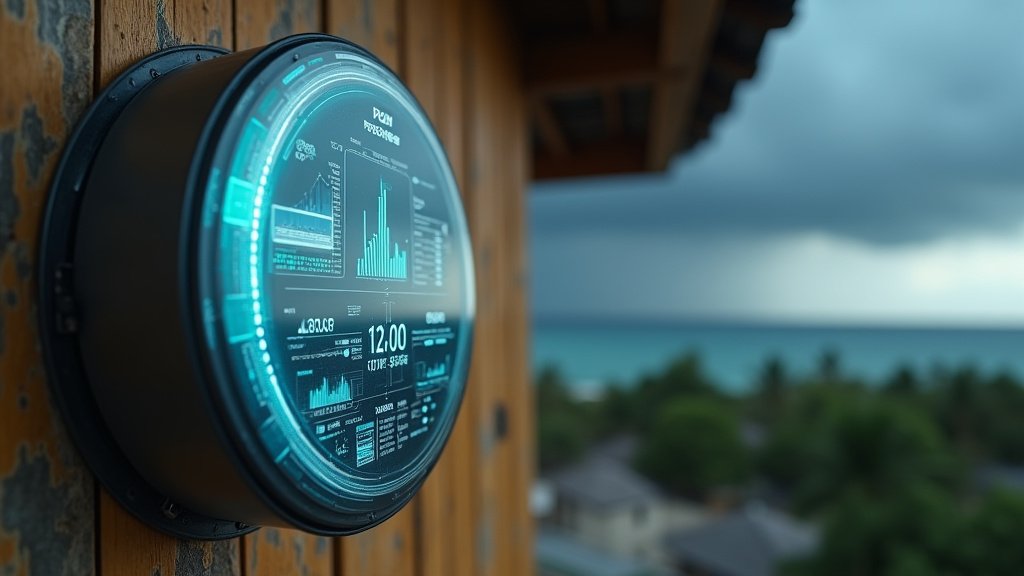
The Caribbean’s journey toward a sustainable energy future has officially shifted from a long-term goal to an immediate necessity. Speaking at the 20th annual conference of the Organisation of Caribbean Utility Regulators (OOCUR) in Trelawny this week, Andrew Wheatley, Minister without Portfolio with responsibility for Science, Technology, and Special Projects, issued a stark warning: the era of aspirational energy planning is over, and the time for urgent, technologically-integrated action has begun.
Key Highlights
- Shift in Priority: Energy transition has moved from a future-looking aspiration to an immediate, critical necessity for Caribbean survival and economic stability.
- Technological Integration: Policymakers are being urged to integrate Artificial Intelligence, 5G networks, and smart infrastructure into national development plans to keep pace with global changes.
- Resilience as a Core Pillar: The push for renewable energy is directly linked to climate resilience, specifically following the devastating impacts of recent climate events like Hurricane Melissa.
- Collaborative Regulation: There is a renewed call for regional regulators to act with foresight, emphasizing that the development of individual islands is inextricably linked to the collective success of the region.
The New Reality of Regional Energy Independence
The declaration made by Minister Wheatley signals a definitive pivot in regional governance. For years, the Caribbean has discussed the promise of renewable energy as a distant horizon—a target to be reached incrementally through steady, manageable steps. Today, that narrative has been disrupted by the harsh realities of the current geopolitical and environmental climate. The combination of fluctuating global electricity costs, a heavy dependence on imported fossil fuels, and the increasing frequency of climate-driven catastrophes has forced a re-evaluation of the region’s priorities.
Moving from Aspiration to Action
Wheatley’s address served as a wake-up call to regulators and policymakers alike. The primary message was clear: energy infrastructure is no longer just a utility; it is the backbone of national development, as fundamental to survival as roads and water supply. The minister noted that while the Caribbean is a minor contributor to global greenhouse gas emissions, the region stands on the frontlines of the climate crisis. This disparity creates a unique pressure to transition not only to save the planet but to insulate regional economies from the volatile swings of global oil markets and the destruction wrought by extreme weather events.
This transition requires a move away from reactive policymaking. Historically, Caribbean energy sectors have often responded to crises—such as power outages or infrastructure damage—with short-term fixes. Wheatley’s vision demands a proactive regulatory framework. By centering utility regulation within national development policies, governments can foster an environment where renewable energy is the standard, not an alternative. This includes leveraging solar photovoltaic systems, which have already seen increased uptake across the region as a primary means of disaster-resilient power generation.
The Role of Technology and AI
Perhaps the most forward-thinking component of Wheatley’s message was the integration of cutting-edge technology. The transition to a green grid is not solely about installing solar panels or wind turbines; it is about the intelligence that manages the flow of that power. Wheatley challenged regulators to keep pace with the rapid evolution of digital tools, including 5G connectivity and AI-driven grid management.
Artificial Intelligence, in particular, offers the Caribbean a chance to bypass traditional, inefficient grid models. With AI, utility providers can predict energy demand spikes, manage storage in battery arrays more efficiently, and automatically reroute power during localized outages. As the region moves toward decentralized energy production, where individual homes and businesses produce their own power, the software layer managing this interaction becomes the most critical asset. This digital transformation is expected to lower operating costs, improve the reliability of the grid, and empower consumers to become active participants in the energy market rather than passive recipients.
Building Climate Resilience
The mention of Hurricane Melissa in the broader discourse underscores the emotional and economic weight of this energy transition. For the Caribbean, energy infrastructure is a matter of life and safety. When a major storm hits, the vulnerability of the central power grid can cut off communication, water pumping, and healthcare services. By diversifying energy sources and decentralizing production—essentially creating a network of microgrids that can operate independently if the main grid fails—the region builds an insurance policy against the next inevitable storm.
Investment in solar, as highlighted by the minister, is not just about ‘going green.’ It is a tactical decision to secure energy continuity. When a standard power plant is knocked offline by wind or flooding, a community relying on distributed solar power and storage remains functional. This decentralization reduces the vulnerability of the region, ensuring that essential services can continue during periods of extreme instability. The Minister’s focus on solar, therefore, is an argument for regional security.
The Regulatory Burden
However, the path to this future is blocked by significant regulatory hurdles. Wheatley emphasized that the “Old Way” of regulating utilities—often characterized by rigid, slow-moving bureaucracies—cannot support the pace of the current transition. If the Caribbean wants to attract the massive private investment required to overhaul its infrastructure, it must create a regulatory environment that is clear, predictable, and welcoming of innovation.
This means updating legislation to allow for easier grid interconnection, incentivizing energy-efficient retrofitting for residential and commercial buildings, and protecting consumer rights in a digital energy market. The call for collaboration across the Organisation of Caribbean Utility Regulators (OOCUR) is particularly vital here. Small island nations acting in isolation lack the scale to negotiate favorable terms with global technology providers or to attract large-scale renewable energy investors. By harmonizing regulations across the Caribbean, the region can act as a single, attractive bloc, sharing the costs of innovation and the benefits of shared expertise.
In conclusion, Wheatley’s remarks suggest that the Caribbean is at a crossroads. The transition to clean, reliable energy is no longer just an environmental goal; it is an urgent economic imperative. By embracing AI, securing the grid against climate threats, and fostering deep regional cooperation, the Caribbean has the potential to transform from a victim of global energy fluctuations into a global leader in sustainable, resilient, and modern energy management.
FAQ: People Also Ask
1. Why is the energy transition considered ‘urgent’ now?
It is driven by the immediate need to reduce dependence on expensive, imported fossil fuels, the necessity to build resilience against increasingly frequent climate disasters (like Hurricane Melissa), and the need for economic stability in the face of global price volatility.
2. How does AI play a role in the Caribbean energy transition?
AI is crucial for managing the complex, decentralized energy grids of the future. It allows for the real-time balancing of energy supply from various sources (like solar and wind), predictive maintenance of infrastructure, and optimizing power usage during high-demand periods.
3. What is the significance of the OOCUR conference?
OOCUR acts as a central hub for regional utility regulators. It provides a platform for Caribbean nations to align their regulatory frameworks, share best practices, and collaborate on standards that make it easier for companies to invest in and roll out green technology across multiple islands simultaneously.
4. Is decentralization of the power grid a major focus?
Yes. Decentralization—empowering homes and businesses to generate their own power and operate on microgrids—is seen as the best way to ensure energy security during hurricanes and other climate events that typically disable centralized, single-point power plants.