
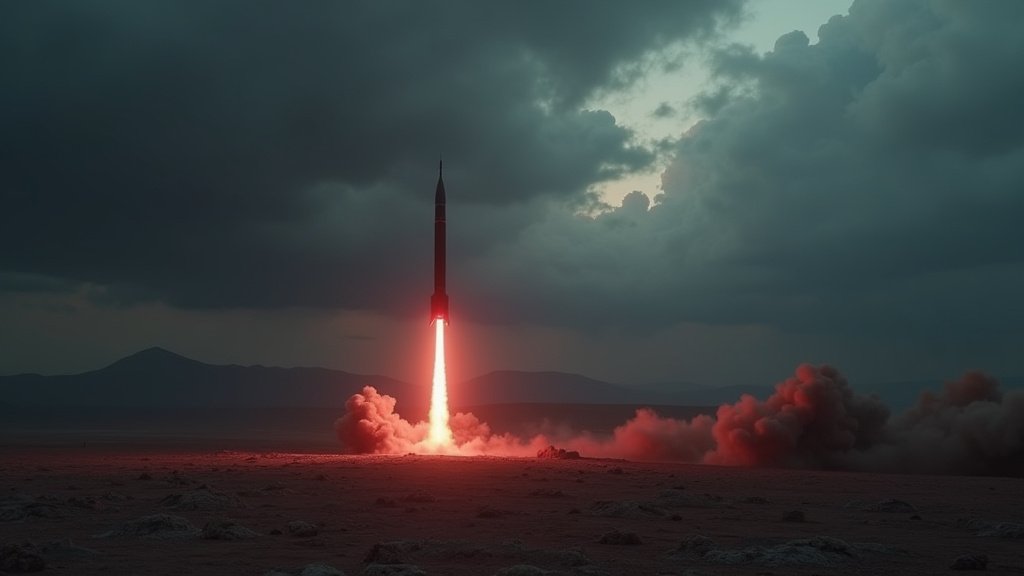
Trump Issues Unprecedented Missile Warning to Iran
US President Donald Trump has declared that 1,000 missiles are “locked and loaded” and targeted at Iran, with thousands more ready to follow if Tehran acts on threats to assassinate him. This forceful declaration, made via his Truth Social platform on July 11, 2026, signals a dramatic escalation in tensions and a stark departure from any existing ceasefire agreements. Trump has asserted that orders have been issued to the US military, positioning them as “ready, willing, and able” to initiate a campaign that could last for a year, subject to extension, with the objective to “completely decimate and destroy all areas of Iran.” This warning comes in the wake of intelligence shared by Israel with the US, suggesting Iran had developed a new plan to assassinate Trump. The situation is further complicated by ongoing disputes over the Strait of Hormuz, with the US having set a deadline for Iran to publicly declare it open and cease attacks on shipping vessels.
Key Highlights
- Massive Retaliation Threat: President Trump has warned that 1,000 missiles are prepared for immediate launch against Iran if an assassination attempt on him is made.
- Year-Long Military Campaign: The US military is under orders to be ready for a potential one-year campaign to “completely decimate” Iran, with possible extensions.
- Intelligence on Assassination Plot: The warning follows Israeli intelligence shared with the US, indicating Iran’s alleged development of a new plot to assassinate President Trump.
- Ceasefire Declared Over: Trump has stated that a ceasefire with Iran is “over,” despite a memorandum of understanding signed in June aimed at ending hostilities.
- Strait of Hormuz Dispute: Tensions persist over the Strait of Hormuz, with the US demanding Iran declare it open and halt attacks on commercial traffic.
Escalating Tensions and Retaliatory Orders
President Donald Trump’s pronouncement of “1,000 Missiles are Locked and Loaded” represents a significant escalation in the already fraught relationship between the United States and Iran. The directive, posted on his Truth Social account on July 11, 2026, explicitly states that these missiles are aimed at the “Islamic Republic of Iran, with thousands of more to immediately follow, should the Iranian Government act on its threat… to assassinate, or attempt to assassinate, the sitting President of the United States of America, in this case, ME!”. This statement underscores a clear red line drawn by the US, with a precondition for immense retaliatory force being an assassination attempt on the President. The inclusion of “orders have already been given” and the assertion that the US military is “ready, willing, and able” for a year-long period, subject to extension, to “completely decimate and destroy all areas of Iran”, indicates a pre-meditated and structured response plan. This isn’t merely a rhetorical threat but a declared state of military readiness for a devastating counteroffensive.
The immediate catalyst for this heightened alert appears to be intelligence shared by Israel with the United States, suggesting that Iran had devised a new plan to assassinate President Trump. This intelligence, while not yet independently verified by US agencies according to some reports, has been taken seriously enough to prompt such a strong public statement from the President. The context of these threats is further amplified by Iranian officials publicly vowing to avenge the 2020 assassination of Qassem Soleimani, a sentiment reportedly echoed during recent mourning commemorations for Ayatollah Ali Khamenei. This history of retribution and ongoing animosity between the two nations forms a volatile backdrop to the current warnings.
Breakdown of Ceasefire and Diplomatic Stalemate
The declaration that the ceasefire is “over” by President Trump on July 11, 2026, marks a significant breakdown in diplomatic efforts. This comes despite a memorandum of understanding (MoU) signed in June of the same year, brokered by Pakistan, which aimed to end the conflict that began in late February and establish a lasting peace agreement. The MoU reportedly called for an immediate cessation of hostilities on all fronts, the lifting of the US naval blockade on Iran, and the reopening of the Strait of Hormuz. However, recent events have seen both sides engage in retaliatory attacks, particularly concerning the passage of commercial traffic in the Strait of Hormuz. The US has accused Iran of failing to uphold its commitments regarding the strait, while Tehran contends that Washington has also not met its obligations. This mutual accusation of broken promises highlights the deep chasm in trust and the fragility of any de-escalation efforts.
The Strait of Hormuz: A Flashpoint
The Strait of Hormuz, a critical chokepoint for global oil trade, has emerged as a central point of contention. The US has issued a firm deadline for Iran to publicly declare the strait open and to halt its attacks on ships traversing its waters. This demand is a direct response to escalating hostilities and potential disruptions to international shipping. The ongoing exchanges of fire and diplomatic friction around this vital waterway underscore the precariousness of regional stability. The US’s military posture, coupled with its diplomatic demands concerning the Strait of Hormuz, indicates a strategic effort to ensure freedom of navigation while simultaneously projecting strength in response to perceived Iranian aggression.
Historical Context of Threats and Retaliation
This is not the first time President Trump has issued strong warnings regarding potential assassination attempts by Iran. In February 2025, he reportedly stated that he had left instructions for Iran to be “obliterated” if they succeeded in assassinating him. Similarly, in January 2026, he conveyed that if he were assassinated, “the whole country’s going to get blown up”. These past statements, coupled with intelligence reports of alleged Iranian plots in November 2024 and September 2024, illustrate a recurring pattern of perceived threats and pre-emptive deterrents. The US has repeatedly warned Tehran about potential retaliation for the 2020 drone strike that killed Qassem Soleimani, the commander of the Islamic Revolutionary Guard Corps’ Quds Force, a vow that Iran has consistently reiterated. The current warnings from Trump appear to be an amplification of these long-standing animosities and security concerns.
US Military Preparedness and Future Outlook
The US military’s readiness for a prolonged engagement, as stated by President Trump, suggests a strategic intent to deter any hostile actions through overwhelming force. The mention of a “one-year period of time, subject to extension,” indicates a preparedness for a sustained military operation if necessary. The effectiveness of such a strategy, however, remains to be seen. While Trump has emphasized his administration’s willingness to continue negotiations, the aggressive rhetoric and the explicit threat of mass destruction cast a long shadow over diplomatic possibilities. Whether future talks, possibly in Oman, can bridge the significant differences between Washington and Tehran or lead to further military escalation is a critical question for regional and global security.
FAQ: People Also Ask
What prompted President Trump’s warning to Iran?
President Trump’s warning was prompted by intelligence shared by Israel suggesting Iran was developing a new plot to assassinate him. This comes amidst escalating tensions and a breakdown of a previous ceasefire agreement between the US and Iran.
How many missiles did President Trump say are ready to be launched at Iran?
President Trump stated that “1,000 Missiles are Locked and Loaded” and aimed at Iran, with thousands more ready to follow if Iran acts on threats to assassinate him.
What is the US military’s preparedness level according to President Trump?
According to President Trump, the US military is “ready, willing, and able” for a one-year period, subject to extension, to “completely decimate and destroy all areas of Iran” if an assassination attempt occurs.
What is the current status of the ceasefire between the US and Iran?
President Trump has declared that the ceasefire with Iran is “over.” This statement comes despite a memorandum of understanding signed in June aimed at ending hostilities and establishing peace.
What is the significance of the Strait of Hormuz in this conflict?
The Strait of Hormuz is a critical chokepoint for global oil trade and has become a point of contention. The US has demanded that Iran publicly declare it open and cease attacks on commercial vessels in the strait.