
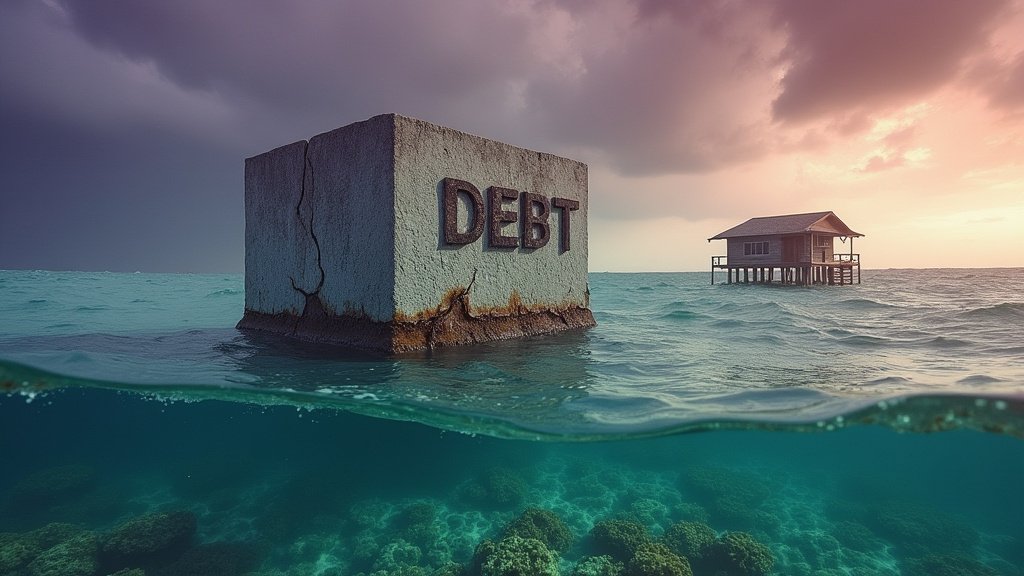
Caribbean nations are increasingly caught in a devastating ‘debt-climate trap,’ where mounting financial burdens exacerbate the impacts of climate change, creating a vicious cycle of vulnerability and underdevelopment.
Key Highlights:
- Small island developing states (SIDS) in the Caribbean face disproportionately high levels of debt.
- Climate change impacts like rising sea levels, intense hurricanes, and coral bleaching are costing these nations billions.
- Existing debt obligations limit the fiscal space for crucial climate adaptation and mitigation investments.
- International financial institutions and developed nations are urged to provide more accessible and targeted support.
The Debt-Climate Nexus Crippling Caribbean Economies
Escalating Debt Burdens
Caribbean countries, many of which are Small Island Developing States (SIDS), have long grappled with significant external debt. This debt often stems from historical development financing, trade imbalances, and, more recently, the costs associated with recovering from natural disasters. The reliance on borrowing to fund public services and infrastructure, coupled with limited export revenues and fluctuating tourism income, has led to a precarious financial situation for many. The debt-to-GDP ratios in several Caribbean nations are alarmingly high, diverting substantial portions of national budgets towards debt servicing rather than essential public investments.
The Accelerating Climate Threat
Simultaneously, the Caribbean region is on the front lines of the climate crisis. Rising global temperatures are causing sea levels to rise, threatening coastal communities and infrastructure with inundation and erosion. The frequency and intensity of hurricanes have increased, leading to catastrophic damage to homes, businesses, and critical infrastructure like hospitals and power grids. Coral reefs, vital for both marine ecosystems and tourism, are suffering from bleaching events due to warming and acidifying oceans. These climate-related events not only cause immediate devastation but also require massive, often borrowed, funds for recovery and rebuilding.
The Trap: Limited Funds, Mounting Needs
The core of the ‘debt-climate trap’ lies in the inescapable feedback loop it creates. Nations burdened by high debt have severely constrained fiscal capacity. When a major hurricane strikes, or sea-level rise erodes beaches, these governments must decide between servicing their debt obligations or investing in rebuilding and adaptation measures. Often, the immediate need for disaster recovery forces governments to take on more debt, further entrenching their financial vulnerability. This cycle prevents them from making the necessary long-term investments in renewable energy, resilient infrastructure, and coastal protection that could mitigate future climate impacts and foster sustainable development. The international community’s response, while sometimes generous, has often been inadequate or tied to conditions that do not fully address the scale of the intertwined crises.
Entities and International Response
Key international organizations like the International Monetary Fund (IMF) and the World Bank play a significant role in Caribbean debt dynamics. While they provide crucial financial assistance, their loan conditionalities can sometimes be perceived as adding to the fiscal strain. Regional bodies such as CARICOM (Caribbean Community) are actively advocating for reformed international financial architectures that are more sensitive to the unique vulnerabilities of SIDS. The concept of ‘loss and damage’ is gaining traction in international climate negotiations, aiming to provide financial assistance to developing countries suffering irreversible climate impacts, a critical issue for the Caribbean. The Paris Agreement’s goals are severely tested by the reality faced by these nations.
Secondary Angles
#### Historical Context of Debt
Many Caribbean nations inherited debt structures from colonial times, often exacerbated by unfavorable trade agreements and a post-colonial economic model focused on resource extraction or single-pillar tourism. This historical legacy has contributed to the persistent structural vulnerabilities that make them susceptible to external shocks, including climate change.
#### Economic Impact Beyond GDP
The impact of the debt-climate trap extends beyond traditional economic indicators. It affects social cohesion, increases migration pressures as livelihoods are destroyed, and hinders progress on the Sustainable Development Goals (SDGs). The psychological toll on populations living under constant threat and economic uncertainty is also a significant, often overlooked, consequence.
#### Future Predictions and Solutions
Without significant international reform and localized investment in resilience, the future for many Caribbean nations appears increasingly precarious. Potential solutions involve debt restructuring or cancellation, blended finance mechanisms that de-risk private investment in climate adaptation, and greater access to grants for loss and damage. A transition to blue and green economies, leveraging marine and renewable resources sustainably, is also seen as a critical pathway forward.
FAQ: People Also Ask
What is the ‘debt-climate trap’?
The ‘debt-climate trap’ refers to a situation where developing countries, particularly small island nations, are overwhelmed by national debt, which severely limits their ability to invest in climate change adaptation and mitigation, thus increasing their vulnerability to climate impacts, leading to further economic losses and potentially more debt.
Which Caribbean countries are most affected by this trap?
While many Caribbean nations are affected, countries with high levels of existing debt and significant exposure to climate risks, such as Haiti, Dominica, St. Lucia, and Jamaica, are particularly vulnerable. However, it’s a widespread issue across the region.
How does climate change specifically impact Caribbean economies?
Climate change impacts include increased intensity of hurricanes causing widespread destruction, rising sea levels threatening coastal infrastructure and tourism, coral bleaching damaging marine ecosystems and fisheries, and changes in rainfall patterns affecting agriculture. All of these result in significant economic costs for recovery, rebuilding, and adaptation.
What is being done internationally to address this issue?
International efforts include advocating for climate finance reform, discussions around ‘loss and damage’ funding under the UNFCCC, debt relief initiatives, and promoting sustainable development frameworks. However, the scale and speed of these actions often fall short of the urgent needs of vulnerable nations.
Why is debt a barrier to climate action in the Caribbean?
High debt servicing costs consume a large portion of a nation’s budget, leaving little financial room for investments in climate-resilient infrastructure, renewable energy projects, or disaster preparedness. When climate disasters strike, nations may be forced to borrow more, perpetuating the cycle of debt and climate vulnerability.