
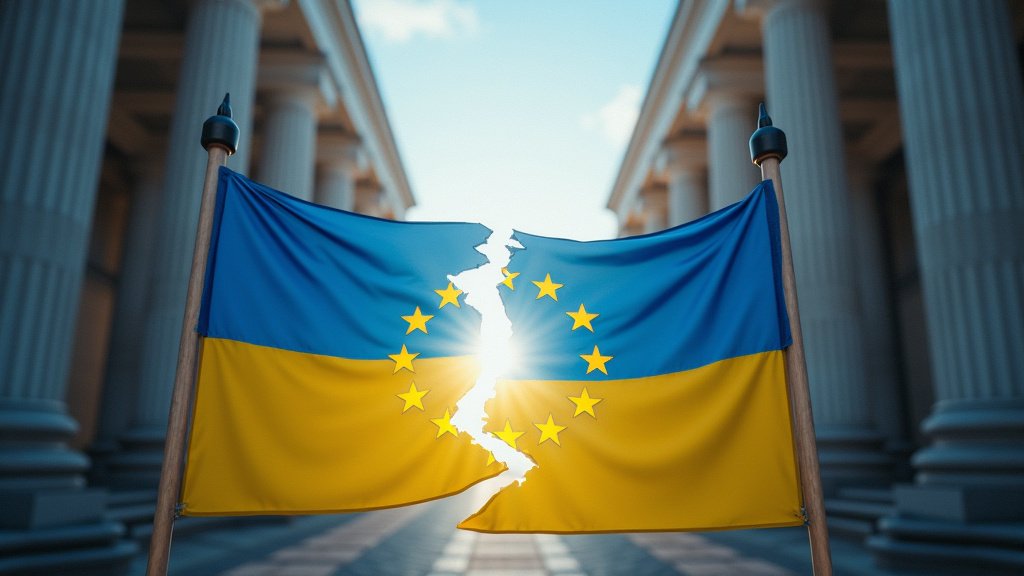
Global leaders are grappling with the potential implications of Donald Trump’s past approach to the Iran nuclear deal as the European Union takes a significant step by opening accession talks with Ukraine.
Key Highlights:
- G7 nations are seeking to understand the potential impact of a renewed Trump presidency on international agreements, particularly the Iran nuclear deal.
- The European Union has formally begun accession negotiations with Ukraine, signaling a long-term commitment to the country’s integration.
- These developments occur amidst ongoing geopolitical tensions and a shifting global political landscape.
- Allies are keen to ensure continuity and stability in foreign policy regardless of US election outcomes.
Geopolitical Crossroads: G7, Iran, and Ukraine
The international community finds itself at a critical juncture, with major powers seeking to navigate complex geopolitical landscapes. At the forefront is the Group of Seven (G7) leading industrialized nations, who are reportedly attempting to gain clarity on the potential foreign policy shifts that a future Donald Trump administration might enact, specifically concerning the Joint Comprehensive Plan of Action (JCPOA), commonly known as the Iran nuclear deal. This deal, aimed at curbing Iran’s nuclear program in exchange for sanctions relief, has been a subject of international debate and fluctuating commitment. Allies are anxious to understand the implications for regional stability and global non-proliferation efforts should the US alter its stance once more.
Simultaneously, in a move that underscores a significant commitment to Ukraine’s long-term future and its European aspirations, the European Union has officially opened accession talks with the war-torn nation. This decision marks a pivotal moment in Ukraine’s post-invasion trajectory, offering a pathway towards potential membership and deeper integration with the bloc. The process is expected to be long and arduous, requiring extensive reforms and adherence to EU standards, but the initiation of talks itself is a powerful political signal of solidarity and support.
The Iran Deal’s Lingering Shadow
The Iran nuclear deal has been a contentious issue since its inception. The Trump administration unilaterally withdrew the US from the JCPOA in 2018, reimposing stringent sanctions on Iran. This move was met with widespread international criticism and led to a period of heightened tensions in the Middle East. The subsequent Biden administration has sought to revive the deal, but negotiations have been protracted and fraught with difficulties. Now, with the prospect of a potential return to the White House by Donald Trump, G7 allies are reportedly engaging in discreet diplomatic efforts to gauge his administration’s likely approach. The core concern is whether a new US administration would seek to re-engage with the deal, pursue a different diplomatic track, or maintain a policy of maximum pressure. Understanding this potential shift is crucial for European and global partners who have invested heavily in the JCPOA’s framework and its associated economic and security implications.
Ukraine’s European Odyssey Begins
The European Union’s decision to open accession talks with Ukraine is a landmark event. It signifies a profound endorsement of Ukraine’s European identity and its resilience in the face of Russian aggression. The accession process involves rigorous screening of Ukraine’s legal and economic systems against the EU’s acquis communautaire, a body of common rights and obligations. This includes implementing reforms in areas such as the rule of law, corruption, and human rights. While the path to full membership is long, the commencement of these talks provides a crucial anchor for Ukraine’s post-war reconstruction and its geopolitical orientation. It sends a clear message to Moscow that Ukraine’s future lies firmly within the European fold, offering a strategic counterpoint to Russian influence.
Intersecting Global Agendas
The convergence of these two significant developments highlights the dynamic and often unpredictable nature of international relations. The G7’s focus on the Iran deal reflects a broader concern among allies about the durability of international agreements and the importance of coordinated foreign policy, especially in light of potential shifts in US leadership. Meanwhile, the EU’s opening of accession talks with Ukraine demonstrates a strategic commitment to European security and stability, reinforcing the bloc’s role as a geopolitical actor. Both situations demand careful diplomatic maneuvering and a clear understanding of evolving global power dynamics.
FAQ: People Also Ask
What is the G7?
The G7 (Group of Seven) is an intergovernmental political forum consisting of Canada, France, Germany, Italy, Japan, the United Kingdom, and the United States. It is the world’s largest advanced economies and works to address global issues such as economic stability, security, and climate change.
What was the Iran nuclear deal (JCPOA)?
The Joint Comprehensive Plan of Action (JCPOA) is an agreement on Iran’s nuclear program reached in 2015 between Iran and the P5+1 (the five permanent members of the United Nations Security Council—China, France, Russia, the United Kingdom, the United States—plus Germany) and the European Union. It aimed to limit Iran’s uranium enrichment capacity and heavy water production in exchange for lifting economic sanctions.
What does it mean for Ukraine to open accession talks with the EU?
Opening accession talks signifies the formal beginning of Ukraine’s negotiation process to potentially become a member state of the European Union. It involves a thorough assessment of Ukraine’s readiness to adopt EU laws and standards, and requires significant reforms across various sectors. It is a long-term commitment that signals strong political support and a shared future.
Why are G7 allies seeking clarity on the Iran deal?
G7 allies are seeking clarity because the US withdrawal from the JCPOA under the previous Trump administration led to international instability and strained diplomatic relations. They want to understand the potential future US policy to ensure coordinated international action and maintain global non-proliferation efforts.
What are the main challenges for Ukraine’s EU accession?
The main challenges for Ukraine’s EU accession include implementing extensive reforms related to the rule of law, combating corruption, economic liberalization, and aligning its legislation with the EU’s vast body of law (the acquis communautaire). The ongoing conflict also presents significant humanitarian and economic challenges that must be addressed.