
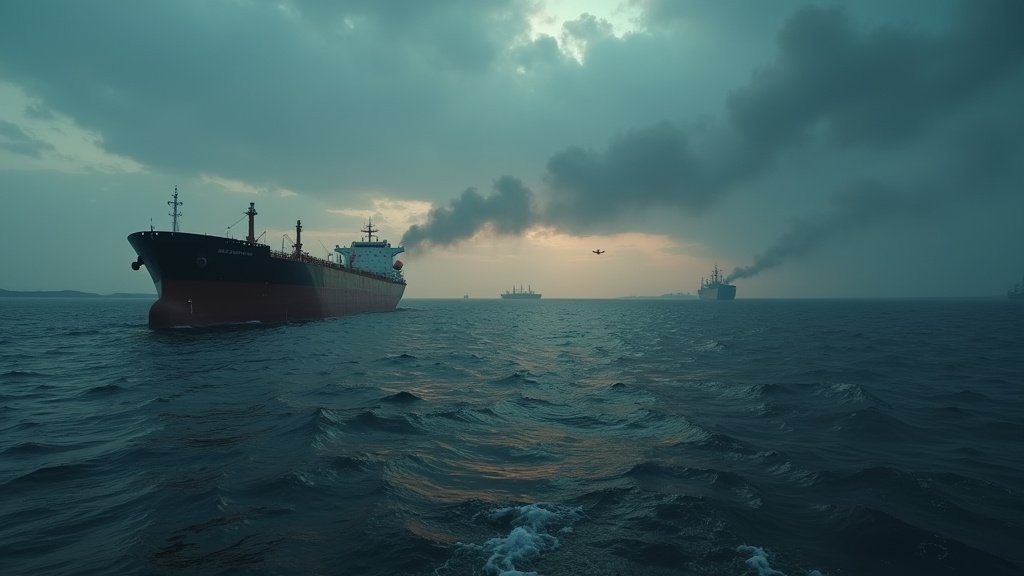
The United States has launched new airstrikes against Iran, escalating regional tensions, with Tehran firing back at three Gulf Arab states amid a worsening conflict that threatens the vital Strait of Hormuz. The U.S. strikes, which reportedly killed three people and wounded several others near Ahvaz, were described by U.S. forces as an effort to curb Iran’s ability to obstruct freedom of navigation in the Strait of Hormuz. Iran’s Foreign Ministry vehemently condemned the attacks, labeling them a “gross war crime” for striking civilian infrastructure. This escalation follows an earlier incident where a Qatari tanker was attacked in the Strait of Hormuz, and Iran launched drones towards Qatar. Amidst this turmoil, Iran is set to bid farewell to its Supreme Leader, Ayatollah Ali Khamenei, who will be buried in Mashhad on Thursday, July 9, 2026, following a week of national mourning ceremonies. The conflict’s wider implications are underscored by Amnesty International’s accusations of war crimes against Israel for its strikes in Lebanon.
Key Highlights:
- U.S. airstrikes hit Iran near Ahvaz, resulting in casualties.
- Iran retaliated with strikes against three Gulf Arab states.
- The conflict escalates tensions around the Strait of Hormuz.
- Supreme Leader Ayatollah Ali Khamenei’s funeral is scheduled for July 9, 2026.
- Amnesty International accuses Israel of war crimes in Lebanon.
Escalating Confrontation in West Asia
U.S. Strikes and Iranian Retaliation
In a dramatic turn of events, the United States has initiated new airstrikes targeting Iran, a move that has been met with swift and forceful retaliation. The official Iranian news agency IRNA reported that these U.S. strikes resulted in the deaths of three individuals and left several others injured, with the attacks specifically targeting the outskirts of Ahvaz. In response, Iran has engaged in retaliatory actions, firing upon three Gulf Arab states, further intensifying the already volatile regional security landscape. U.S. forces have asserted that their strikes were a direct response to Iran’s perceived threats to freedom of navigation within the critical Strait of Hormuz, a vital chokepoint for global oil transit. This exchange marks a significant escalation in the long-standing tensions between the two nations.
Iran Condemns U.S. Actions, Cites Civilian Impact
Iran’s Ministry of Foreign Affairs has issued a strong condemnation of the U.S. airstrikes, denouncing them as a “gross war crime.” The ministry specifically highlighted that the strikes targeted civilian infrastructure, underscoring the devastating human cost and broader implications of such military actions. This statement from Tehran emphasizes Iran’s perspective that the U.S. actions not only violate international norms but also endanger civilian populations and infrastructure, further fueling the cycle of recrimination and reprisal in the region.
Strait of Hormuz: A Flashpoint for Conflict
The Strait of Hormuz remains a central and precarious flashpoint in the escalating conflict. The region has seen heightened activity and concern, particularly following an earlier incident involving the attack on a Qatari tanker within the strait. Iran’s subsequent launch of drones targeting Qatar indicates a widening scope of engagement and a potential spillover effect of the current hostilities. The repeated targeting of maritime traffic and the strategic importance of this waterway underscore the grave threat to international trade and energy security.
National Mourning Amidst War
As the region grapples with escalating military confrontations, Iran is also preparing for the solemn occasion of its Supreme Leader Ayatollah Ali Khamenei’s burial. Following a week-long period of mourning ceremonies, Khamenei is scheduled to be laid to rest in Mashhad on Thursday, July 9, 2026. This significant national event is unfolding against a backdrop of intense regional conflict, adding a layer of solemnity and gravity to an already precarious geopolitical situation. The succession and future leadership of Iran will be closely watched in the coming days.
International Scrutiny and War Crime Allegations
The wider conflict in West Asia is drawing increased international attention, with human rights organizations highlighting potential violations of international law. Amnesty International has formally accused Israel of war crimes due to its airstrikes conducted in Lebanon. These allegations, coupled with the ongoing direct confrontations between Iran and the U.S., signal a broader pattern of conflict and potential human rights abuses that are being closely monitored by the international community.
Geopolitical Ramifications and Future Outlook
The current trajectory of events in West Asia presents a complex web of geopolitical challenges. The direct military engagement between the U.S. and Iran, combined with Iran’s actions against Gulf Arab states and the broader regional instability, poses a significant threat to global peace and security. The critical nature of the Strait of Hormuz for global energy supplies means that any sustained disruption could have far-reaching economic consequences. The upcoming burial of Supreme Leader Khamenei may also herald a period of uncertainty regarding Iran’s internal politics and its future foreign policy.
FAQ: People Also Ask
Q1: What led to the new U.S. airstrikes on Iran?
A1: U.S. forces stated that the airstrikes were aimed at hindering Iran’s ability to threaten freedom of navigation in the Strait of Hormuz. The strikes reportedly killed three people and wounded several others near Ahvaz.
Q2: How did Iran respond to the U.S. airstrikes?
A2: Iran retaliated by firing at three Gulf Arab states and condemned the U.S. strikes as a “gross war crime” for targeting civilian infrastructure.
Q3: When and where will Supreme Leader Khamenei be buried?
A3: Supreme Leader Ayatollah Ali Khamenei is scheduled to be buried in Mashhad on Thursday, July 9, 2026, following a week of mourning ceremonies.
Q4: What is the significance of the Strait of Hormuz in this conflict?
A4: The Strait of Hormuz is a vital chokepoint for global oil transit. Tensions and attacks in this region pose a significant threat to international trade and energy security.
Q5: Are there other accusations of war crimes related to this conflict?
A5: Yes, Amnesty International has accused Israel of war crimes for its strikes on Lebanon, indicating a broader pattern of conflict with international legal implications.