
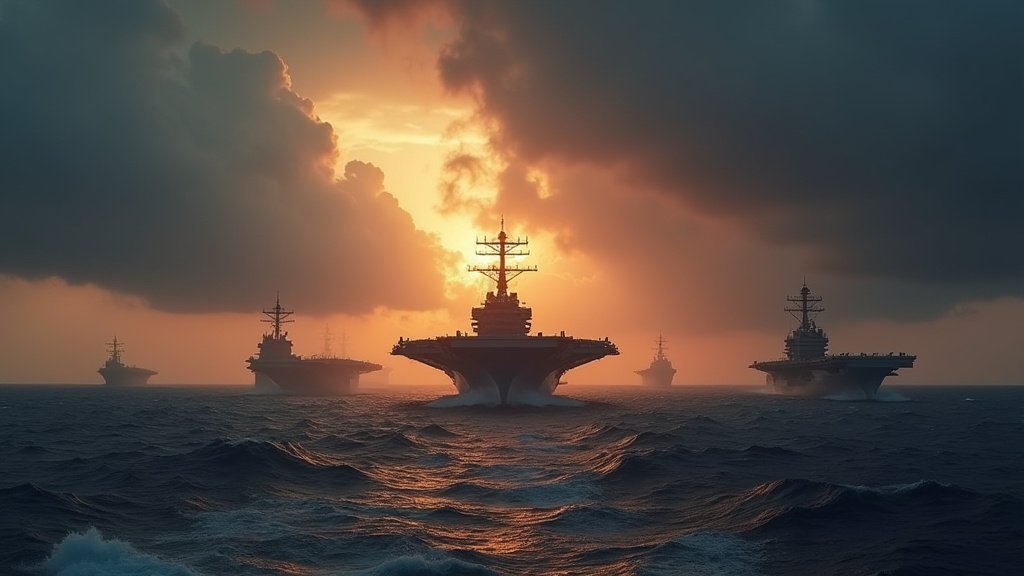
President Trump signaled a dramatic escalation in US-Iran tensions, stating that the United States would “hit Iran ‘hard’ today” following the breakdown of recent peace talks. The announcement came as diplomatic efforts to de-escalate the situation appeared to have failed, raising fears of a wider conflict in the Middle East.
Key Highlights:
- President Trump indicated an imminent “hard” military strike against Iran.
- The planned action follows the collapse of ongoing peace negotiations.
- Tensions between the US and Iran have significantly escalated.
- The situation raises concerns about regional stability and potential wider conflict.
US Readies for Retaliation Amidst Diplomatic Failure
Escalation of Tensions
The defiant declaration by President Trump marks a critical juncture in the already fraught relationship between the United States and Iran. For months, the two nations have been engaged in a delicate dance of threats and cautious diplomacy, with occasional skirmishes and heightened rhetoric fueling regional anxieties. The breakdown of recent peace talks, details of which remain sparse, appears to have been the final catalyst for a more aggressive posture from the White House. The precise nature of the “hard” strike remains undisclosed, but the language suggests a significant military response rather than a limited engagement.
Analysis of the Failed Peace Talks
Sources close to the negotiations suggest that irreconcilable differences over key demands led to their ultimate failure. While specific sticking points have not been publicly revealed, it is widely believed that issues related to Iran’s ballistic missile program, its regional influence, and the lifting of sanctions were central to the impasse. The Trump administration has consistently pushed for a comprehensive deal that addresses these concerns, while Iran has maintained its right to its defense capabilities and has sought substantial sanctions relief as a prerequisite for further concessions. The collapse of these discussions leaves a void that appears to be filled by military action.
Geopolitical Implications
The potential US strike on Iran carries significant geopolitical weight, with implications extending far beyond the immediate bilateral relationship. Regional powers, including Saudi Arabia and Israel, are closely monitoring the situation, with their own security interests intertwined with the stability of the Persian Gulf. An escalation could also draw in other global players, potentially leading to a broader regional conflict. The international community, including allies and adversaries alike, will be watching to see how this plays out and what the long-term consequences will be for global energy markets and international security.
Historical Context and Precedents
This current standoff is not without historical precedent. The US-Iran relationship has been volatile since the 1979 Islamic Revolution. While direct military confrontations have been rare, proxy conflicts and periods of intense diplomatic tension have been recurring themes. Previous administrations have also employed various forms of pressure, including sanctions and naval presence, to curb Iran’s nuclear ambitions and regional activities. However, President Trump’s direct threat of a “hard” strike today signals a potentially more direct and immediate form of engagement than has been seen in recent history.
Economic Ramifications
A military escalation in the Strait of Hormuz, a critical chokepoint for global oil supplies, could have severe economic consequences. Oil prices, already sensitive to geopolitical events, could surge dramatically, impacting global markets and potentially triggering inflation. Furthermore, any disruption to shipping lanes or the destruction of energy infrastructure could lead to significant supply shortages, affecting economies worldwide. Businesses reliant on Middle Eastern energy imports would face immediate challenges, and the broader global economic recovery could be jeopardized.
Expert Opinions and Future Outlook
Analysts are divided on the potential outcomes. Some fear a prolonged period of heightened conflict and instability, while others believe that a decisive, albeit forceful, action might ultimately lead to a renewed push for diplomacy from a position of perceived strength. However, the risk of miscalculation and unintended escalation remains a primary concern. The coming hours and days will be crucial in determining whether this is a limited strike or the precursor to a more sustained military engagement that could reshape the geopolitical landscape of the Middle East for years to come.
FAQ: People Also Ask
What led to the breakdown of the peace talks between the US and Iran?
While the specifics remain undisclosed, reports suggest that irreconcilable differences regarding Iran’s ballistic missile program, regional influence, and the lifting of sanctions were the primary reasons for the collapse of the negotiations.
What does “hit Iran ‘hard’ today” mean?
This statement implies a significant and potentially severe military action planned by the United States against Iran. The exact nature and targets of the strike have not been specified.
What are the potential consequences of a US strike on Iran?
Consequences could include a surge in oil prices, disruption to global energy supplies, increased regional instability, and a potential for wider conflict involving other Middle Eastern nations.
How has the US-Iran relationship evolved historically?
The relationship has been tense since the 1979 Islamic Revolution, marked by periods of diplomatic strain, proxy conflicts, and sanctions. Direct military confrontation has been rare, but tensions have frequently flared.
What is the significance of the Strait of Hormuz?
The Strait of Hormuz is a vital maritime chokepoint through which a significant portion of the world’s oil supply passes. Any disruption in this region can have a major impact on global energy markets.