
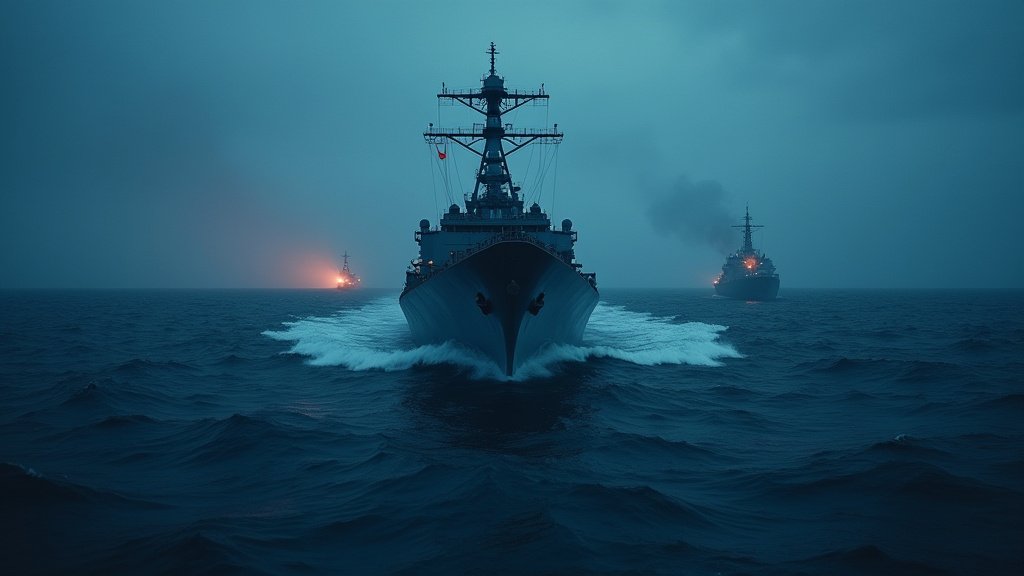
The United States Navy has announced a new initiative, dubbed ‘Project Freedom,’ to escort commercial vessels transiting the Strait of Hormuz, a critical chokepoint for global oil shipments. This strategic deployment aims to enhance maritime security and deter potential threats in the vital waterway.
Key Highlights:
- ‘Project Freedom’ is a US-led initiative to provide naval escorts for ships in the Strait of Hormuz.
- The operation seeks to bolster security and deter aggression against commercial shipping.
- The Strait of Hormuz is a globally significant route for oil and gas transport.
- The initiative underscores the US commitment to freedom of navigation in international waters.
‘Project Freedom’: Enhancing Maritime Security in a Vital Waterway
The Strait of Hormuz, a narrow sea passage connecting the Persian Gulf with the Gulf of Oman and the open sea, is an indispensable artery for international trade, particularly for energy resources. Annually, a significant portion of the world’s oil supply passes through this strategically vital strait. In response to escalating regional tensions and potential threats to maritime commerce, the United States, through its naval forces, has launched ‘Project Freedom.’ This new operation is designed to provide direct naval escorts for commercial vessels navigating this perilous passage, thereby increasing the safety and security of international shipping.
Rationale Behind ‘Project Freedom’
The decision to implement ‘Project Freedom’ stems from a confluence of factors, including heightened geopolitical instability in the Middle East and an increased risk of disruptions to global supply chains. The US military has observed a growing pattern of assertiveness and potential provocations in the region, necessitating a robust response to safeguard the free flow of commerce. By deploying naval assets to escort ships, the US aims to create a deterrent effect, signaling to any potential aggressors that such actions will not be tolerated and that international maritime law will be upheld. This proactive measure is intended to prevent incidents before they occur and to reassure global markets of the commitment to maintaining stability in this crucial maritime domain.
Operational Details and Scope
While specific details regarding the number of vessels or the exact deployment schedule of ‘Project Freedom’ remain under wraps for operational security reasons, the US Navy has indicated that the escorts will be conducted in accordance with international maritime law and best practices. The initiative is expected to involve a coordinated effort, potentially including various naval assets such as destroyers, cruisers, and other support vessels. The focus will be on providing a visible and credible security presence, ensuring that commercial ships can transit the strait without undue fear or interference. The operation’s success will be measured not only by the absence of incidents but also by the confidence it instills in shipping companies and international stakeholders.
International Cooperation and Alliances
The success of ‘Project Freedom’ may also depend on broader international cooperation. While the initiative is US-led, the US has consistently advocated for burden-sharing and collaborative security efforts in critical maritime regions. Discussions with regional partners and allies are likely underway to ensure a coordinated approach and to maximize the effectiveness of the security measures. International bodies such as the International Maritime Organization (IMO) play a crucial role in setting standards and facilitating communication among nations regarding maritime safety and security. ‘Project Freedom’ aligns with the broader international commitment to freedom of navigation, a principle enshrined in international law and vital for global economic prosperity.
Historical Context of Hormuz Strait Security
The Strait of Hormuz has a long history of strategic importance and has been a focal point for international maritime security concerns. Throughout various periods of regional conflict and tension, foreign powers, including the United States, have intervened to ensure the unimpeded flow of traffic. Notably, during the Iran-Iraq War in the 1980s, naval forces, including the US Navy, were deployed to protect oil tankers and shipping from attacks. These historical precedents underscore the recurring need for robust security measures in the strait and provide valuable lessons for current operations like ‘Project Freedom.’ The lessons learned from past operations inform the strategic planning and execution of contemporary security initiatives.
Economic Implications of Hormuz Disruptions
Any significant disruption to shipping in the Strait of Hormuz would have profound and far-reaching economic consequences. The strait is a vital transit route for approximately 30% of the world’s seaborne oil trade. A closure or severe disruption could lead to a sharp increase in global oil prices, impacting everything from transportation costs to manufacturing expenses. This could trigger inflation, slow down economic growth, and create instability in financial markets worldwide. Therefore, initiatives like ‘Project Freedom’ are not just about military security; they are about maintaining global economic stability and preventing widespread financial repercussions.
Future Outlook and Potential Challenges
‘Project Freedom’ represents a significant commitment by the US to ensuring maritime security in a highly volatile region. However, the operation is not without its challenges. Maintaining a consistent and effective escort presence requires substantial resources and can be politically sensitive. Furthermore, the effectiveness of such measures can be tested by sophisticated asymmetric tactics or state-sponsored harassment. The long-term success will likely depend on sustained diplomatic engagement, de-escalation efforts, and the continued cooperation of international partners. The US will need to navigate complex regional dynamics while ensuring the safety and security of commercial vessels.
FAQ: People Also Ask
What is the Strait of Hormuz?
The Strait of Hormuz is a strategically vital strait connecting the Persian Gulf and the Gulf of Oman. It is the only sea passage from the Persian Gulf to the open ocean and is one of the world’s most important oil transit points.
Why is the Strait of Hormuz important for global oil supply?
Approximately 30% of the world’s seaborne oil trade passes through the Strait of Hormuz daily. This makes it a critical chokepoint for the global energy market, and any disruption can significantly impact oil prices and availability.
What is ‘Project Freedom’?
‘Project Freedom’ is a new initiative launched by the United States Navy to provide escorts for commercial ships transiting the Strait of Hormuz. The goal is to enhance maritime security and deter potential threats to shipping.
What are the primary threats to shipping in the Strait of Hormuz?
Threats can include potential attacks by state or non-state actors, naval mines, piracy, and other forms of maritime harassment aimed at disrupting the flow of commerce, particularly oil shipments.
How does the US Navy ensure freedom of navigation?
The US Navy actively patrols international waters, including the Strait of Hormuz, to ensure freedom of navigation and commerce. This involves conducting presence operations, participating in joint exercises, and, as with ‘Project Freedom,’ providing direct escorts when deemed necessary to deter threats and uphold international law.