
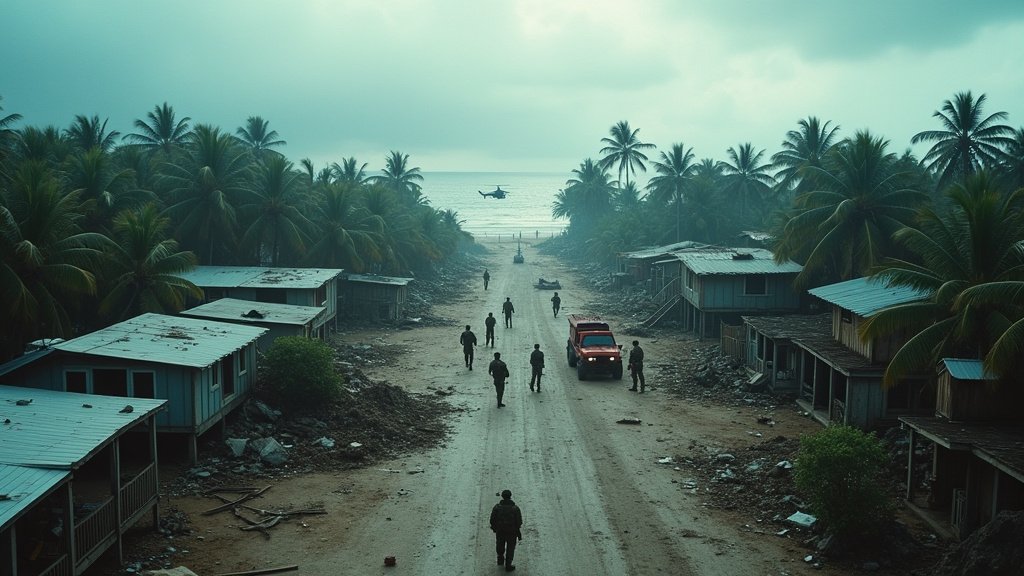
The Caribbean District is conducting a multi-day exercise to enhance preparedness for the upcoming 2026 Hurricane Season, involving extensive coordination and simulation across various agencies and units. This comprehensive drill aims to test response capabilities, identify potential weaknesses, and ensure seamless integration of resources in the event of a major storm.
Key Highlights:
- Multi-agency participation including military, civilian, and international partners.
- Simulation of various hurricane scenarios, from landfall to recovery.
- Focus on communication, logistics, and resource deployment.
- Assessment of current response plans and identification of areas for improvement.
- Reinforcement of training for personnel involved in disaster response.
Readiness for Resilience: Caribbean District’s Hurricane Season Exercise
The Caribbean District’s proactive stance for the 2026 Hurricane Season is underscored by a rigorous, multi-day exercise designed to simulate and enhance its disaster response capabilities. This critical initiative brings together a diverse array of military personnel, civilian agencies, and potentially international partners to test and refine operational plans against the backdrop of realistic hurricane threats. The exercise is not merely a procedural check; it represents a deep commitment to safeguarding lives and infrastructure across the region.
Strategic Simulation and Coordination
At the core of the exercise is the meticulous simulation of various hurricane scenarios. These simulations are crafted to mirror the potential complexities and challenges posed by severe weather events, ranging from initial landfall impacts to the long-term recovery phases. The objective is to push the boundaries of current response protocols, revealing any chinks in the armor and fostering an environment where improvements can be identified and implemented swiftly. Effective coordination is paramount, and the drill places a significant emphasis on establishing clear lines of communication and command structures that can withstand the pressures of a real crisis.
Logistics and Resource Management Under Pressure
A significant component of the exercise focuses on the intricate logistics of resource management. This includes the rapid deployment of personnel, equipment, and essential supplies to affected areas. Participants are tasked with overcoming simulated logistical hurdles, such as transportation disruptions, infrastructure damage, and the prioritization of critical needs. The successful movement and allocation of resources are vital for mitigating the impact of a hurricane, and this exercise ensures that the Caribbean District’s operational teams are adept at managing these complex challenges.
Training and Personnel Development
The exercise serves as an invaluable training platform for all personnel involved in disaster response. Through hands-on participation in simulated events, individuals and teams can hone their skills, build confidence, and develop a deeper understanding of their roles and responsibilities. This continuous professional development is crucial for maintaining a high level of readiness. Experienced leaders are on hand to provide guidance, evaluate performance, and ensure that all participants are equipped with the knowledge and expertise necessary to respond effectively when a real hurricane threatens the region.
Interagency Collaboration and International Partnerships
Recognizing that disaster response is a collective effort, the Caribbean District emphasizes robust interagency collaboration. The exercise provides a unique opportunity for military units and civilian emergency management agencies to work side-by-side, fostering mutual understanding and strengthening operational synergy. Furthermore, the inclusion of international partners, where applicable, enhances regional cooperation and builds a more resilient network capable of addressing trans-boundary challenges that often accompany major natural disasters.
Lessons Learned and Future Preparedness
Post-exercise analysis is a critical phase, where performance is meticulously reviewed, and lessons learned are documented. This includes evaluating the effectiveness of communication systems, the efficiency of command and control, and the adequacy of resource allocation. The insights gained from these evaluations directly inform updates to existing disaster response plans, ensuring that the Caribbean District remains at the forefront of preparedness for future hurricane seasons. The commitment to continuous improvement is a hallmark of their approach to disaster risk reduction.
FAQ: People Also Ask
What is the primary goal of the Caribbean District’s hurricane preparedness exercise?
The primary goal is to enhance the readiness and response capabilities of the Caribbean District and its partner agencies for the upcoming 2026 Hurricane Season by simulating realistic scenarios, testing communication and logistics, and identifying areas for improvement in disaster response plans.
Which agencies typically participate in such exercises?
Such exercises typically involve various branches of the military within the Caribbean District, alongside civilian emergency management agencies (like FEMA or local equivalents), public works departments, law enforcement, fire services, and potentially non-governmental organizations and international partners from affected or supporting nations.
How do these exercises help in real hurricane events?
These exercises help by identifying weaknesses in response plans, improving coordination among different agencies, training personnel on their specific roles, ensuring that communication systems are functional, and testing the logistics of deploying resources. This proactive approach leads to a more efficient and effective response when a real hurricane strikes.
What are the key components of a hurricane preparedness exercise?
Key components usually include scenario development, team mobilization, communication drills, resource deployment simulations, command and control exercises, damage assessment simulations, and a thorough after-action review to capture lessons learned and recommend improvements.
How frequently does the Caribbean District conduct such exercises?
While specific frequencies can vary, comprehensive hurricane preparedness exercises are typically conducted annually or biennially leading up to the hurricane season to maintain a high level of readiness. The intensity and scope may vary based on perceived threats and available resources.