
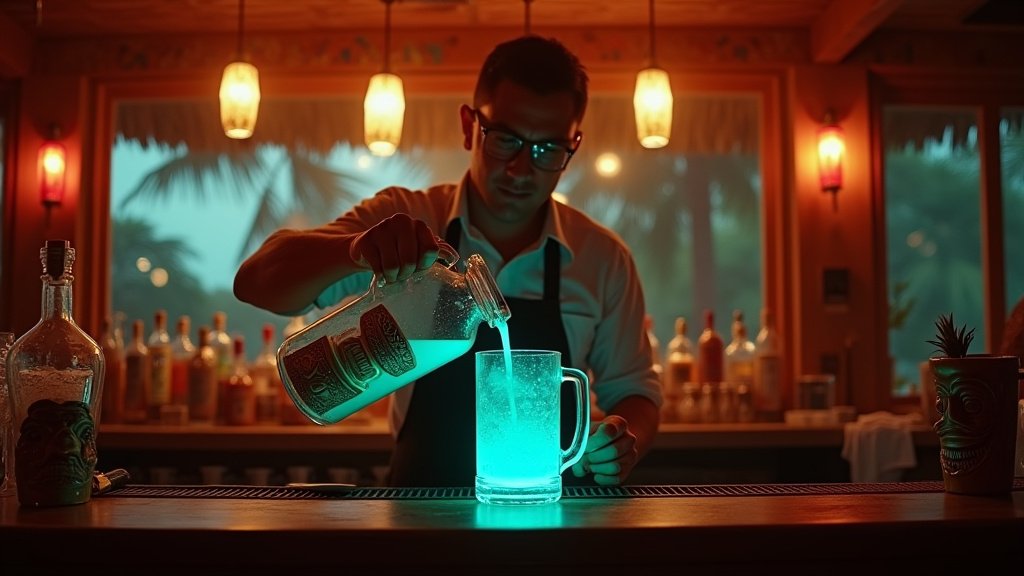
Behind every vibrant, electric-blue cocktail sitting poolside—from the nostalgic Blue Lagoon to the mid-century classic Blue Hawaii—lies a secret that might dampen the mood of your next happy hour: the liqueur is not naturally blue at all. In fact, in its purest, rawest state, Curaçao is as transparent as water, a bitter orange essence that traces its roots to a specific, unpalatable citrus fruit in the Caribbean. The brilliant azure hue that has defined tropical drink menus for decades is purely cosmetic, a marketing stroke of genius that has successfully duped generations of cocktail enthusiasts into believing that “blue” is a flavor profile.
Key Highlights
- The Natural State: Authentic Curaçao is a clear, orange-flavored liqueur derived from the peels of the Laraha orange, a bitter citrus fruit that grows exclusively on the Caribbean island of Curaçao.
- The Great Dye Job: The signature electric-blue color is achieved entirely through the addition of artificial food coloring, such as FD&C Blue No. 1, and serves no function in the spirit’s flavor profile.
Historical Context: While the liqueur’s history is murky, the “blue” variation gained massive mainstream popularity in the 1960s and 70s, coinciding with the rise of kitschy, exotic tiki culture and films like Blue Hawaii*.
- Craft Resistance: A growing movement of craft distillers is moving away from the artificial dye, opting for clear, high-quality distillations that emphasize the botanical complexity of the Laraha peel without the artificial spectacle.
The Anatomy of a Beverage Illusion
When we order a blue-tinted beverage, the human brain—conditioned by years of advertising and marketing psychology—expects a cooling, refreshing experience, often associating the color blue with the ocean or crisp, cold water. This cognitive association is exactly what the spirits industry has capitalized on for over a century. However, from a strictly chemical standpoint, Blue Curaçao is a masterclass in visual deception. The base spirit is produced by steeping the dried peels of the Citrus × aurantium subsp. currassuviencis—commonly known as the Laraha orange—in a neutral grain spirit. This process extracts essential oils that carry a complex, bitter-sweet citrus profile. After distillation, the resulting liquid is remarkably clear, or at best, a pale straw color.
The Laraha Legend: An Accidental Discovery
The story of this liqueur is inseparable from the history of the island of Curaçao itself. In the early 16th century, Spanish settlers brought Valencia orange trees to the island, hoping to cultivate a lucrative crop. The island’s arid climate, volcanic soil, and lack of consistent rainfall, however, thwarted these efforts. The sweet Valencia oranges devolved into the Laraha, a small, green, and inedible fruit. While the fruit itself was bitter enough to be considered useless by the standards of traditional agriculture, the settlers eventually discovered that the oils within the thick, fragrant peels were highly aromatic. This discovery laid the foundation for the Curaçao liqueur industry, which has since been guarded by local producers, most notably Senior & Co., which remains the only distillery that uses authentic Laraha peels from the island.
The Industrialization of Color
For centuries, Curaçao was sold without color, or perhaps with a natural golden tint derived from spices or herbs. The shift toward the bright blue variation is an interesting case study in 20th-century branding. Distilleries, including the Dutch giant Bols, began experimenting with hues in the early 1900s, but the color truly exploded in popularity during the mid-20th century. This was the era of the “tiki” explosion, where escapism was the primary goal of the American bar scene. Consumers were looking for a vacation in a glass. The introduction of bright blue dye was an aesthetic intervention, designed to make drinks look more “tropical” and “exotic” than a standard clear liqueur ever could. It turned a simple orange-flavored drink into a visual prop, perfectly timed for the rise of Technicolor cinema and the booming tourism industry.
Craft Distillation vs. Marketing Gimmick
Today, the industry is split between traditional, large-scale production and a modern craft movement that seeks to reclaim the integrity of the spirit. Major commercial brands rely on the dye because it has become an inseparable part of the brand identity; customers would be confused, perhaps even suspicious, if a bottle of “Blue Curaçao” poured clear. However, small-batch distillers are increasingly releasing clear “Curaçao” or “Orange Sec” products, encouraging bartenders and consumers to appreciate the nuance of the Laraha oil. These distillers argue that the reliance on Blue No. 1 dye masks the quality of the spirit, effectively categorizing it as a low-end mixer rather than a sophisticated cocktail ingredient.
FAQ: People Also Ask
Q: Does Blue Curaçao taste different than other orange liqueurs?
A: Not inherently. The blue dye has no flavor. The distinct profile of a high-quality Curaçao comes from the Laraha orange peel, which is more bitter and “perfumed” than the sweet Valencia oranges used in Triple Sec. However, many cheap, mass-market Blue Curaçaos use synthetic flavorings rather than real orange peel, which contributes to the perception that it is a “lower quality” ingredient.
Q: Why is it called Blue Curaçao if the original isn’t blue?
A: It is a naming convention based on the ingredient and the island of origin (Curaçao), combined with the final product’s presentation. It is essentially a “product name” rather than a descriptor of the natural raw material.
Q: Are there natural ways to color the liqueur blue?
A: Yes, historically, some distillers experimented with Butterfly Pea flowers (which turn blue in alcohol). However, these natural pigments are notoriously unstable when exposed to UV light or acid (like citrus juice), causing the color to shift or fade, which is why artificial dyes remain the industry standard for consistency.
Q: Can I use Triple Sec as a substitute?
A: In most recipes, yes. Since both are orange-flavored liqueurs, they are functionally interchangeable in terms of flavor. The only difference is the color—and the specific “bitter-sweet” balance depending on the brand of Curaçao used.